
Deeploy vs Threat Watch
Side-by-side comparison to help you choose the right AI tool.

Deeploy
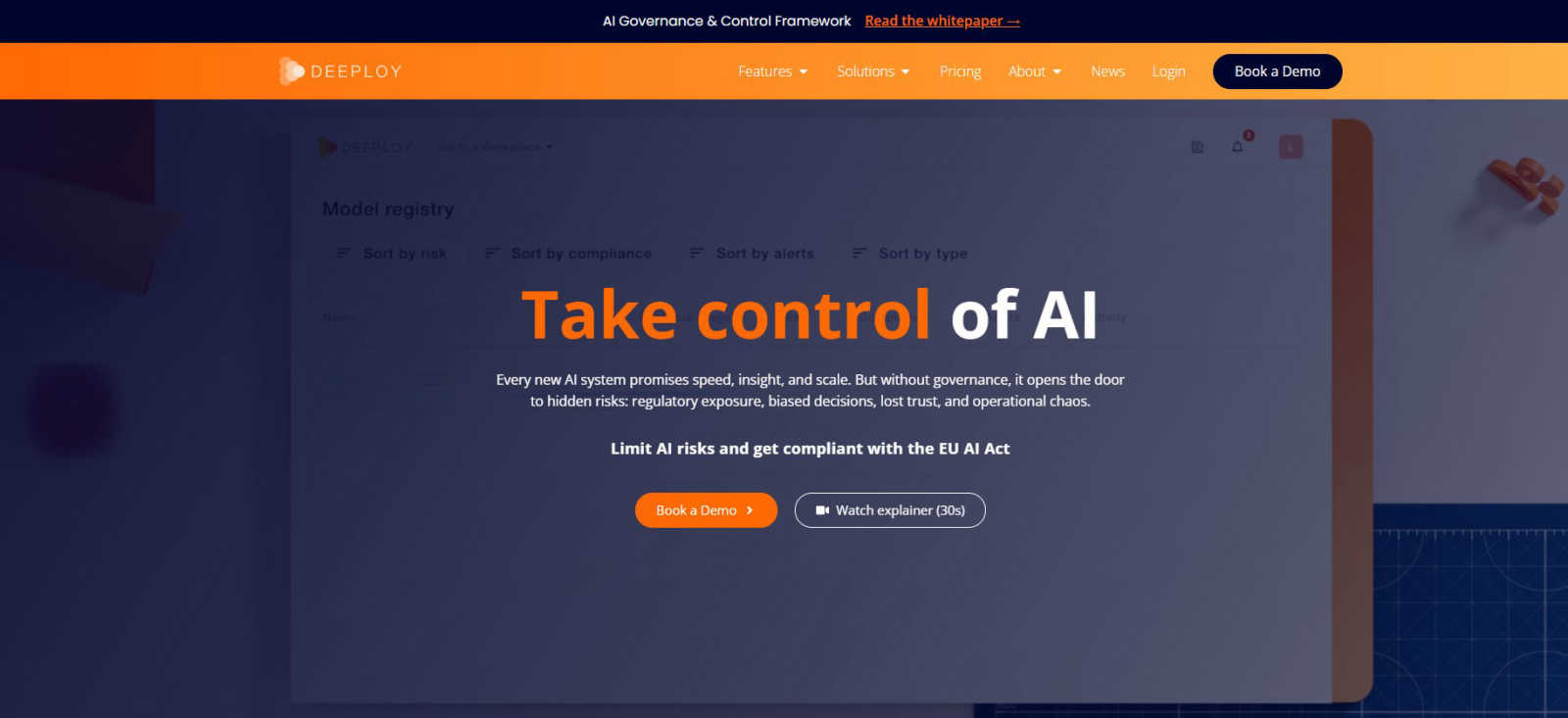
Deeploy provides the essential governance layer to safely scale and control AI across your organization.
Last updated: March 1, 2026

Threat Watch
Instantly assess your cybersecurity health with actionable insights across critical risk categories.
Last updated: March 1, 2026
Visual Comparison
Deeploy
Threat Watch
Feature Comparison
Deeploy
AI Discovery and Onboarding
This feature provides complete visibility across an organization's AI landscape. It allows teams to discover, onboard, and manage every AI system from a single, unified interface. By connecting to any MLOps or GenAI platform, it eliminates blind spots and creates a centralized AI inventory without requiring painful migrations. This foundational visibility is the first critical step toward effective governance, ensuring no AI application operates in the shadows.
Control Frameworks
Deeploy simplifies navigating complex AI regulations with guided workflows that make compliance straightforward. Organizations can choose from default, recognized frameworks like ISO 42001 and NIST AI RMF or build custom ones tailored to their needs. The platform enables rapid AI system risk classification in minutes and establishes clear accountability through structured approval processes, turning abstract regulatory requirements into a manageable operational reality.
Control Implementation
This feature translates governance frameworks into enforceable, engineer-friendly controls. It ensures every deployed AI system automatically receives the correct, actionable requirements without manual overhead. By leveraging templates and auto-collected evidence, it can accelerate compliance processes by up to 90%. Furthermore, AI-powered assessments handle repetitive work, allowing human experts to focus on higher-value oversight and exception handling.
Real-Time Monitoring
Deeploy provides proactive oversight to prevent AI incidents before they impact users or create compliance risks. It monitors AI performance in real-time, offering instant alerts for critical issues like model drift or performance degradation. The system identifies errors and anomalies proactively and allows for the addition of tracing and guardrails to protect LLM outputs, ensuring AI systems behave as intended in production.
Threat Watch
Unified Threat Intelligence Dashboard
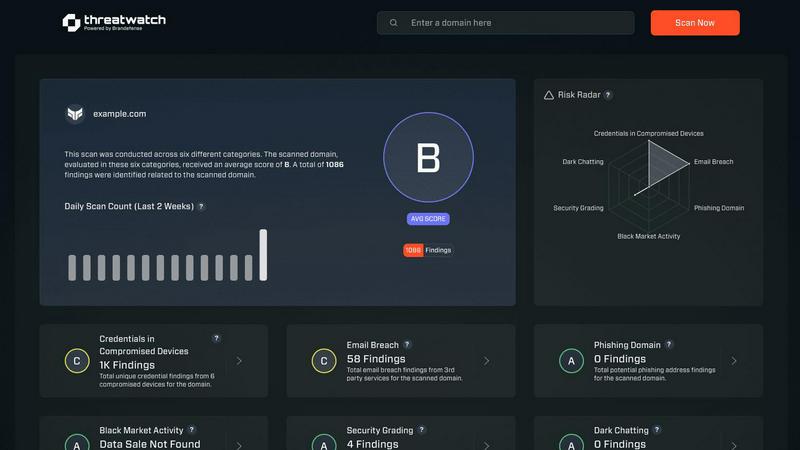
This central command center synthesizes data from across the clear, deep, and dark web into a single pane of glass. It transforms overwhelming, disparate data streams into a coherent visual narrative of your organization's security posture, enabling rapid comprehension and decision-making without the need to juggle multiple tools or reports.
Automated Cyber Health Assessment
Threat Watch automates the continuous evaluation of critical security categories, providing a fast and comprehensive scan of your digital footprint. This feature delivers an immediate diagnostic of key risk areas, including compromised credentials, breached accounts, and vulnerable devices, establishing a clear baseline for your cybersecurity health.
Proactive Dark Web Monitoring
The platform actively patrols dark web marketplaces, forums, and private channels where stolen data is traded. This proactive surveillance is crucial for early detection of compromised employee credentials, leaked intellectual property, or planned attacks against your organization, offering a vital early warning system.
Prioritized Risk Insights and Alerts
Beyond simple detection, Threat Watch employs intelligent analytics to triage and prioritize threats based on context and potential impact. This means security teams are guided directly to the most critical issues first, such as active credential misuse or high-severity vulnerabilities, optimizing response efforts and resource allocation.
Use Cases
Deeploy
Enterprise-Wide AI Inventory and Audit
Large organizations with AI scattered across departments use Deeploy to create a single source of truth for all AI assets. This central registry enables complete discovery and documentation, which is essential for internal audits, risk assessments, and providing transparency to executive leadership and regulators. It turns a fragmented portfolio into a catalogued, manageable ecosystem.
Streamlining EU AI Act Compliance
Companies operating in or selling to the European Union leverage Deeploy's guided workflows to navigate the stringent requirements of the EU AI Act. The platform helps classify AI systems by risk level, implement necessary controls, and automatically collect the evidence required for conformity assessments, transforming a complex legal mandate into a systematic, efficient process.
Implementing Human-in-the-Loop Oversight
In high-stakes industries like healthcare or finance, Deeploy facilitates effective human oversight. It provides explainability features that allow subject matter experts, such as clinicians or compliance officers, to understand AI reasoning and provide feedback. This creates a robust feedback loop, ensuring AI systems remain aligned with ethical guidelines and domain-specific standards.
Accelerating Safe Model Deployment
ML engineering teams use Deeploy to reduce the time from model development to governed production deployment from weeks to hours. The platform provides the necessary observability, monitoring, and control frameworks as part of the deployment pipeline, allowing data scientists to iterate quickly while giving assurance to risk and business teams that all safeguards are in place.
Threat Watch
Proactive Breach Response and Mitigation
Security teams use Threat Watch to shift from reacting to breach notifications to proactively discovering them. By identifying compromised employee credentials or corporate data on the dark web before they are actively exploited, organizations can force password resets and secure accounts, effectively neutralizing a threat before an attack begins.
Third-Party and Supply Chain Risk Management
Risk professionals leverage the platform to extend visibility beyond their own perimeter. By monitoring for breaches and exposures associated with vendors, partners, and suppliers, organizations can assess third-party risk and initiate crucial conversations to strengthen the security of their entire ecosystem.
Executive and Board-Level Risk Reporting
Business leaders utilize the clear, consolidated dashboard to gain an accurate, real-time understanding of organizational cyber risk. The visual reports and prioritized metrics translate technical data into strategic business intelligence, supporting informed decision-making and resource justification for security investments.
IT Asset and Vulnerability Management
IT and security operations teams integrate Threat Watch findings with their asset inventories. The platform helps identify unknown or unmanaged devices exposed on the internet, and correlates them with known vulnerabilities, ensuring that patching and remediation efforts are focused on the assets most likely to be targeted.
Overview
About Deeploy
Deeploy is an enterprise-grade AI governance platform engineered to bring order, compliance, and trust to organizations scaling artificial intelligence. It acts as the central nervous system for an organization's entire AI portfolio, providing the critical oversight infrastructure that is often missing in today's fragmented AI landscape. Designed for Chief Technology Officers, Heads of AI, Risk & Compliance Officers, and engineering teams, Deeploy addresses the core challenge of managing AI deployed across various models, vendors, and embedded systems. Its fundamental value proposition is enabling businesses to innovate with AI faster while systematically managing the associated operational, ethical, and regulatory risks. By offering a unified interface for discovery, control, monitoring, and documentation, Deeploy transforms a chaotic "jungle of AI systems" into a governed, auditable, and compliant ecosystem. It directly tackles stringent regulatory demands like the EU AI Act, turning compliance from a burdensome, manual cost center into an integrated and efficient process through guided workflows and automated evidence collection. Ultimately, Deeploy empowers organizations to maintain complete transparency and control over their AI initiatives, ensuring they can scale with confidence and build genuinely trustworthy AI systems.
About Threat Watch
Threat Watch is not merely a monitoring tool; it is a strategic cybersecurity intelligence platform that fundamentally shifts how organizations perceive and manage digital risk. It acts as a centralized diagnostic hub, providing a real-time, holistic view of an organization's cyber health by continuously scanning and correlating data across the clear, deep, and dark web. Designed for IT security teams, risk management professionals, and forward-thinking business leaders, its core mission is to dismantle reactive security postures. By consolidating fragmented threat data—from exposed credentials and breached accounts to vulnerable devices and phishing campaigns—into a single, intuitive dashboard, Threat Watch delivers prioritized, actionable insights. This empowers organizations to move with speed and precision, closing the window of opportunity for attackers by mitigating critical risks before they escalate, thereby building a more resilient and intelligence-driven security foundation.
Frequently Asked Questions
Deeploy FAQ
Who is Deeploy designed for?
Deeploy is built for enterprise roles responsible for the safe and compliant scaling of AI. Primary users include Chief Technology Officers (CTOs), Heads of AI, Risk & Compliance Officers, and the engineering or MLOps teams that deploy and maintain production AI systems. It serves organizations that use multiple AI models or vendors and need centralized oversight.
How does Deeploy help with AI regulations like the EU AI Act?
Deeploy provides structured, guided workflows aligned with major regulatory frameworks. It helps organizations classify their AI systems by risk level, map applicable requirements, and implement corresponding controls. Crucially, it automates the collection of evidence needed to demonstrate compliance, turning a documentation-heavy burden into an integrated, continuous process.
Can Deeploy integrate with our existing AI and MLOps tools?
Yes, a core feature of Deeploy is its ability to connect with any MLOps or Generative AI platform. It is designed to provide a governance layer over your existing AI stack without requiring you to migrate your systems. This approach eliminates blind spots and establishes central control without disrupting current workflows or investments.
What kind of monitoring and alerts does Deeploy provide?
Deeploy offers real-time monitoring of AI system performance and behavior. It alerts teams to critical issues such as model drift, significant drops in performance metrics, data anomalies, and potential breaches of predefined guardrails for LLMs. This enables proactive incident prevention rather than reactive firefighting.
Threat Watch FAQ
What does Threat Watch actually scan and monitor?
Threat Watch conducts a comprehensive scan across multiple layers of the internet. This includes the clear web (publicly accessible information), the deep web (unindexed databases), and the dark web (obfuscated networks). It specifically hunts for compromised employee credentials, breached account details, phishing sites targeting your domain, vulnerable devices, and mentions of your organization's assets in criminal forums.
How is Threat Watch different from a traditional vulnerability scanner?
While vulnerability scanners focus on identifying technical weaknesses within your known IT infrastructure, Threat Watch operates from an external, intelligence-led perspective. It discovers risks you may not know exist—like stolen credentials on the dark web or a shadow IT server exposed online—providing context about how attackers might actually target you, not just what flaws are present.
Who inside an organization typically uses this platform?
Threat Watch serves multiple roles. Security analysts and SOC teams use it for daily threat hunting and incident response. IT managers use it to discover unmanaged assets. Risk and compliance officers use it for reporting and third-party assessment. Finally, CISOs and business executives use the high-level dashboard to oversee the organization's cyber risk posture.
How quickly can I see results after starting a scan?
The platform is designed for rapid insight. Upon initiating a free scan, Threat Watch immediately begins assessing your provided domains and key terms against its intelligence databases. You can receive initial findings on critical categories like compromised credentials and breached accounts within minutes, providing immediate value and a starting point for deeper investigation.
Alternatives
Deeploy Alternatives
Deeploy is an enterprise-grade AI governance platform, a critical category of software for businesses scaling artificial intelligence responsibly. It provides the essential oversight layer to manage risk, ensure compliance, and maintain control across a diverse portfolio of AI models and systems. Users may explore alternatives for various reasons, including budget constraints, specific feature requirements not covered by a single platform, or the need for a solution that integrates more tightly with their existing technology stack. The search often stems from a need to balance comprehensive governance with operational flexibility and cost. When evaluating alternatives, key considerations should include the platform's ability to provide unified visibility and control, its adaptability to both internal policies and external regulations like the EU AI Act, and the depth of its monitoring and documentation capabilities. The ideal solution should transform governance from a bottleneck into an enabler of safe, scalable innovation.
Threat Watch Alternatives
Threat Watch is a cybersecurity intelligence platform that falls under the broader category of business intelligence tools, specifically focused on providing a real-time, actionable view of an organization's digital security posture. It consolidates threat data to offer proactive insights into risks like compromised credentials and vulnerable assets. Users often explore alternatives for various practical reasons. These can include budget constraints, the need for a different feature set, integration requirements with existing security stacks, or a preference for a platform with a different operational focus, such as deeper compliance reporting or more specialized threat hunting capabilities. When evaluating other options, key considerations should align with your primary needs. Look for the scope of monitoring (clear, deep, and dark web coverage), the quality and speed of actionable alerts, ease of integration, and the platform's ability to prioritize risks effectively to reduce your overall attack surface and improve cyber resilience.