
OGimagen vs Skene
Side-by-side comparison to help you choose the right AI tool.

OGimagen effortlessly generates stunning Open Graph images and meta tags for all your social platforms in seconds, enhancing your online presence.
Last updated: March 11, 2026

Skene turns your own codebase into a prompt-driven growth engine you fully control.
Last updated: February 28, 2026
Visual Comparison
OGimagen
Skene
Feature Comparison
OGimagen
AI-Powered Image Generation
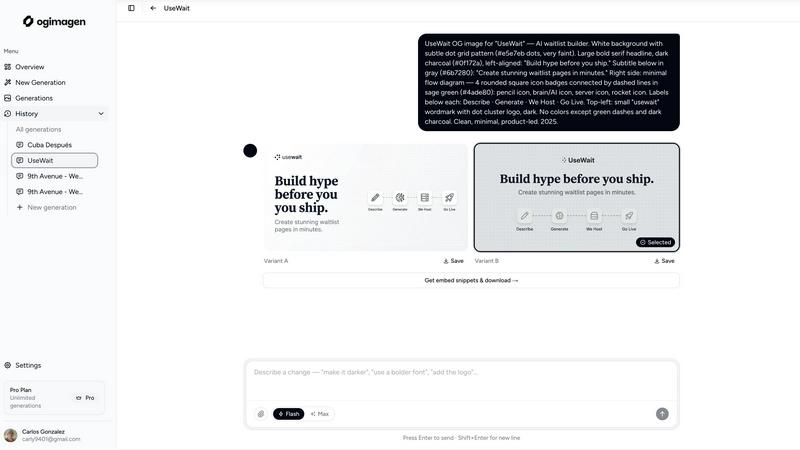
OGimagen utilizes state-of-the-art AI to create stunning Open Graph, Twitter, and LinkedIn images tailored to your content. By simply filling out a form with your title, description, brand color, and style preset, the tool generates two pixel-perfect variants, ensuring compatibility across different platforms.
Multi-Platform Output
Each social media platform has specific image requirements, and OGimagen caters to these needs by exporting images in three optimized formats. Users receive OG images, Twitter cards, and LinkedIn cards, all designed to meet the unique specifications of Facebook, X (formerly Twitter), and LinkedIn.
Ready-to-Paste Meta Tags
After generating images, OGimagen provides users with framework-specific meta tag snippets that are ready to be pasted into their projects. Free users receive HTML snippets, while Pro users can access advanced meta tags for frameworks like Next.js, Astro, and Svelte, making integration seamless.
MCP Integration
For advanced users, OGimagen offers MCP (Multi-Code Platform) integration, allowing you to generate OG images directly from your coding environment. This feature supports popular editors like Claude Code and Cursor, enabling users to streamline their workflow without switching applications.
Skene
Codebase-Native Signal Detection
Skene integrates directly with your repository and IDE, performing deep structural analysis to automatically detect growth signals and user friction points from your code itself. It scans framework patterns, component trees, and user flow logic to identify onboarding bottlenecks, activation opportunities, and retention risks without requiring manual instrumentation or external tagging. This creates a living, code-accurate map of your user journey.
Autonomous Growth Loop Implementation
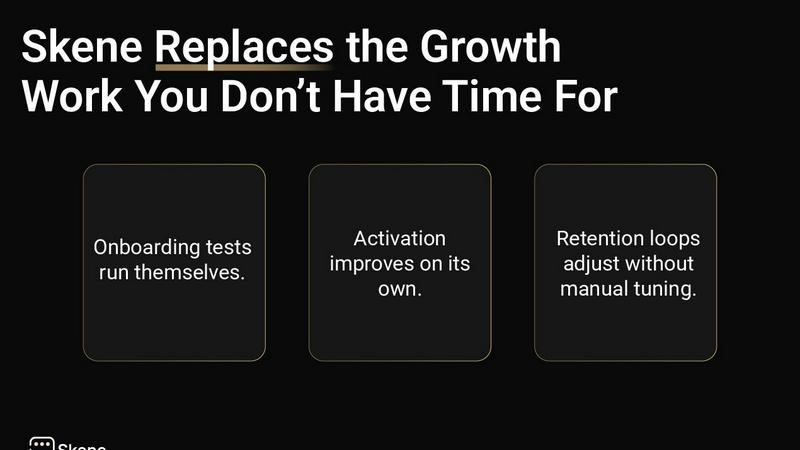
Moving beyond analysis, Skene autonomously generates and deploys optimized growth loops. Based on its analysis, it can prompt engineers or AI agents to implement changes, or manage deployments itself to improve funnels. This transforms growth from a manual, campaign-based effort into a continuous, automated process that ships improvements as seamlessly as new features.
Prompt-Driven Growth Infrastructure
Growth logic becomes as malleable and promptable as any other part of your codebase. Developers and AI agents can interact with Skene's context layer using natural language prompts to query analytics, request optimizations for specific flows, or generate implementation code. This shifts the paradigm from configuring rigid dashboards to commanding an intelligent growth engine.
Self-Healing & Version-Controlled Logic
Because Skene's intelligence is built upon your actual code, its recommendations and implemented flows automatically update and adapt with every git commit and deployment. There's no risk of UI tour scripts breaking after a redesign; the growth logic is versioned and tested alongside the product, ensuring resilience and maintainability.
Use Cases
OGimagen
Enhancing Social Media Posts
Social media marketers can use OGimagen to create eye-catching images that enhance their posts. By generating professional images quickly, marketers can ensure their content stands out in crowded feeds, ultimately driving higher engagement rates.
Streamlining Web Development
Web developers can incorporate OGimagen into their projects to easily generate social preview images. This tool allows them to focus on coding while still creating visually appealing links that enhance user experience and improve click-through rates.
Boosting E-commerce Listings
E-commerce businesses can utilize OGimagen to create enticing images for product links shared on social media. By presenting products with professional-looking images, they can attract more customers and increase sales through visually appealing promotions.
Simplifying Content Creation
Content creators, including bloggers and influencers, can benefit from OGimagen by generating images for their articles and posts with ease. This feature allows them to maintain a consistent and professional aesthetic while saving time on design.
Skene
Accelerating Time-to-Value for New Users
For products struggling with user activation, Skene autonomously audits the onboarding funnel directly from the code, identifying unnecessary steps or confusing UI patterns. It then generates and implements streamlined flows, tooltips, or progress trackers to guide users to their "aha moment" faster, dramatically improving activation rates without constant manual experimentation.
Reducing Engineering Overhead on Growth Tasks
Engineering teams burdened with building and maintaining one-off analytics events, A/B test frameworks, and lifecycle emails can offload this work to Skene. It handles the instrumentation, analysis, and iterative optimization, allowing developers to focus on core product features while still shipping data-driven growth improvements.
Enabling AI Agents to Own Growth Outcomes
Companies leveraging AI agents for development can provide them with a rich, code-aware growth context layer via Skene. An agent can be tasked with "improving retention for feature X" and, using Skene's analysis and tooling, understand the current flow, propose changes, and even implement the necessary code modifications autonomously.
Consolidating a Fragmented Growth Stack
Startups tired of managing multiple point solutions for analytics, user onboarding, and email automation can replace them with Skene's unified infrastructure. It eliminates the performance tax of external scripts, breaks down data silos, and provides a single source of truth for growth logic that is owned, versioned, and evolved within the main codebase.
Overview
About OGimagen
OGimagen is a cutting-edge tool specifically designed to simplify the creation of Open Graph images for social media platforms. Leveraging advanced artificial intelligence, OGimagen allows users to generate visually appealing social cards in mere seconds. This tool is perfect for web developers, marketers, and content creators who want to enhance their online presence without the need for extensive design skills. Whether you are looking to improve engagement on Facebook, Twitter, or LinkedIn, OGimagen ensures that your links look polished and professional. With a straightforward interface that requires minimal input, users can simply enter a title and description to generate high-quality images optimized for various social media platforms. This efficiency not only saves time but also boosts click-through rates, making OGimagen an invaluable asset for anyone aiming to elevate their digital marketing strategy.
About Skene
Skene is not just another growth tool; it's a foundational reimagining of how software achieves product-led growth (PLG). It functions as an AI-powered, fully automated PLG iteration engine that integrates as intrinsic infrastructure directly into your development environment. Unlike external services that bolt on with performance-draining snippets, Skene connects to your codebase and IDE, analyzing your application's structure and user interaction data to autonomously identify friction points, optimize critical user flows, and deploy improvements. Its core value proposition is the consolidation and automation of growth work: it replaces manual A/B testing, fragmented analytics dashboards, and brittle third-party scripts with a self-learning system that treats growth logic as version-controlled code you own. Designed for indie developers, early-stage startups, and established PLG companies, Skene acts as a "growth team in a box." It continuously optimizes key funnels like onboarding, activation, and retention, freeing engineering and product teams from constant manual optimization overhead. By deriving signals directly from the source code, it creates a powerful, actionable context layer for your AI agents and ensures your growth strategies evolve in lockstep with every product deployment, making data silos and performance-breaking external dependencies obsolete.
Frequently Asked Questions
OGimagen FAQ
What exactly is an OG image?
An OG image is a graphical representation that appears when a link is shared on social media platforms. It enhances the visual appeal of the link and can significantly affect engagement rates and click-through rates.
How does AI generation work?
OGimagen employs advanced AI algorithms to analyze the provided title and description, creating visually appealing images that are tailored to the specifications of various social media platforms.
What's the difference between Starter, Growth, and Pro?
The Starter plan offers a one-time purchase for 10 generations and basic hosting. The Growth plan includes 25 generations and extended hosting. The Pro plan provides ongoing monthly access with 50 generations, MCP integration, and permanent hosting.
Can I cancel Pro at any time?
Yes, users have the flexibility to cancel their Pro subscription at any time, allowing for a risk-free trial of the advanced features that OGimagen offers.
Skene FAQ
How is Skene different from traditional customer experience software?
Traditional tools like tour builders or analytics platforms are external services that require manual configuration, rely on fragile DOM selectors that break with UI updates, and create data silos. Skene is infrastructure that reads your codebase to automatically generate and maintain context-aware flows. It updates itself with each deploy and keeps all logic and data within your owned code environment.
How long does it take to set up Skene?
Setup is designed to be exceptionally fast, typically under 60 seconds. You grant Skene read-only access to your GitHub or GitLab repository. It then automatically analyzes your codebase structure to generate initial PLG flows and insights without requiring any initial code changes or API integrations.
Is my source code secure with Skene?
Absolutely. Security is a primary design principle. Skene only ever requires read-only access to your repository. All code analysis is performed in a secure, isolated environment. Your proprietary code never becomes training data for external models, and you maintain full ownership and control.
What kind of analytics does Skene provide?
Skene offers a real-time analytics dashboard focused on actionable growth metrics. This includes user progress tracking, funnel completion rates, engagement heatmaps, and bottleneck identification. It provides insights like time-to-value and measures the direct impact of automated improvements, all derived from your codebase signals rather than external pageview trackers.
Alternatives
OGimagen Alternatives
OGimagen is an AI-powered tool designed for generating stunning Open Graph images quickly and efficiently. As a part of the dev tools category, it allows users to create production-ready social cards that enhance the appearance of links shared across various platforms. This capability helps website owners and developers improve their click-through rates with minimal effort, making it a popular choice among those looking to optimize their online presence. However, users may seek alternatives to OGimagen for several reasons, including pricing structures, specific feature requirements, or compatibility with different platforms. When exploring alternatives, it's essential to consider factors such as ease of use, image customization options, integration capabilities, and overall cost-effectiveness. This evaluation ensures that the chosen tool meets the unique needs of each user or organization.
Skene Alternatives
Skene is an AI-powered Product-Led Growth (PLG) engine that integrates directly with your codebase. It belongs to the category of growth automation and product analytics infrastructure, designed to autonomously optimize user funnels by treating growth as version-controlled code. This represents a shift from traditional, manual growth hacking and external analytics services. Users may explore alternatives for several common reasons. These include budget constraints, as advanced automation tools often carry a premium. Others might seek solutions with a different technical approach, such as those focusing purely on analytics dashboards without deep code integration, or platforms that cater to non-technical teams. The need for specific integrations, company size, or a preference for more manual control over experiments can also drive the search. When evaluating alternatives, key considerations should align with your core needs. Assess the depth of integration with your development stack and whether the solution treats growth logic as owned, versionable code. Consider the level of automation versus manual control offered, the robustness of signal detection beyond basic click-tracking, and how the tool scales with your product's complexity. Ultimately, the choice hinges on finding the right balance between powerful automation and the transparency and ownership you require over your growth processes.