
Private Equity List vs Redbark
Side-by-side comparison to help you choose the right AI tool.

Private Equity List
AI finds private equity and venture capital investors to help you get funded faster.
Last updated: March 1, 2026

Redbark automatically syncs your Australian bank data to Google Sheets and YNAB in real time.
Last updated: March 4, 2026
Visual Comparison
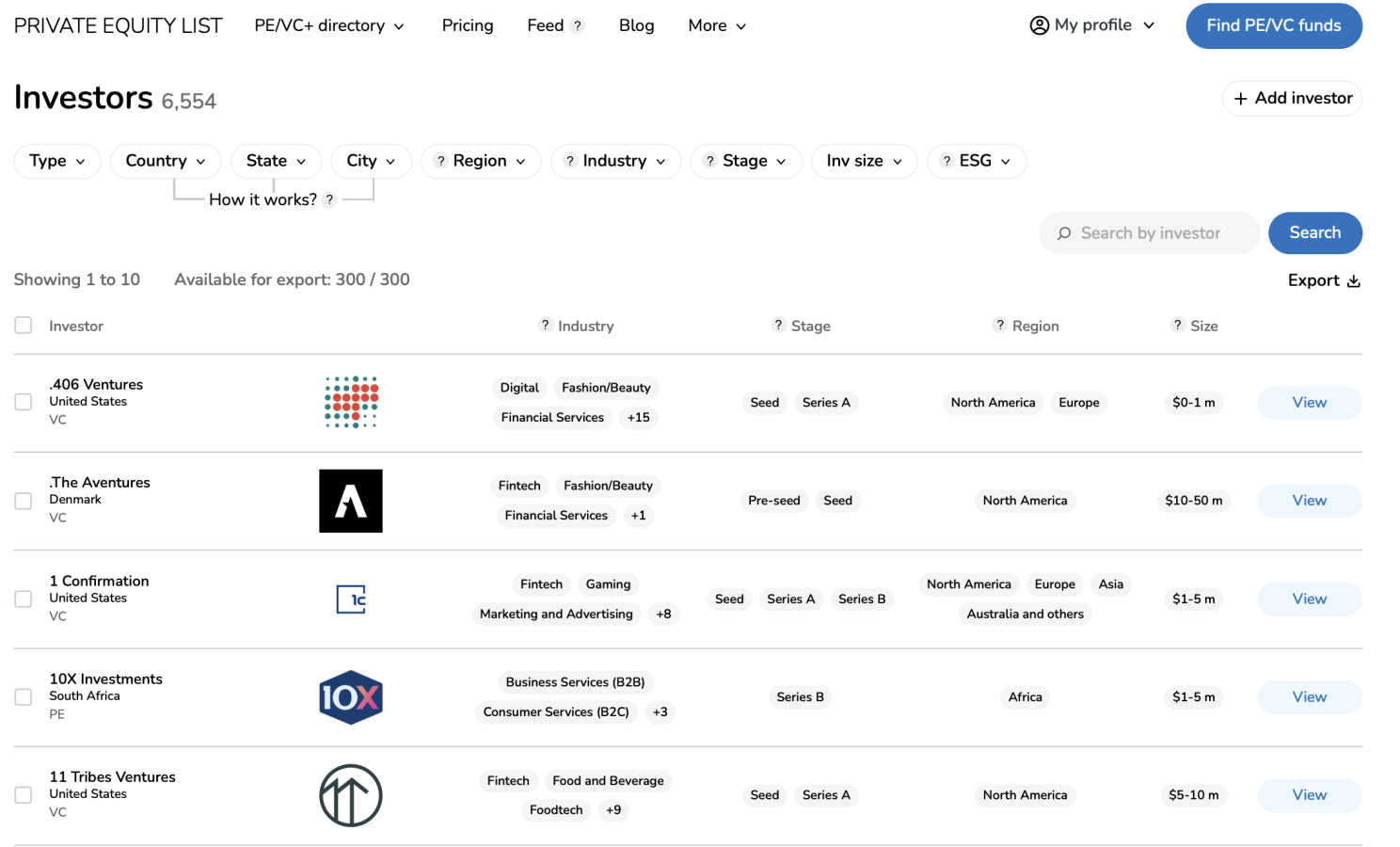
Private Equity List
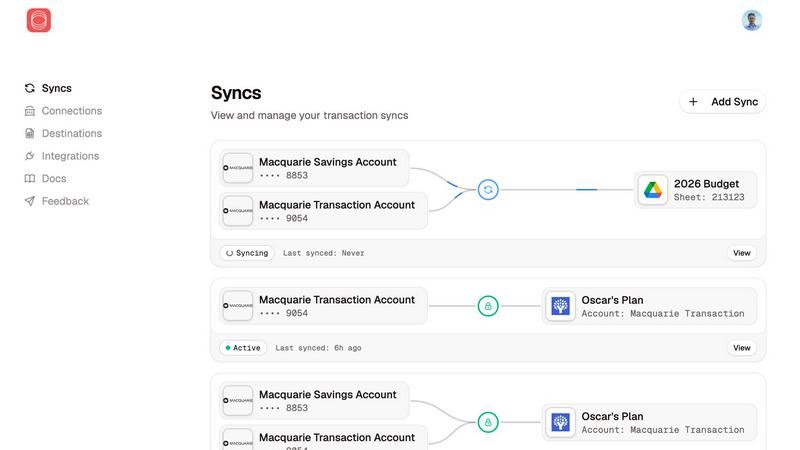
Redbark
Feature Comparison
Private Equity List
AI-Powered Natural Language Search
This innovative feature allows users to bypass complex filters and search the database using simple, conversational queries. You can ask, "Find early-stage climate tech VCs in Europe," and the AI will interpret the request to deliver targeted results. This dramatically reduces the time to find relevant investors, making initial research and brainstorming sessions highly efficient. The platform advises users to verify AI-generated information for accuracy.
Super-Intuitive Filtering & Search
The platform offers a lightweight, user-friendly interface with powerful, PE/VC-first filters that are readily accessible. Users can quickly narrow down investors by geography, investment stage, thesis, ticket size, and status (active only). This design philosophy ensures that from login to generating a structured, usable investor shortlist takes only a few minutes, without the steep learning curve or feature overload common in enterprise platforms.
Human-Curated & Export-Ready Contact Data
Beyond firm-level data, Private Equity List provides detailed contact information for investment team members, including roles and enriched details. This data is human-curated and updated nearly daily, ensuring high reliability. A key differentiator is the ability to export this contact data in bulk (e.g., via .csv) at a much more affordable price point than competitors, where such functionality is often locked behind exorbitant paywalls.
New PE/VC Funds Discovery
This dedicated feature surfaces funds launched within the last 6-12 months that are actively seeking investment opportunities. For founders and fundraisers, this is a critical advantage, as these newer funds often have fresh capital and a strong mandate to deploy it, making them highly motivated potential partners and increasing the odds of securing funding.
Redbark
Pass-Through Data Architecture
This foundational feature ensures maximum privacy and security by design. Your sensitive financial data—transactions, balances, account details—never lands on or passes through Redbark's permanent storage. It flows directly from your bank or brokerage to your chosen destination like Google Sheets or YNAB. This architecture minimizes data liability, aligns with strict data sovereignty principles, and guarantees that Redbark cannot view, sell, or retain your personal financial information, setting a new standard for trust in financial data piping.
Multi-Destination & Multi-Account Support
Redbark provides unparalleled flexibility in data routing. You can sync a single bank account to multiple destinations simultaneously—for instance, sending transactions to both a Google Sheets ledger and your YNAB budget, each with customized formatting. Conversely, you can direct different accounts (e.g., savings, credit card, loan) to separate sheets or databases within one destination. This granular control allows for sophisticated, organized financial systems tailored to complex personal or business needs without creating data silos.
Automated Background Sync with Smart Deduplication
Moving beyond manual refreshes, Redbark employs automated background syncing triggered by bank webhooks where possible, pushing new transactions in near real-time. This is paired with intelligent, ID-based deduplication logic that includes overlap buffers to catch late-posting transactions. The result is a constantly updated dataset in your tools where you never have to worry about duplicate entries or missing data, ensuring the integrity and accuracy of your financial records is maintained automatically.
Secure, Regulated Connectivity (CDR & Open Banking)
Redbark prioritizes secure, compliant access over outdated methods. For Australian banks, it uses the official Consumer Data Right (CDR) framework via an ACCC-accredited intermediary like Fiskil. This means connections are bank-approved, regulated, and transparent, with clear consumer consent and revocation rights. For global brokerages and NZ banks, it uses secure API providers like SnapTrade and Akahu. This approach eliminates the risks and instability of screen-scraping, providing a reliable and future-proof connection channel.
Use Cases
Private Equity List
Startup Fundraising
Founders from pre-seed to Series C can rapidly identify and shortlist ideal investors. By filtering by geography, stage, check size, and industry thesis, startups can build a targeted outreach list in seconds, significantly speeding up the capital-raising process and connecting with the most relevant funding sources for their growth stage.
Consultant & Advisor Deal Sourcing
Consultants and financial advisors use the platform to create tailored investor or buyer shortlists for their clients' fundraising or M&A mandates. The ability to quickly generate structured, exportable lists of qualified targets enables them to move faster, deliver superior client service, and accelerate the timeline to earning success fees.
VC Ecosystem Partnership Development
Existing venture capital funds, accelerators, and venture studios leverage the database to find co-investors and strategic partners across the global landscape. This helps in syndicating deals, providing better support for portfolio companies during subsequent funding rounds, and building a robust network within the investment community.
Academic & Market Research
Universities, journalists, government agencies, and independent researchers utilize the platform as a source of reliable PE/VC intelligence. The curated data supports academic studies, market reporting, policy analysis, and competitive research, providing a clear view of investment trends, player activity, and market dynamics without enterprise-level costs.
Redbark
Automated Business Cash Flow Management
Small business owners and freelancers can automate their bookkeeping and cash flow tracking. By connecting their business transaction accounts, Redbark automatically pipes all income and expenses into a Google Sheets or Airtable database. This eliminates manual data entry from bank statements, enabling real-time profit/loss views, automated invoice reconciliation, and streamlined reporting for accountants, all within a customizable and familiar spreadsheet environment.
Consolidated Investment Portfolio Dashboard
Investors with holdings across multiple platforms (e.g., CommSec for ASX shares, Stake for US stocks, a crypto exchange) can unify their portfolio view. Redbark syncs holding and transaction data from each brokerage into a single Google Sheets workbook. This allows for the creation of a live, custom dashboard that tracks total portfolio value, asset allocation, performance across accounts, and dividend income without logging into multiple websites or handling CSV files.
Personal Budgeting with Live Bank Data
Individuals seeking control over their finances can supercharge budgeting apps like YNAB or Actual Budget. Instead of manually entering transactions, Redbark automatically syncs spending from all connected accounts (checking, savings, credit cards) directly into the budget. This provides a true, real-time picture of category balances and spending against budget goals, removing the friction that often causes budgeting efforts to fail and turning intention into effortless habit.
Financial Reporting and Data Analysis
Financial analysts, consultants, or savvy individuals can build powerful, automated reports. By streaming clean, deduplicated transaction data into Google Sheets or Notion databases, users can leverage formulas, pivot tables, and connected data visualization tools to generate monthly spending reports, analyze expense categories over time, track tax-deductible items, or model future savings scenarios—all with data that updates itself, turning static reports into dynamic financial insights engines.
Overview
About Private Equity List
Private Equity List is a specialized, AI-powered database platform engineered to provide streamlined and affordable access to the global private equity and venture capital ecosystem. It positions itself as a focused, user-centric alternative to larger, more expensive generalist platforms, cutting through the noise to deliver actionable, investor-specific intelligence. The platform aggregates and curates detailed data on thousands of active PE firms, VC funds, accelerators, and their investment teams worldwide. Its core value proposition is a powerful trifecta: affordability, an exceptionally intuitive interface, and a feature set purpose-built for the specific needs of fundraising and partnership sourcing. A recent major update introduced an AI Search function, allowing users to find investors using natural language queries, which dramatically accelerates the research process. Trusted by over 10,700 users, including startup founders, consultants, investment professionals, and researchers, Private Equity List leverages human-curated, frequently updated data to empower critical decisions in fundraising, market analysis, and strategic partnership development.
About Redbark
Redbark redefines financial data management by acting as a secure, intelligent conduit between your money and your productivity tools. It solves a universal pain point: the tedious, error-prone process of manually exporting, downloading, and importing financial data from banks and brokerages into spreadsheets or budgeting apps. By leveraging Australia's official Consumer Data Right (CDR) framework and global brokerage integrations, Redbark provides a bank-approved, secure alternative to risky screen-scraping. Its core innovation is a privacy-first, pass-through architecture where your transaction, balance, and investment data flows directly from your financial institution to destinations like Google Sheets, Notion, YNAB, and Airtable without ever being stored on Redbark's servers. This automated sync, controlled on your schedule, delivers real-time financial visibility. Designed for simplicity without code, it empowers a diverse user base: freelancers automating invoice tracking, investors monitoring multi-asset portfolios, small business owners gaining instant cash flow clarity, and personal finance enthusiasts building custom dashboards. Ultimately, Redbark isn't just a connector; it's a foundational layer for financial automation, turning fragmented data into actionable insight within the tools you already trust.
Frequently Asked Questions
Private Equity List FAQ
What makes Private Equity List different from platforms like Pitchbook or Crunchbase?
Private Equity List is a specialized, affordable alternative focused solely on private equity and venture capital investor data. It avoids the analytics overload and high cost of generalist platforms, offering a super-intuitive interface, PE/VC-specific filters, and export-ready contact data at a fraction of the price. It is designed for speed and practicality in fundraising and sourcing.
How current and reliable is the data on the platform?
The data is human-curated and updated nearly daily. The platform specifically tracks "Active Funds" and highlights newly launched funds. A timestamp on the website indicates the last database update, and while the AI search is powerful, the platform transparently notes that users should verify AI-generated information for complete accuracy.
Is there a free trial or a free plan available?
Yes, the platform offers a "Try for free" option with basic functions available at no cost and no credit card required. This allows users to experience the core search and filtering capabilities, including limited use of the AI Search, before committing to a paid plan for full access and export features.
Who are the typical users of Private Equity List?
The platform serves a diverse user base of over 10,700 professionals. This includes startup founders, consultants and advisors, investment professionals within the VC/PE ecosystem, as well as universities, journalists, and researchers. It is built to serve both large corporates and smaller teams or solo entrepreneurs effectively.
Redbark FAQ
Is my financial data stored on Redbark's servers?
No. Redbark uses a unique pass-through data architecture. Your sensitive data—including transaction details, account balances, and holdings—flows directly from your financial institution (your bank or brokerage) to your chosen destination (like Google Sheets or YNAB). Redbark acts only as the secure conduit facilitating this connection and does not store your financial data on its servers, ensuring maximum privacy and data minimization.
How does Redbark connect to my bank, and is it safe?
For Australian banks, Redbark connects exclusively via the Consumer Data Right (CDR) framework through an ACCC-accredited data recipient partner. This is the official, government-regulated open banking system, not screen-scraping. It is bank-approved, requires your explicit consent, and you can revoke access at any time. For global brokerages, secure API providers like SnapTrade are used. All credentials are encrypted with AES-256, and the entire infrastructure is hosted in Australia.
Can I sync data to multiple tools at once?
Yes, Redbark's multi-destination support is a key feature. You can configure a single bank or investment account to sync simultaneously to multiple endpoints. For example, you could send your transaction data to a Google Sheets spreadsheet for custom analysis, to YNAB for budgeting, and to a Notion database for logging—all from the same source connection, with the ability to customize the format for each destination.
What happens if my bank isn't listed as supported?
Redbark supports over 100 Australian financial institutions via the CDR system, covering all major banks and many credit unions. If your Australian bank participates in CDR (most do), it will be supported. For non-Australian banks or specific institutions, support depends on partnerships with API providers like Akahu for New Zealand. The connections page on the Redbark website provides the most current and comprehensive list of supported institutions.
Alternatives
Private Equity List Alternatives
Private Equity List is a specialized database platform in the business and finance category, designed to connect entrepreneurs and professionals with private equity and venture capital investors. It leverages AI and curated data to streamline the fundraising and research process, offering a focused alternative to broader, more complex platforms. Users often seek alternatives for various reasons, including budget constraints, the need for a more intuitive user interface, or a desire for features tailored specifically to private capital markets rather than general business intelligence. Some may require different data coverage, pricing models, or levels of customer support that better align with their specific operational needs and scale. When evaluating alternatives, key considerations should include the depth and accuracy of the investor data, the platform's ease of use and search capabilities, the total cost of ownership, and how well the tool's feature set aligns with your primary use case, whether it's fundraising, deal sourcing, or market analysis. The goal is to find a solution that removes friction without compromising on the quality of insights.
Redbark Alternatives
Redbark is a financial data automation tool that securely syncs transaction and investment data from Australian banks and global brokerages directly into apps like Google Sheets and Notion. It operates within the personal and business finance category, focusing on eliminating manual data entry through automated, secure connections. Users often explore alternatives for various reasons. These can include budget constraints, a need for different integration platforms beyond what's offered, or specific feature requirements like more advanced reporting, support for non-Australian financial institutions, or a different user interface. The search is typically driven by finding the perfect fit for one's unique financial workflow and tech stack. When evaluating other options, key considerations should be security methodology, the range of supported banks and destinations, automation reliability, and overall value for money. It's crucial to assess how the tool accesses your data, ensuring it uses official, secure APIs rather than less reliable methods, and that it aligns with your need for simplicity or advanced functionality.