
Image3D AI vs Postproxy
Side-by-side comparison to help you choose the right AI tool.

Image3D AI
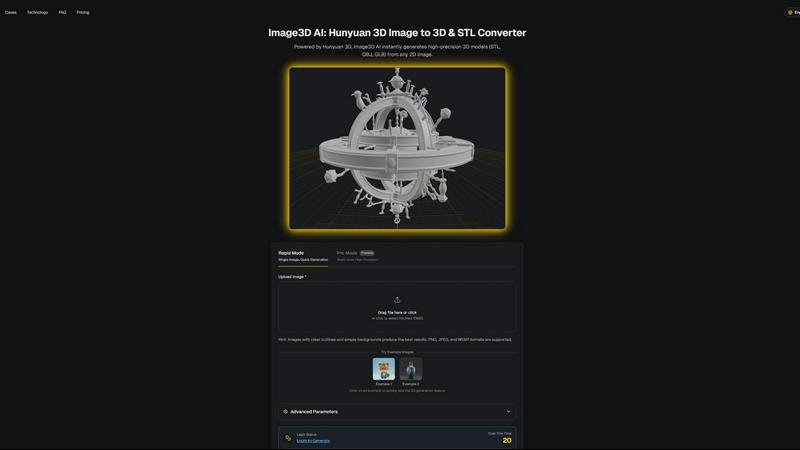
Image3D AI instantly transforms any 2D image into a high-precision 3D model for printing or games.
Last updated: March 1, 2026

Postproxy
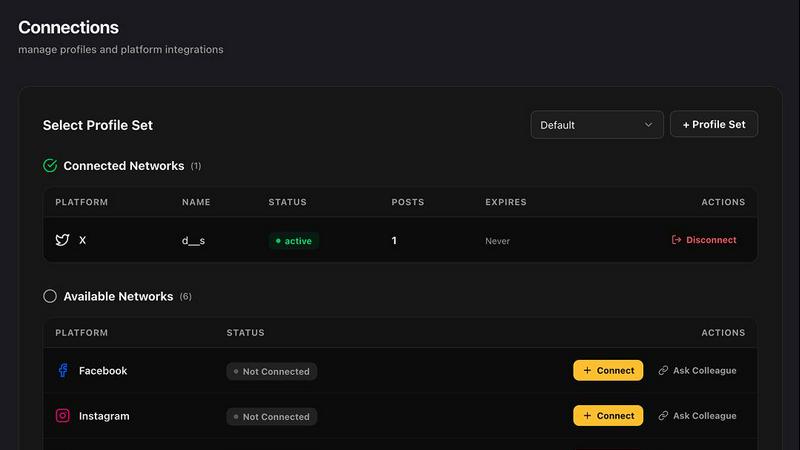
Postproxy's single API publishes your content reliably across all major social networks.
Last updated: February 28, 2026
Visual Comparison
Image3D AI
Postproxy
Feature Comparison
Image3D AI
Dual Generation Modes (Rapid & Pro)
Image3D AI caters to different project needs with two distinct operational modes. The Rapid Mode is designed for speed and simplicity, generating a 3D model from a single uploaded image in under a minute, perfect for quick concepts or simple objects. For projects demanding higher precision and physical accuracy, the Pro Mode utilizes multi-view images. By uploading several photos of an object from different angles (e.g., front, side, back), the AI performs a more comprehensive analysis, resulting in a superior, dimensionally accurate reconstruction ideal for professional 3D printing or detailed digital assets.
Multi-Format Export (STL, OBJ, GLB)
Understanding that a 3D model's utility lies in its compatibility, Image3D AI exports directly to the industry's most essential file formats. Users can download their creations as STL files, the universal standard for 3D printing; as OBJ files, widely compatible with traditional 3D editing suites like Maya and Blender for further refinement; or as GLB files, the modern, compact format perfect for web applications, AR experiences, and game engines, as it contains both model and texture data in a single file.
Advanced Parameter Controls
Beyond a simple one-click conversion, the platform offers users a degree of creative and technical control through advanced parameters. While the specifics are hinted at with modes like "Normal," "Low Poly," and "Geometry," this feature allows for tailoring the output. Users can prioritize mesh detail for printing, optimize for lower polygon counts for game performance, or balance texture quality with generation speed, ensuring the final model is optimized for its intended use case.
No-Skill-Required Interface & Free Testing
A cornerstone of its accessibility is an exceptionally user-friendly interface that requires zero prior 3D modeling knowledge. The process is as simple as dragging and dropping an image. Furthermore, the platform encourages experimentation by offering a library of free example images that users can test with, requiring no login or credit expenditure. This risk-free trial allows anyone to immediately experience the power of AI-driven 3D conversion and understand the quality of results possible.
Postproxy
Unified Multi-Platform API
Postproxy's cornerstone feature is its single API endpoint that manages publishing across all supported social networks. This eliminates the need for developers to learn, implement, and maintain separate SDKs and integration logic for Facebook, Instagram, LinkedIn, X, and YouTube. A single POST request with your content and target profiles is all that's required, dramatically reducing code complexity and integration time while ensuring consistency across your publishing pipeline.
Automated Platform Compliance & Content Adaptation
Each social media platform has unique and often shifting rules regarding media formats, text limits, and post validation. Postproxy intelligently handles this "inconsistent rules" problem by automatically transforming and validating your content to meet each platform's specific requirements. This includes formatting text, resizing or converting media, and ensuring compliance, so the same core message publishes successfully everywhere without manual tweaking.
Robust Operational Reliability & Error Handling
Postproxy is engineered with operational failures in mind. It provides "delivery guarantees" by automatically managing rate limits, quotas, and flaky endpoints. The system includes intelligent retry mechanisms, clear publish state reporting, and handles silent drops or delayed errors that typically plague direct API integrations. This transforms publishing from an error-prone task into a deterministic process where success and failure states are explicit and actionable.
Centralized Authentication & Account Management
Dealing with OAuth tokens, app reviews, permission scopes, and account sprawl across multiple clients or brands is a significant burden. Postproxy centralizes all authentication, securely storing tokens and handling automatic refresh cycles. This simplifies connecting and managing dozens of social media profiles and pages, providing a single control plane for access and permissions without the platform-specific bureaucracy.
Use Cases
Image3D AI
Game Development & Asset Creation
For indie developers and large studios alike, Image3D AI accelerates the prototyping and production pipeline. Concept art, character designs, and environmental props can be converted into base 3D meshes in seconds. These assets, especially when generated with PBR material support, provide a fantastic starting point that can be directly imported into engines like Unity or Unreal Engine for further detailing, texturing, and integration, drastically reducing initial modeling time.
E-commerce & Interactive Product Visualization
Online retailers can leverage this technology to create immersive shopping experiences. By converting standard 2D product photos into interactive 3D models, customers can rotate, zoom, and inspect items from every angle on a website. This "image to 3D" capability is also the first step toward creating Augmented Reality (AR) previews, allowing customers to visualize products in their own space, which can significantly boost engagement and reduce return rates.
3D Printing & Rapid Prototyping
The platform serves as a powerful "image to STL converter" for makers, hobbyists, and engineers. A simple sketch, a logo, or a photo of an object can be transformed into a watertight, manifold STL file ready for slicing and 3D printing. This opens up rapid prototyping to a much wider audience, enabling the physical creation of custom parts, artistic sculptures, educational models, and personalized gifts directly from a 2D idea.
Architectural Visualization & Design
Architects and interior designers can use Image3D AI to quickly generate basic 3D forms from sketches, floor plans, or inspiration images. While not a replacement for detailed CAD software, it provides a rapid method to create massing models or simple contextual assets for presentations and client reviews. This speeds up the early conceptual phases, allowing for faster iteration and more efficient communication of spatial ideas before committing to detailed modeling.
Postproxy
Automating AI-Generated Content Workflows
Teams using Large Language Models (LLMs) or AI agents to generate social content can integrate Postproxy as the final, reliable output layer. Instead of building custom adapters for each platform to normalize AI output, they can send generated content directly to Postproxy's API. This enables fully automated pipelines where AI creates content and Postproxy ensures it is properly formatted and published across all chosen networks without manual intervention.
Powering Multi-Client Social Media Management Tools
Agencies and SaaS platforms that manage social media for multiple clients face immense complexity with account sprawl and platform access. Postproxy acts as a unified backend, allowing these tools to offer multi-platform publishing without building complex, fragile integrations in-house. It handles authentication for all client accounts and provides a stable interface, letting the tool focus on its core UI and client management features.
Enhancing No-Code/Low-Code Automation
Users of automation platforms like n8n, Zapier, or Make can leverage Postproxy to create robust, multi-step workflows that include social publishing. A workflow can trigger from a new blog post, CRM update, or scheduled event, generate a summary, and then use a single Postproxy action node to publish it everywhere, replacing multiple, less reliable platform-specific nodes and simplifying the entire automation build.
Enabling Event-Driven and Scheduled Publishing at Scale
Development teams can integrate Postproxy's API directly into their CI/CD pipelines, internal dashboards, or product-led growth engines. This allows for publishing based on system events—like a new product launch, version update, or milestone achievement—directly from their core systems. Whether publishing ten announcements or ten thousand promotional posts, the same reliable logic applies, enabling scalable, programmatic communication.
Overview
About Image3D AI
Image3D AI represents a paradigm shift in the digital creation landscape, fundamentally altering how three-dimensional content is generated. At its core, it is a sophisticated AI-powered platform that transforms static, two-dimensional images into fully-realized, production-ready 3D models in a matter of seconds. This is not a simple extrusion tool; it leverages Tencent's groundbreaking Hunyuan 3D engine to infer depth, geometry, and texture from flat visuals, producing high-fidelity assets with remarkable accuracy. The tool democratizes 3D modeling, dismantling the steep technical and time barriers traditionally associated with software like Blender or Maya. Its primary value proposition is immense time savings and enhanced creative productivity, allowing professionals and hobbyists alike to bypass weeks of manual labor. Whether you are a game developer needing rapid asset iteration, a designer creating AR experiences, a 3D printing enthusiast bringing sketches to life, or an e-commerce manager seeking interactive product showcases, Image3D AI provides a seamless, intuitive bridge from concept to three-dimensional reality. It empowers users to focus on the creative vision and application of the model, rather than the arduous technical process of building it from scratch.
About Postproxy
Postproxy is a transformative infrastructure layer designed to solve the complex, operational nightmare of multi-platform social media publishing. At its core, it is a unified API that abstracts away the chaos of dealing with individual platform APIs like Instagram, Facebook, YouTube, LinkedIn, and X. For developers, automators, and businesses scaling their digital presence, Postproxy replaces a tangled web of platform-specific integrations, OAuth flows, and inconsistent rules with a single, reliable endpoint. Its primary value proposition is turning publishing from a fragile, high-maintenance task into predictable, scalable infrastructure. It is explicitly built for modern tech stacks, seamlessly integrating with automation tools like n8n and Zapier, content generation pipelines powered by LLMs, and CI/CD workflows. By handling authentication, rate limits, content adaptation, retries, and analytics automatically, Postproxy allows teams to focus on creating and strategizing content rather than debugging API failures and managing platform bureaucracy.
Frequently Asked Questions
Image3D AI FAQ
What image formats and quality work best for conversion?
For optimal results, upload high-contrast images (PNG, JPEG, or WEBP) with clear, well-defined outlines and a simple, uncluttered background. The subject should be in focus with good lighting. Avoid blurry, dark, or overly complex images where the main object is obscured. Following these best practices dramatically increases the AI's ability to accurately interpret shape and depth.
What is the difference between Single Image and Multi-view modes?
Single Image mode (Rapid) uses AI inference to generate a 3D model from one picture, ideal for logos, sketches, or objects with an obvious shape. Multi-view mode (Pro) requires several photos of a real-world object from different angles. This provides the AI with more geometric data, leading to a physically accurate and higher-fidelity reconstruction, which is essential for precise 3D printing or detailed digital twins.
Which output file format should I choose?
The choice depends on your intended use. Select .STL if you plan to 3D print the model. Choose .OBJ if you intend to edit the model further in traditional 3D software like Blender, 3ds Max, or ZBrush. Opt for .GLB if you need the model for web display, AR/VR applications, or game engines, as it is a compact, modern format that includes textures and materials in a single file.
Is there a free tier or way to test the tool?
Yes, you can test Image3D AI's core functionality without creating an account or paying. The platform provides a selection of free example images that you can click to instantly generate a 3D model. This allows you to evaluate the speed, quality, and workflow of the tool before committing to any paid plans or uploading your own images.
Postproxy FAQ
What platforms does Postproxy support?
Postproxy currently supports publishing to Instagram, Facebook, YouTube, LinkedIn, and X (formerly Twitter). The platform handles each network's unique API, converting your content and media to meet their specific format requirements and publishing rules through a single, unified request.
How does Postproxy handle authentication for my social accounts?
Postproxy manages the entire OAuth flow for you. You connect your social media accounts through a secure onboarding process. Postproxy then securely stores the necessary tokens and automatically handles token refreshes in the background, eliminating the need for you to manage platform-specific authentication logic or worry about expired tokens.
What happens if a post fails on one platform?
Postproxy provides explicit publish states for every platform targeted in a request. If a post fails on one network due to a rate limit, quota, or content error, Postproxy will automatically retry according to its logic where possible and report the specific failure reason. Posts to other platforms in the same request will continue independently, and you receive clear, actionable status updates for each.
Is Postproxy suitable for high-volume publishing?
Absolutely. Postproxy is designed to turn publishing into scalable infrastructure. It handles rate limits and quotas intelligently, and its unified API means the process for publishing ten items is identical to publishing ten thousand. This deterministic logic, combined with robust error handling, makes it ideal for businesses and tools that need to publish content at scale reliably.
Alternatives
Image3D AI Alternatives
Image3D AI is a specialized design tool that leverages artificial intelligence to convert standard 2D images into detailed 3D models. It simplifies a traditionally complex process, making 3D asset creation accessible for 3D printing, game development, and digital content creation. Users often explore alternatives for various practical reasons. Cost is a primary consideration, as budget constraints or pricing models may not align with every user's needs. Others might seek different feature sets, such as specific export formats, animation capabilities, or integration with other software in their workflow. Platform compatibility, whether desktop versus web-based or operating system requirements, also drives the search for different solutions. When evaluating other options, it's crucial to assess your core requirements. Consider the primary output you need, such as print-ready precision or game-engine optimized assets. Examine the balance between automation and manual control, the learning curve involved, and the overall value proposition regarding output quality, speed, and cost.
Postproxy Alternatives
Postproxy is a developer-centric social media publishing API, falling into the category of automation and integration tools. It simplifies the complex process of posting to multiple platforms like Instagram, Facebook, and LinkedIn by providing a single, unified endpoint. This approach handles the technical intricacies of authentication, content formatting, and platform-specific rules behind the scenes. Users often explore alternatives for various practical reasons. These can include budget constraints, the need for different feature sets like advanced analytics or niche platform support, or a preference for a different user interface, such as a full dashboard versus a pure API. Some may seek tools that integrate more tightly with their existing marketing stack or offer different scalability options. When evaluating alternatives, key considerations should include the specific social platforms you need to support, the required level of technical integration (API vs. no-code builder), the robustness of features like scheduling, analytics, and content adaptation, and of course, the total cost of ownership. Security, reliability, and the quality of developer documentation are also critical factors for long-term success.