
Dreamflow vs Miget
Side-by-side comparison to help you choose the right AI tool.
Dreamflow
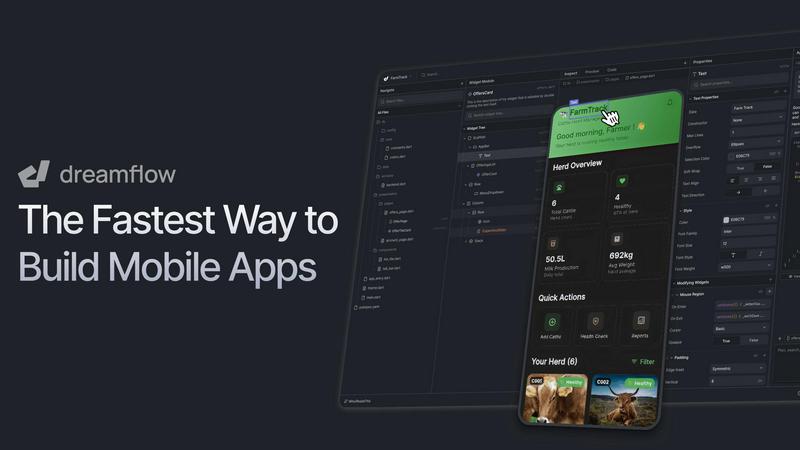
Dreamflow is an AI-powered visual builder that transforms ideas into production-ready mobile apps in minutes.
Last updated: March 1, 2026

Miget
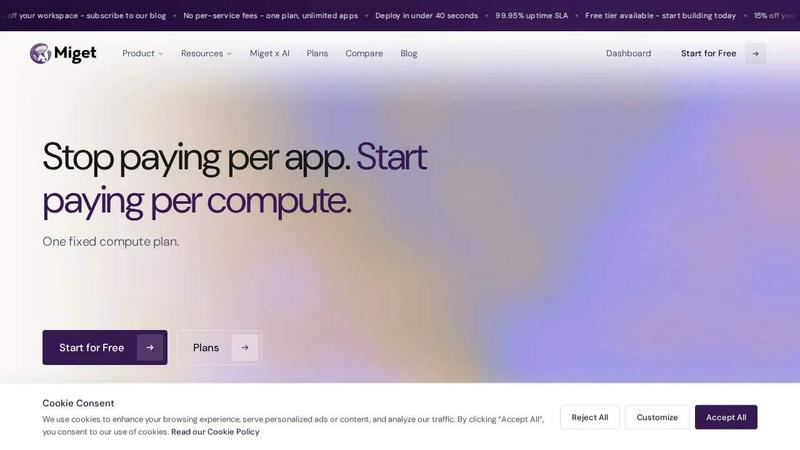
Miget offers one flat-rate plan for unlimited app deployments, eliminating per-service fees and surprise costs.
Last updated: April 13, 2026
Visual Comparison
Dreamflow
Miget
Feature Comparison
Dreamflow
Tri-Surface Editing
Dreamflow's tri-surface editing feature allows users to navigate effortlessly between AI prompts, a visual canvas, and full code. This seamless integration ensures that all changes are synchronized, empowering users to choose their preferred mode of operation at any point in the development process.
AI-Powered Development
The platform leverages smart AI technology that understands coding patterns and best practices. This context-aware AI assists users in generating app features intelligently, significantly speeding up the development cycle and ensuring that the final product adheres to industry standards.
Responsive Design for All Screens
With Dreamflow, developers can create robust applications that adapt to various screen sizes. The platform utilizes Flutter's capabilities to facilitate the deployment of apps across the App Store, Play Store, and web with just a few clicks, ensuring a consistent user experience on all devices.
Backend Integrations
Dreamflow supports immediate integration with popular backend services like Firebase and Supabase. This feature enables developers to build full-stack applications that are scalable from day one, eliminating the need for extensive backend setup and maintenance.
Miget
Unlimited Services per Plan
Miget's foundational feature is its billing model. Once you choose a compute plan, you can deploy an unlimited number of applications, managed PostgreSQL or Redis databases, and background workers within that allocated resource pool. This eliminates per-service fees, turning infrastructure from a complex budgeting puzzle into a single, predictable line item. It encourages architectural experimentation and scaling without the fear of incremental costs for every new microservice or preview environment.
GitHub-Native Deployments & Preview Apps
Integration with GitHub is seamless and powerful. Connecting a repository enables push-to-deploy functionality for any branch. Every pull request automatically generates a full-stack preview environment with a unique, shareable URL, complete with its own database and services. This feature, coupled with aggressive build caching, enables the advertised average deploy time of under 40 seconds, streamlining development workflows and collaboration.
Managed Databases Inside Compute
Unlike other platforms that charge extra for data services, Miget includes managed databases like PostgreSQL, MySQL, and Valkey (Redis-compatible) within your selected compute plan. There is no separate billing for these essential components. They run with full isolation and are seamlessly integrated into the deployment and cloning workflows, providing a true full-stack experience without hidden costs.
Full-Stack Cloning & Instant Redeploys
For testing and staging, Miget allows you to clone an entire application stack—including its code, database schema, and data—with a single click. This creates a perfect replica for debugging or development. Combined with intelligent buildpacks (Migetpacks) that auto-detect application stacks and cache dependencies, this enables incredibly fast and reliable redeploys, ensuring developers spend less time waiting and more time building.
Use Cases
Dreamflow
Startups and MVP Development
For startups looking to validate their business ideas quickly, Dreamflow serves as the perfect solution. Entrepreneurs can use the platform to rapidly develop a minimum viable product (MVP), allowing them to test market assumptions without extensive investment in time and resources.
Educational Institutions
Dreamflow can be effectively utilized by educational institutions to teach students about app development. Its user-friendly interface and comprehensive features make it an ideal teaching tool for both novice and advanced learners, facilitating hands-on experience in mobile app creation.
Freelancers and Agencies
Freelancers and development agencies can leverage Dreamflow to streamline their project workflows. The platform’s capabilities allow them to build and deploy apps for clients efficiently, offering a competitive edge in delivering high-quality solutions within tight deadlines.
Internal Business Tools
Companies can use Dreamflow to create tailored internal business applications that address specific operational needs. Whether it is for project management, inventory tracking, or customer relationship management, Dreamflow enables organizations to build custom solutions that enhance productivity and efficiency.
Miget
Indie Hackers & Solo Developers
For individuals launching startups or side projects, Miget is ideal. It offers a full PaaS experience—application hosting, database, and cache—on a single, fixed monthly bill. The predictable pricing prevents budget overruns common with usage-based services, while features like GitHub push-to-deploy and preview apps enable rapid prototyping and iteration without operational complexity.
Growing Engineering Teams
Teams transitioning from prototype to product benefit from Miget's scalable yet cost-contained model. Horizontal autoscaling occurs within the purchased compute allocation, so performance can improve without changing the bill. The platform supports team roles, audit logs, custom domains, and multi-region deployment, providing the necessary governance and reliability for production applications without platform migration pain.
AI-Powered Development & Vibe Coding
Developers leveraging AI coding assistants find a perfect partner in Miget. The platform's simplicity allows for instant deployment of AI-generated code. With features like one-click infrastructure setup via skills.md and the ability to share preview URLs with non-technical stakeholders, it bridges the gap between rapid AI prototyping and having a live, shareable application in minutes.
Enterprise Development & Compliance
Larger organizations can use Miget to standardize developer platforms while maintaining control. It supports bringing your own cloud (BYOC) or bare metal, and offers enterprise-grade tooling like Helm charts, Terraform modules, and custom orchestration. This, combined with dedicated support, SLAs, and compliance tooling, allows enterprises to offer a simple internal PaaS with strict governance and security.
Overview
About Dreamflow
Dreamflow is an innovative platform crafted to transform the landscape of mobile app development, offering a unique blend of simplicity and power. Designed for developers, entrepreneurs, and creators alike, Dreamflow allows users to build mobile applications that cater to their specific requirements while maintaining complete control throughout the process. Its standout feature is the tri-surface editing approach, which harmonizes AI-powered prompts, an intuitive visual canvas, and comprehensive Flutter code. This enables users to switch seamlessly between these modes without losing synchronization, making it accessible to novices and seasoned developers alike. With the esteemed backing of the FlutterFlow team and a thriving community of over 2 million builders, Dreamflow is positioned as an invaluable tool for anyone looking to bring their app ideas to fruition efficiently and effectively. The platform not only accelerates the app development journey but also enhances collaboration, scalability, and deployment, making it a must-have for modern app creators.
About Miget
Miget is a revolutionary Platform-as-a-Service (PaaS) that fundamentally rethinks cloud infrastructure billing. It shifts the paradigm from a traditional, component-based pricing model to a simple, capacity-based approach. Instead of paying separately for each application, database, and background worker, users select a fixed compute plan and can deploy an unlimited number of services within that reserved capacity. This model is designed for developers, indie hackers, growing startups, and enterprises who are frustrated by the escalating and unpredictable costs of conventional PaaS offerings. Its core value proposition is predictable pricing, eliminating billing surprises and empowering teams to experiment, iterate, and scale their full-stack applications—from simple side projects to complex microservices architectures—without financial penalty. Built on robust, isolated Kubernetes infrastructure, Miget combines the affordability and control of a VPS with the developer-friendly simplicity and automation of platforms like Heroku, offering features like zero-config Git deploys, managed databases, automatic TLS, and preview environments for every pull request.
Frequently Asked Questions
Dreamflow FAQ
What types of applications can I build with Dreamflow?
Dreamflow is versatile and allows users to create a wide range of applications, from simple mobile apps to complex full-stack solutions, all adaptable to various screen sizes and platforms.
Is Dreamflow suitable for beginners?
Yes, Dreamflow is designed to accommodate all skill levels. Its intuitive interface, combined with AI-powered prompts and visual editing, makes it easy for beginners to start building their apps without prior coding experience.
What kind of support does Dreamflow offer?
Dreamflow provides dedicated support for its users, particularly for those on the Enterprise plan. This includes onboarding assistance, advanced access control, and personalized engagement to ensure a smooth development experience.
Can I export my project from Dreamflow?
Absolutely! Dreamflow allows users to export their full Flutter project, providing flexibility for developers who want to run their applications locally or further customize the code outside the platform.
Miget FAQ
How does the unlimited services model actually work?
You select a compute plan based on the total CPU and memory resources you need (e.g., 2 vCPUs, 4GB RAM). Within that isolated resource "container," you can deploy as many apps, databases (PostgreSQL, Redis, etc.), and workers as the resources can support. You are not charged for the quantity of services, only for the underlying compute capacity you reserved. This allows you to pack multiple lightweight services or run a few heavy ones, all for one price.
What is included in the 99.95% uptime SLA?
The 99.95% uptime SLA is a service level agreement that applies to the platform's core infrastructure and control plane. It guarantees that the platform itself will be operational and available for deployment and management operations. It covers the API, dashboard, and deployment orchestration systems. Application-level uptime depends on your code and resource allocation, but the underlying platform's high availability is formally committed.
Is there really a free tier?
Yes, Miget offers a free tier to allow developers to start building and testing the platform at no cost. This tier includes a limited amount of compute resources, which is sufficient for running small applications, prototypes, or learning the platform's features. It's designed to let you experience the core workflow—Git integration, deployments, and preview apps—before committing to a paid plan.
How are preview environments for pull requests billed?
This is a key advantage of Miget's model. Preview environments are not billed separately. They are created using a portion of the compute resources from your main plan. When you create a pull request, it spins up a preview environment within your existing allocated capacity. This means you can have multiple active previews simultaneously without any additional fees, fostering a culture of testing and review.
Alternatives
Dreamflow Alternatives
Dreamflow is a cutting-edge visual AI builder that redefines mobile app development, catering to developers, entrepreneurs, and creators alike. With its tri-surface editing capabilities and AI-powered features, it provides a versatile platform for building production-ready mobile applications. Users often seek alternatives to Dreamflow for various reasons, including pricing concerns, specific feature requirements, or the need for compatibility with different platforms. When selecting an alternative, it’s essential to consider factors such as ease of use, flexibility in design and coding, integration capabilities, and the overall support provided by the platform. As the mobile app development landscape evolves, users may find that their needs change or that they require specific functionalities not offered by Dreamflow. Additionally, budget constraints or specific project demands might lead them to explore other options. In this search for alternatives, it's crucial to assess the learning curve, the richness of features, and the community or support resources available to ensure a smooth development experience and successful project outcomes.
Miget Alternatives
Miget is a modern platform-as-a-service (PaaS) solution that reimagines cloud hosting billing. It belongs to the broader category of low-code/no-code and developer platforms that simplify deployment. Instead of charging per application or database, Miget offers a flat-rate compute plan where you can run an unlimited number of services, aiming to eliminate unpredictable per-service costs. Users often explore alternatives for various reasons. Some may need specific features Miget doesn't offer, while others might have outgrown its plans or require a different pricing structure. Platform philosophy, from vendor lock-in concerns to specific compliance or integration needs, also drives the search for other options. When evaluating alternatives, consider your primary bottleneck. Is it cost predictability, specific managed services, deployment workflow, or scalability? The ideal platform aligns with your technical requirements, budget model, and long-term operational philosophy, ensuring it grows with your projects.