
diffray vs Skene
Side-by-side comparison to help you choose the right AI tool.

diffray
Diffray's AI agents review code with high accuracy, catching real bugs while drastically reducing false alarms.
Last updated: February 28, 2026

Skene turns your own codebase into a prompt-driven growth engine you fully control.
Last updated: February 28, 2026
Visual Comparison
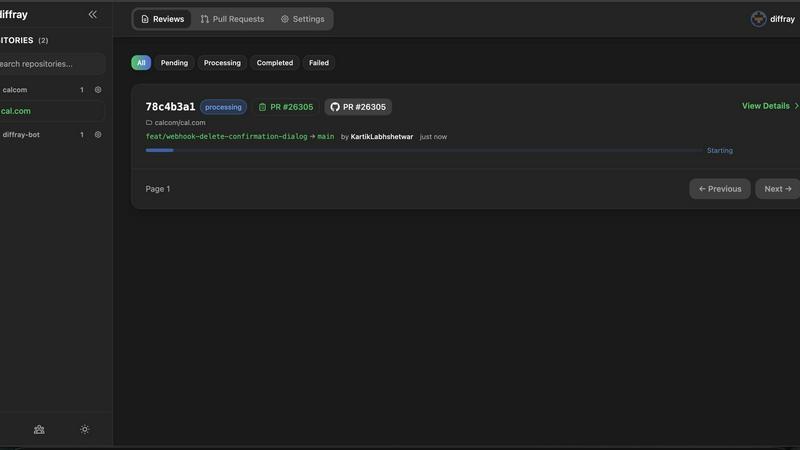
diffray
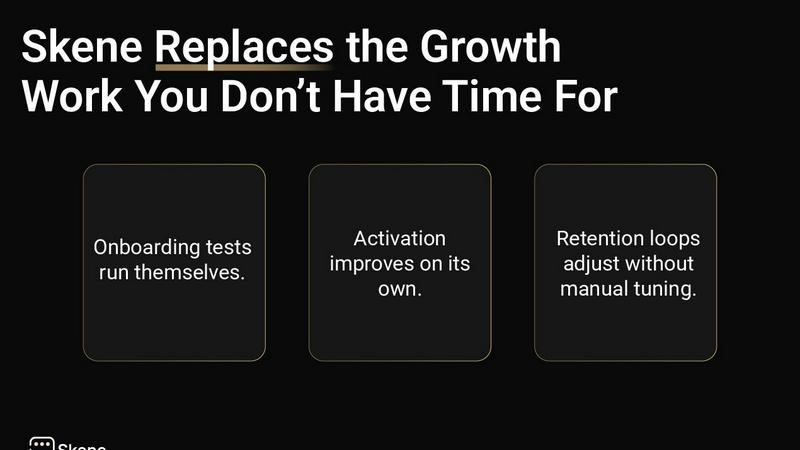
Skene
Feature Comparison
diffray
Multi-Agent Specialized Architecture
Unlike monolithic AI tools that use a single model for all tasks, diffray's power stems from its orchestrated fleet of over 30 specialized agents. Each agent is fine-tuned to excel in a specific niche, such as detecting SQL injection vulnerabilities, identifying memory leaks in specific languages, flagging code style deviations, or analyzing front-end code for SEO best practices. This division of labor ensures that every aspect of a code change is examined by an expert, leading to incredibly accurate and context-aware feedback that generic models simply cannot match.
Drastic Noise and False Positive Reduction
A primary pain point in automated code review is the deluge of irrelevant or incorrect warnings. diffray's targeted agent strategy directly combats this, achieving a documented 87% reduction in false positives. By having agents that understand the specific context and rules of their domain, the tool filters out the "noise" that plagues other systems. This means developers spend virtually no time dismissing bogus alerts and can immediately trust and act upon the issues diffray surfaces, streamlining the review workflow significantly.
Comprehensive Issue Detection Matrix
diffray's multi-faceted analysis ensures a 360-degree review of every pull request. The system concurrently checks for security flaws, performance bottlenecks, logical bugs, adherence to coding standards, and maintainability concerns. This holistic approach means that a single PR pass can uncover a wide spectrum of potential problems—from a critical authentication bypass to a simple but costly inefficient loop—that might be missed in a manual review or by a less comprehensive tool, ultimately leading to more robust and higher-quality software.
Seamless Integration and Actionable Feedback
diffray is built for the developer's workflow, integrating directly into popular version control platforms like GitHub and GitLab. It provides clear, concise, and actionable comments directly on the pull request diff. Feedback is not just a generic warning; it often includes explanations of why something is an issue and may suggest concrete fixes or best practice examples. This educational aspect accelerates developer learning and team standardization, turning every code review into a learning opportunity.
Skene
Codebase-Native Signal Detection
Skene integrates directly with your repository and IDE, performing deep structural analysis to automatically detect growth signals and user friction points from your code itself. It scans framework patterns, component trees, and user flow logic to identify onboarding bottlenecks, activation opportunities, and retention risks without requiring manual instrumentation or external tagging. This creates a living, code-accurate map of your user journey.
Autonomous Growth Loop Implementation
Moving beyond analysis, Skene autonomously generates and deploys optimized growth loops. Based on its analysis, it can prompt engineers or AI agents to implement changes, or manage deployments itself to improve funnels. This transforms growth from a manual, campaign-based effort into a continuous, automated process that ships improvements as seamlessly as new features.
Prompt-Driven Growth Infrastructure
Growth logic becomes as malleable and promptable as any other part of your codebase. Developers and AI agents can interact with Skene's context layer using natural language prompts to query analytics, request optimizations for specific flows, or generate implementation code. This shifts the paradigm from configuring rigid dashboards to commanding an intelligent growth engine.
Self-Healing & Version-Controlled Logic
Because Skene's intelligence is built upon your actual code, its recommendations and implemented flows automatically update and adapt with every git commit and deployment. There's no risk of UI tour scripts breaking after a redesign; the growth logic is versioned and tested alongside the product, ensuring resilience and maintainability.
Use Cases
diffray
Accelerating Enterprise Development Cycles
For large organizations with multiple teams and high PR volume, manual review backlogs can cripple velocity. diffray acts as a first-line, expert reviewer that never sleeps. It automatically analyzes every PR, providing immediate, high-quality feedback to authors before human reviewers even begin. This pre-qualification reduces the cognitive load on senior engineers, cuts average review time by over 70%, and allows enterprises to maintain high code quality while shipping features faster.
Onboarding Junior Developers and Enforcing Standards
New team members often struggle with codebase-specific conventions and best practices. diffray serves as an always-available mentor, providing instant feedback on code style, architecture patterns, and potential pitfalls as they write code. This real-time guidance helps juniors learn faster and produce code that aligns with team standards from day one, reducing the review burden on senior developers and improving overall code consistency.
Proactive Security and Compliance Auditing
In regulated industries or for applications handling sensitive data, security cannot be an afterthought. diffray's dedicated security agents continuously scan every code change for vulnerabilities like injection flaws, insecure dependencies, and misconfigurations. This integrates security directly into the development process (shifting it left), enabling teams to identify and remediate risks early, often before the code is even merged, which is far more efficient and secure than post-hoc penetration testing.
Maintaining Code Quality in Fast-Paced Startups
Startup development teams need to move quickly without accruing technical debt. diffray provides the scalable "quality gate" that a small team lacks. It ensures that even under tight deadlines, fundamental best practices, performance considerations, and bug-prone patterns are caught automatically. This allows small, agile teams to maintain a high standard of code health and long-term maintainability without sacrificing their crucial development speed.
Skene
Accelerating Time-to-Value for New Users
For products struggling with user activation, Skene autonomously audits the onboarding funnel directly from the code, identifying unnecessary steps or confusing UI patterns. It then generates and implements streamlined flows, tooltips, or progress trackers to guide users to their "aha moment" faster, dramatically improving activation rates without constant manual experimentation.
Reducing Engineering Overhead on Growth Tasks
Engineering teams burdened with building and maintaining one-off analytics events, A/B test frameworks, and lifecycle emails can offload this work to Skene. It handles the instrumentation, analysis, and iterative optimization, allowing developers to focus on core product features while still shipping data-driven growth improvements.
Enabling AI Agents to Own Growth Outcomes
Companies leveraging AI agents for development can provide them with a rich, code-aware growth context layer via Skene. An agent can be tasked with "improving retention for feature X" and, using Skene's analysis and tooling, understand the current flow, propose changes, and even implement the necessary code modifications autonomously.
Consolidating a Fragmented Growth Stack
Startups tired of managing multiple point solutions for analytics, user onboarding, and email automation can replace them with Skene's unified infrastructure. It eliminates the performance tax of external scripts, breaks down data silos, and provides a single source of truth for growth logic that is owned, versioned, and evolved within the main codebase.
Overview
About diffray
In the modern software development lifecycle, the code review process stands as a critical but often time-consuming bottleneck. diffray reimagines this essential practice through the lens of specialized artificial intelligence. It is not merely another AI code reviewer; it is a sophisticated, multi-agent system engineered to dissect pull requests with surgical precision. At its core, diffray addresses the fundamental flaw of generic AI models: overwhelming noise and false positives that frustrate developers and obscure genuine issues. By deploying a dedicated ensemble of over 30 specialized AI agents, each an expert in a distinct domain like security vulnerabilities, performance anti-patterns, bug detection, language-specific best practices, and even SEO considerations for web code, diffray delivers hyper-targeted, actionable feedback. This architectural choice is its primary value proposition, transforming code review from a broad, shallow scan into a deep, multi-faceted analysis. It is designed for development teams of all sizes who seek to enhance code quality, accelerate release cycles, and empower their engineers. The results speak volumes: an 87% reduction in false positives, the identification of three times more genuine issues, and a dramatic cut in average PR review time from 45 to just 12 minutes per week. diffray shifts the developer's role from tedious line-by-line scrutiny to strategic oversight, allowing them to focus on architecture, innovation, and what truly matters in their code.
About Skene
Skene is not just another growth tool; it's a foundational reimagining of how software achieves product-led growth (PLG). It functions as an AI-powered, fully automated PLG iteration engine that integrates as intrinsic infrastructure directly into your development environment. Unlike external services that bolt on with performance-draining snippets, Skene connects to your codebase and IDE, analyzing your application's structure and user interaction data to autonomously identify friction points, optimize critical user flows, and deploy improvements. Its core value proposition is the consolidation and automation of growth work: it replaces manual A/B testing, fragmented analytics dashboards, and brittle third-party scripts with a self-learning system that treats growth logic as version-controlled code you own. Designed for indie developers, early-stage startups, and established PLG companies, Skene acts as a "growth team in a box." It continuously optimizes key funnels like onboarding, activation, and retention, freeing engineering and product teams from constant manual optimization overhead. By deriving signals directly from the source code, it creates a powerful, actionable context layer for your AI agents and ensures your growth strategies evolve in lockstep with every product deployment, making data silos and performance-breaking external dependencies obsolete.
Frequently Asked Questions
diffray FAQ
How is diffray different from other AI code review tools like GitHub Copilot or SonarQube?
diffray's fundamental difference is its multi-agent, specialized architecture. Tools like GitHub Copilot are primarily AI pair programmers focused on code generation, not deep analysis. Traditional static analysis tools like SonarQube often rely on rule-based engines that can generate significant noise. diffray uses multiple, fine-tuned AI models each designed for a specific review domain (security, performance, etc.), resulting in more accurate, context-aware, and actionable feedback with dramatically fewer false positives than these alternatives.
What programming languages and frameworks does diffray support?
diffray is designed to be broad and versatile. Its multi-agent system includes specialists for all major programming languages and popular web frameworks. This includes, but is not limited to, JavaScript/TypeScript (React, Vue, Angular), Python (Django, Flask), Java, C#, Go, Ruby on Rails, and PHP. The specialized agents understand the unique idioms, best practices, and common pitfalls associated with each language and ecosystem.
How does diffray handle the privacy and security of our source code?
Code privacy and security are paramount. diffray can be deployed following strict data handling protocols. Typically, it operates by receiving only the diff (the changed code) from a pull request for analysis, not the entire codebase. Many deployments use secure, encrypted connections, and data retention policies can be configured. It is advisable to review diffray's specific security whitepaper and compliance certifications (like SOC 2) for detailed information on their data protection measures.
Can we customize the rules or feedback provided by diffray's agents?
Yes, diffray is built for adaptability. While its core agents provide expert out-of-the-box analysis, teams can often customize severity levels, ignore specific patterns that are accepted in their codebase, and even define custom rules or guidelines. This ensures that the tool aligns perfectly with your team's specific coding standards and project requirements, making the feedback 100% relevant to your context.
Skene FAQ
How is Skene different from traditional customer experience software?
Traditional tools like tour builders or analytics platforms are external services that require manual configuration, rely on fragile DOM selectors that break with UI updates, and create data silos. Skene is infrastructure that reads your codebase to automatically generate and maintain context-aware flows. It updates itself with each deploy and keeps all logic and data within your owned code environment.
How long does it take to set up Skene?
Setup is designed to be exceptionally fast, typically under 60 seconds. You grant Skene read-only access to your GitHub or GitLab repository. It then automatically analyzes your codebase structure to generate initial PLG flows and insights without requiring any initial code changes or API integrations.
Is my source code secure with Skene?
Absolutely. Security is a primary design principle. Skene only ever requires read-only access to your repository. All code analysis is performed in a secure, isolated environment. Your proprietary code never becomes training data for external models, and you maintain full ownership and control.
What kind of analytics does Skene provide?
Skene offers a real-time analytics dashboard focused on actionable growth metrics. This includes user progress tracking, funnel completion rates, engagement heatmaps, and bottleneck identification. It provides insights like time-to-value and measures the direct impact of automated improvements, all derived from your codebase signals rather than external pageview trackers.
Alternatives
diffray Alternatives
diffray is an AI-powered code review tool within the development and DevOps category. It stands out by utilizing a multi-agent architecture to analyze code for security, performance, and best practices, aiming to drastically reduce false positives and review time. Users often explore alternatives for various reasons. These can include budget constraints and specific pricing models, the need for integration with platforms beyond GitHub, or a desire for different feature sets like support for additional programming languages or different reporting interfaces. When evaluating alternatives, key considerations should include the accuracy of the AI and its reduction of false positives, the depth of codebase context and integration capabilities, and the overall clarity and actionability of the feedback provided to developers. The goal is to find a tool that enhances code quality without disrupting the development workflow.
Skene Alternatives
Skene is an AI-powered Product-Led Growth (PLG) engine that integrates directly with your codebase. It belongs to the category of growth automation and product analytics infrastructure, designed to autonomously optimize user funnels by treating growth as version-controlled code. This represents a shift from traditional, manual growth hacking and external analytics services. Users may explore alternatives for several common reasons. These include budget constraints, as advanced automation tools often carry a premium. Others might seek solutions with a different technical approach, such as those focusing purely on analytics dashboards without deep code integration, or platforms that cater to non-technical teams. The need for specific integrations, company size, or a preference for more manual control over experiments can also drive the search. When evaluating alternatives, key considerations should align with your core needs. Assess the depth of integration with your development stack and whether the solution treats growth logic as owned, versionable code. Consider the level of automation versus manual control offered, the robustness of signal detection beyond basic click-tracking, and how the tool scales with your product's complexity. Ultimately, the choice hinges on finding the right balance between powerful automation and the transparency and ownership you require over your growth processes.