
Crawlkit vs Skippership
Side-by-side comparison to help you choose the right AI tool.

Crawlkit
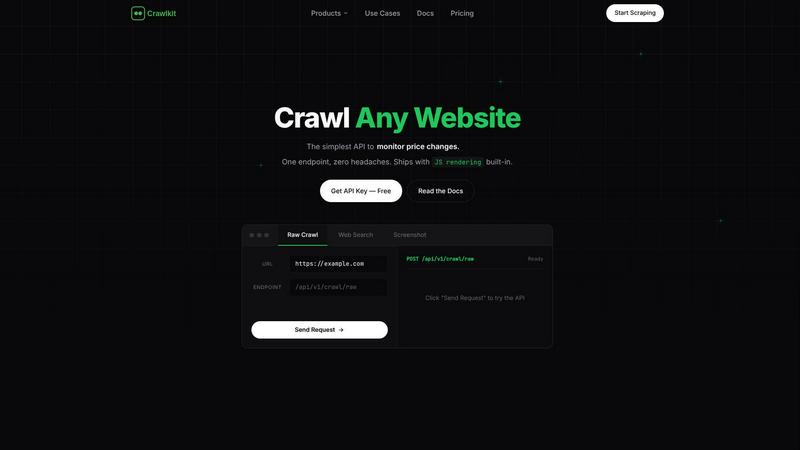
CrawlKit is the reliable API platform that turns any website into structured data with a single call.
Last updated: February 28, 2026

Skippership
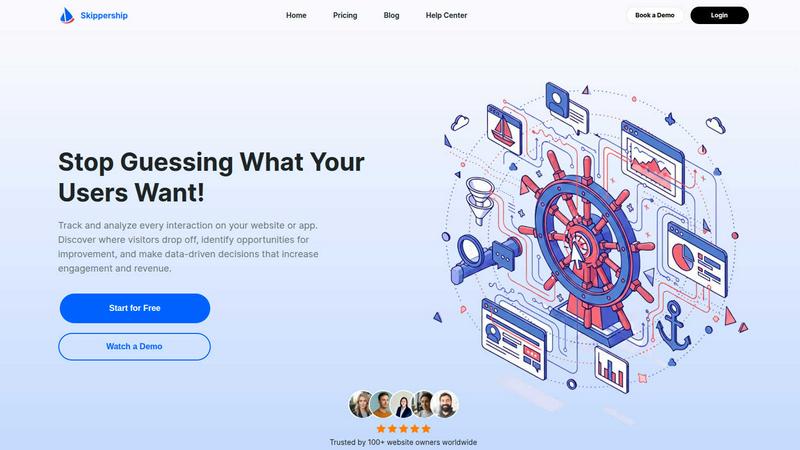
Skippership uses AI to find where users get stuck and helps you fix it, all while respecting your privacy.
Last updated: February 28, 2026
Visual Comparison
Crawlkit
Skippership
Feature Comparison
Crawlkit
Unified API for Diverse Sources
Crawlkit consolidates access to a wide array of data sources under one simple API. Whether you need data from LinkedIn company pages, Instagram profiles, Google Search results, or mobile app stores, you use the same consistent request format and authentication. This eliminates the need to integrate and manage multiple specialized scraping tools or APIs, drastically simplifying your data stack and reducing code complexity.
Robust Anti-Bot Infrastructure Abstraction
The platform's core engineering magic lies in its handling of the hardest parts of web scraping. It automatically manages rotating proxies, executes JavaScript for single-page applications, bypasses CAPTCHAs, and respects dynamic rate limits. This infrastructure is continuously updated against evolving anti-bot measures, guaranteeing high success rates and delivering complete, rendered page data without requiring any developer intervention or custom configuration.
Developer-First SDKs and Playground
Crawlkit is built for seamless integration into developer workflows. It provides official SDKs for popular languages like Node.js, allowing you to start fetching structured data in minutes with just a few lines of code. The interactive Playground lets you test API endpoints in real-time, see the parsed JSON output, and generate ready-to-use code snippets, making prototyping and debugging incredibly straightforward.
Transparent, Credit-Based Pricing
Crawlkit employs a clear, pay-as-you-go pricing model based on credits. Each API endpoint has a fixed credit cost, and you only pay for successful requests. Credits never expire, there are no monthly commitments or hidden fees, and volume discounts apply automatically. This model provides predictable costs, aligns spending directly with value received, and offers flexibility for projects of any scale without lock-in.
Skippership
AI-Powered Session Replays
Skippership's session replays go beyond simple recording. Its AI engine actively reviews these replays to interpret user actions, automatically flagging critical moments like rage clicks, hesitation, or unexpected drop-offs. This means you're not just watching hours of footage; you're presented with curated insights that highlight exactly where users struggle, turning qualitative observation into quantifiable, actionable data for immediate improvement.
Interactive Heatmaps (Click, Scroll, Move)
Gain instant visual understanding of user attention with comprehensive heatmaps. These maps aggregate data to show exactly where users click, how far they scroll, and where their mouse hovers. This reveals which page elements are engaging and which are being ignored, allowing you to optimize layout, content placement, and call-to-action buttons to dramatically improve engagement and guide users toward conversion.
Intelligent Goal & Funnel Tracking
Define and track key user actions—such as purchases, sign-ups, or form submissions—with precision. Skippership's funnel analysis visually maps the user journey toward these goals, identifying at which specific step visitors abandon the process. This allows teams to measure performance in real-time, uncover conversion-blocking patterns, and implement targeted fixes to streamline the path to completion.
Privacy-First, Secure Data Architecture
Built with trust and compliance at its core, Skippership ensures all user data is secured with SSL/TLS encryption and stored on reliable, secure cloud infrastructure. The platform is designed to align with GDPR and CCPA standards, processing only the necessary interaction data while avoiding personal or sensitive details. This allows teams to gain deep insights without compromising on user privacy or legal compliance.
Use Cases
Crawlkit
CRM and Sales Intelligence Enrichment
Automatically enrich lead and contact records in your CRM with fresh, structured data. Use the LinkedIn API to pull job titles, company information, and professional details. This transforms manual research into an automated pipeline, enabling sales teams to personalize outreach at scale and gain deeper insights into their prospects directly within their existing tools.
Competitive and Market Intelligence
Systematically track competitors' digital footprints. Monitor their Instagram for follower growth and engagement trends, scrape their app store reviews for user sentiment analysis, or track their public job postings on LinkedIn to infer hiring strategies. Crawlkit turns sporadic manual checks into structured, historical datasets for strategic analysis.
Social Media Monitoring and Analytics
Build dashboards to track brand mentions, campaign performance, or industry trends across the web. Use the Search API to gather news and forum mentions, while the Instagram API provides precise metrics on public profiles. This enables marketing teams to measure ROI, understand audience sentiment, and identify influencers or trending content.
Product and Review Aggregation
Create a comprehensive view of your product's reputation by aggregating user reviews from multiple app stores (Play Store, App Store). Analyze competitor products by scraping their detail pages and review sections. This data is crucial for product managers to prioritize feature development, understand user pain points, and conduct competitive benchmarking.
Skippership
Reducing E-commerce Cart Abandonment
E-commerce teams use Skippership to dissect the checkout funnel. By analyzing session replays and heatmaps, they can identify precise friction points—such as a confusing shipping calculator, an unexpected error message, or a poorly placed trust signal—that cause shoppers to abandon their carts. The AI's suggestions then guide targeted optimizations, directly recovering lost revenue.
Optimizing SaaS Product Onboarding
Product managers at SaaS companies leverage Skippership to understand how new users interact with their onboarding flows. Watching session replays reveals where users get confused or drop off, while goal tracking measures completion rates for key setup steps. This data is used to simplify complex processes, clarify instructions, and improve user activation and retention.
Validating UX/UI Design Changes
UX designers employ Skippership's heatmaps and session recordings to A/B test new designs or page layouts. Instead of relying on assumptions, they can see exactly how real users interact with new elements—where they click, what they ignore, and how they navigate. This provides concrete, behavioral evidence to validate design decisions before full-scale deployment.
Enhancing Content Marketing Performance
Marketing teams utilize Skippership to understand how visitors engage with blog posts, landing pages, and content offers. Scroll heatmaps show how far users read, while click maps reveal which CTAs are effective. This insight allows for the optimization of content structure, placement of lead magnets, and improvement of overall engagement metrics.
Overview
About Crawlkit
Crawlkit is a sophisticated web data extraction platform engineered specifically for developers and data teams. It addresses the core frustration of modern web scraping: the immense operational overhead. Instead of wrestling with rotating proxies, headless browsers, CAPTCHAs, and rate limits, Crawlkit provides a single, reliable API that abstracts away this complexity. The platform is built on a robust infrastructure designed for high success rates and scalability, ensuring consistent data access even as target websites update their anti-bot protections. Its primary value proposition is enabling users to focus entirely on data analysis and application logic, not on building and maintaining fragile scraping infrastructure. With a developer-first philosophy, it offers a simple REST API and SDKs for popular languages, making it accessible for projects of any scale, from one-off data pulls to enterprise-level data pipelines. From a business perspective, it turns the variable cost and risk of in-house scraping into a predictable, fixed-cost utility. For the data engineer, it eliminates the endless cycle of parser maintenance and infrastructure tuning, offering a "set it and forget it" solution for reliable data ingestion.
About Skippership
Skippership represents a paradigm shift in the realm of digital analytics, moving beyond passive data collection to active, intelligent interpretation. It is an all-in-one, AI-powered user behavior analytics platform engineered to eliminate the guesswork that plagues website and app optimization. Designed for a diverse audience—including product managers, UX designers, marketing teams, and business owners—Skippership consolidates critical tools like session recordings, interactive heatmaps, goal tracking, and funnel analysis into a single, intuitive dashboard. Its core innovation lies in its proactive AI engine, which doesn't just present raw data but actively reviews user sessions, interprets actions, and pinpoints exact friction points, such as checkout errors or confusing navigation. This transforms overwhelming interaction data into clear, actionable intelligence, empowering teams to transition from reactive problem-solving to proactive experience enhancement. The ultimate value proposition is clear: by providing a crystal-clear window into real user behavior, Skippership enables truly data-driven decisions that drive increased engagement, reduce cart abandonment, and systematically boost conversion rates.
Frequently Asked Questions
Crawlkit FAQ
What happens if a request fails?
Crawlkit operates on a "refund on failure" policy. If an API request fails to return the requested structured data, the credits spent on that request are automatically refunded to your account. The platform's infrastructure is designed for high reliability, but this guarantee ensures you only pay for successful, usable data.
Do credits expire?
No, purchased credits never expire. You can buy a bulk pack of credits and use them at your own pace, whether over weeks, months, or years. This provides maximum flexibility and eliminates pressure to use the service within a specific billing cycle, making it ideal for both sporadic and continuous data needs.
Can I request a new data source or API?
Yes. Crawlkit encourages users to talk to them about needed APIs that are not yet available. They have a policy of building custom data source APIs based on user demand. This means the platform can evolve to meet your specific project requirements, extending its value beyond the currently listed integrations.
How is Crawlkit different from building my own scraper?
Building your own scraper involves significant hidden costs: ongoing maintenance of parsers, managing proxy networks, solving CAPTCHAs, handling rate limits, and ensuring scalability. Crawlkit abstracts all this operational burden. You trade variable engineering time and infrastructure cost for a fixed, predictable API cost, allowing your team to focus on deriving insights from data, not collecting it.
Skippership FAQ
How does Skippership's AI differ from other analytics tools?
Unlike traditional tools that simply dump data into dashboards, Skippership's AI actively works for you. It reviews session replays to automatically detect and log critical user events like rage clicks, hesitation, and drop-offs. It then interprets these actions to pinpoint the exact cause of friction and suggests practical solutions, transforming raw data into clear, prescriptive insights.
Is Skippership difficult to set up and use?
Not at all. Skippership is designed for a no-code, fast setup that can be completed in minutes—simply add a snippet to your website. The platform is built with a user-friendly, intuitive interface, making it accessible for everyone on the team, from marketers to product managers, without requiring technical expertise.
How does Skippership ensure user privacy and data security?
Skippership is built on a privacy-first architecture. It uses SSL/TLS encryption for all data in transit and at rest, employs secure cloud hosting, and is designed to comply with GDPR and CCPA standards. The platform is configured to avoid collecting personal or sensitive user information, focusing solely on interaction data to provide insights while maintaining strict privacy.
Will adding Skippership slow down my website?
Skippership is engineered for minimal performance impact. The tracking script is lightweight and optimized to ensure your site's speed and user experience remain fast and seamless. You can gain deep behavioral insights without compromising on page load times or overall site performance.
Alternatives
Crawlkit Alternatives
Crawlkit is a developer-centric platform in the web data extraction and analytics category. It provides a robust API to simplify accessing website data and screenshots by handling complex infrastructure like proxies and anti-bot systems internally. This allows technical teams to bypass operational headaches and focus on their core data workflows. Users explore alternatives for various practical reasons. Cost considerations, specific feature requirements like data point limits or export formats, and the need for a different user interface—such as a visual scraper versus an API-first tool—are common drivers. The scale of a project, from a simple one-time scrape to a massive, ongoing data pipeline, also significantly influences the choice. When evaluating options, key criteria include the platform's reliability and success rate against modern websites, its scalability and performance under load, and the total cost of ownership. Security and data handling practices are paramount, as is the quality of developer experience, including API design, documentation, and available SDKs.
Skippership Alternatives
Skippership is a comprehensive AI-powered user behavior analytics platform. It falls squarely into the digital analytics and optimization category, designed to help teams understand and improve user experience by identifying friction points through session replays, heatmaps, and funnel analysis. Users often explore alternatives for various practical reasons. These can include budget constraints, the need for a platform that integrates with a specific tech stack, or a desire for a different feature emphasis, such as more robust survey tools or a simpler interface for smaller teams. The search for the right tool is a natural part of finding the perfect operational fit. When evaluating alternatives, key considerations should align with your core needs. Focus on the depth of insights provided, the intuitiveness of the dashboard, the strength of AI and automation features, and the overall value relative to cost. The goal is to find a solution that turns user data into clear, actionable steps for improvement.