
Coursebricks vs qtrl.ai
Side-by-side comparison to help you choose the right AI tool.

Coursebricks
Coursebricks is your all-in-one platform for seamlessly managing training courses, scheduling, payments, and CRM.
Last updated: March 1, 2026

qtrl.ai
qtrl.ai scales QA with AI agents while ensuring full team control and governance.
Last updated: March 4, 2026
Visual Comparison
Coursebricks
qtrl.ai
Feature Comparison
Coursebricks
Course Scheduling
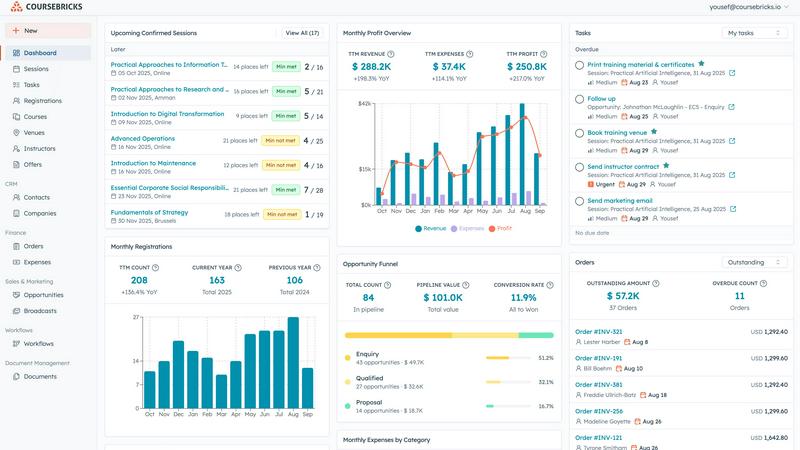
Coursebricks provides a unified view for managing your entire course schedule. Administrators can assign instructors, select venues, and organize training materials all from one platform. This feature ensures that course availability is tracked, conflicts are managed, and team synchronization is achieved without the chaos of switching between various spreadsheets.
Website & Checkout
The platform enables training providers to display and sell courses through a personalized website. With a professional storefront experience, Coursebricks allows users to accept registrations directly, offering options for card payments or invoice-based bookings while automatically capturing customer information into the integrated CRM.
Email Marketing & Broadcasts
Coursebricks enhances course enrollment through targeted email campaigns. With advanced filtering options, users can send personalized promotions tailored to specific audiences. This feature not only boosts enrollment rates but also helps generate leads with automated, segmented campaigns designed to convert prospects into participants.
Automations & Workflows
With Coursebricks, communication becomes automated, allowing users to send confirmation emails, share training materials, and follow up with payment reminders effortlessly. The platform provides full tracking visibility for all automated tasks, making it easier to manage the entire learner experience from a centralized location.
qtrl.ai
Enterprise-Grade Test Management
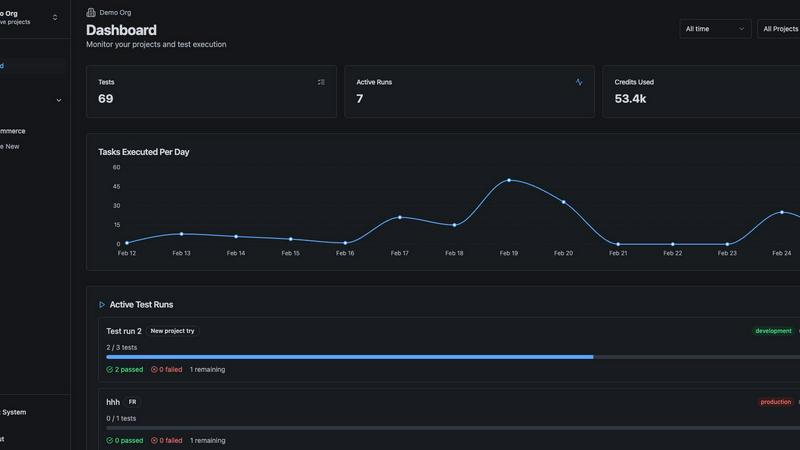
qtrl provides a robust, centralized hub for all QA artifacts. It enables teams to create, organize, and manage test cases, plans, and runs with full traceability back to requirements. This ensures clear audit trails, supports compliance needs, and offers a single source of truth for both manual and automated testing workflows, giving managers complete oversight and control over the quality process.
Autonomous QA Agents
This core feature introduces intelligent automation through AI agents that execute high-level instructions in real browsers. Teams can describe a test in plain English, and the agent performs the actions across defined environments. These agents operate at scale, run continuously or on-demand, and function within strict governance rules, providing automation power without the fragility of traditional script maintenance.
Progressive Automation & Adaptive Memory
qtrl champions a step-by-step journey to automation. Teams begin with human-written instructions, then progress to AI-generated tests, with full review capabilities at each stage. The platform's Adaptive Memory builds a living knowledge base of your application, learning from every interaction and execution to power smarter, more context-aware test suggestions and maintenance over time.
Multi-Environment Execution & Governance
The platform supports secure testing across development, staging, and production environments. It manages per-environment variables and encrypted secrets, ensuring sensitive data is never exposed to AI agents. Built-in governance features like permissioned autonomy levels, full agent visibility, and transparent decision-making ensure enterprise-ready security and foster trust in the automated processes.
Use Cases
Coursebricks
Training Providers
Training providers can leverage Coursebricks to manage their operations more effectively. By integrating all aspects of course management into one platform, they can focus on enhancing the quality of training rather than juggling multiple tools and systems.
Corporate Learning Departments
Corporate learning departments find Coursebricks invaluable for orchestrating training programs for employees. The platform's ability to handle registrations, payments, and reporting simplifies the process of employee education and skills development.
Course Creators
Independent course creators benefit from Coursebricks by having a comprehensive toolset at their disposal. They can create, schedule, and sell courses while automating communications and managing finances, allowing them to focus on developing exceptional course content.
Educational Institutions
Educational institutions can utilize Coursebricks to streamline their training offerings. By managing instructors, venues, and learner registrations within a single system, they can ensure a cohesive educational experience and better resource allocation.
qtrl.ai
Scaling Beyond Manual Testing
For QA teams overwhelmed by repetitive manual test cycles, qtrl offers a graceful off-ramp. Teams can start by structuring their existing manual cases in the platform and then progressively introduce automation for the most tedious flows using autonomous agents, dramatically increasing test coverage and execution speed without a steep learning curve or loss of control.
Modernizing Legacy QA Workflows
Companies stuck with outdated, siloed, or script-heavy automation frameworks can use qtrl to consolidate and modernize. The platform integrates test management and execution, reduces maintenance burden via AI, and provides the dashboards and traceability missing from legacy setups, enabling a cohesive, data-driven quality strategy.
Ensuring Governance in Enterprise AI Adoption
Enterprises that require strict compliance, audit trails, and security for any AI tool find a safe partner in qtrl. Its "governance by design" philosophy, with features like permissioned autonomy, full visibility into agent actions, and encrypted secret management, allows large organizations to harness AI's power for QA without compromising on oversight or regulatory requirements.
Accelerating Product-Led Engineering Teams
Fast-moving product and engineering teams need to ensure quality without slowing down deployment. qtrl fits seamlessly into CI/CD pipelines, provides continuous quality feedback, and allows developers to create and run tests via simple instructions, enabling rapid iteration with confidence and shifting quality left in the development process.
Overview
About Coursebricks
Coursebricks is a robust training management platform meticulously designed to unify and streamline the diverse operations of contemporary training organizations. It acts as the central nervous system for training providers, course creators, and corporate learning departments, facilitating a seamless experience by integrating scheduling, registrations, payments, customer relationship management (CRM), and reporting into a single, cohesive system. This comprehensive platform empowers users to focus on what truly matters—educational excellence and business growth—by automating routine administrative tasks. From solo entrepreneurs to large teams managing training for prestigious organizations, Coursebricks caters to anyone looking to scale their educational offerings efficiently. Additionally, it offers a free website, a fee-free payment gateway, and extensive workflow automations, ensuring users have complete control over the entire learner journey. With Coursebricks, the complexities of training management become manageable, allowing educators to devote more time to pedagogy and less to administrative burdens.
About qtrl.ai
qtrl.ai is a modern, progressive QA platform engineered to solve the fundamental tension in software quality assurance: the need for both speed and control. It is not merely another test automation tool, but a unified platform that seamlessly integrates enterprise-grade test management with powerful, trustworthy AI automation. At its heart, qtrl provides a centralized command center for all quality activities. Teams can meticulously organize test cases, plan and execute test runs, trace requirements to ensure comprehensive coverage, and monitor quality health through real-time dashboards. This structured foundation offers engineering leads and QA managers unparalleled visibility into testing status, risk areas, and release readiness.
Where qtrl truly distinguishes itself is through its philosophy of "progressive automation." Rejecting the risky, all-or-nothing approach of "black-box" AI, qtrl allows teams to start with familiar, manual test management. When ready, they can incrementally leverage intelligent autonomous agents. These agents can generate robust UI tests from simple English instructions, autonomously maintain them against application changes, and execute them at scale across multiple browsers and environments. This makes qtrl an ideal solution for product-led engineering teams seeking velocity, QA groups transitioning from manual processes, organizations modernizing legacy workflows, and enterprises that demand strict compliance, audit trails, and governance. Ultimately, qtrl bridges the gap between the slow pace of manual testing and the brittle, expensive complexity of traditional scripted automation, offering a trusted, scalable path to intelligent quality assurance.
Frequently Asked Questions
Coursebricks FAQ
What is a training management system?
A training management system is a software solution that streamlines the administration of training programs. It integrates various aspects such as scheduling, registrations, payments, and reporting to create a cohesive management experience.
Do I need technical knowledge to use Coursebricks?
No, Coursebricks is designed for users of all technical backgrounds. The platform is user-friendly, ensuring that anyone can manage their training operations without requiring extensive technical skills.
Can Coursebricks be customized to fit our processes?
Absolutely, Coursebricks offers customization options to ensure the platform aligns with your specific training processes. Users can tailor fields, templates, and workflows to meet their unique needs.
Can I showcase my courses directly on my own website?
Yes, Coursebricks allows you to showcase and sell your courses directly from your website. This integration provides a professional storefront experience and captures customer information seamlessly into your CRM.
qtrl.ai FAQ
How does qtrl.ai's AI differ from other "autonomous" testing tools?
qtrl.ai rejects the "black-box" AI-first approach that can be unpredictable and risky. Instead, it employs a progressive, trust-earning model. The AI operates as assistive agents that execute clear instructions or generate tests that are always reviewable and editable by humans. Governance controls, full transparency into agent actions, and a focus on augmenting (not replacing) human oversight make its AI practical and trustworthy for real enterprise workflows.
Can we use qtrl.ai if we currently only do manual testing?
Absolutely. qtrl is explicitly designed for this scenario. You can begin by using it as a powerful test management system to organize your existing manual cases and plans. When you're ready, you can start automating specific tests using plain English instructions with the AI agents, allowing you to scale your efforts incrementally without a disruptive, all-at-once transition.
How does qtrl handle testing across different environments and with sensitive data?
qtrl provides secure, multi-environment execution capabilities. You can define various environments (dev, staging, prod) with their own variables. Crucially, sensitive data like passwords and API keys can be stored as encrypted secrets that are injected at runtime. These secrets are never exposed to the AI agents, ensuring security and compliance are maintained throughout the testing process.
What kind of integration and traceability does qtrl support?
qtrl is built for real-world workflows. It supports requirements management integration, allowing you to trace tests back to specific features or user stories for coverage analysis. It also offers CI/CD pipeline support for automated test execution as part of your build process. Furthermore, its centralized nature provides inherent traceability from test cases to execution results and defects, all visible in comprehensive dashboards.
Alternatives
Coursebricks Alternatives
Coursebricks is an all-in-one training management platform designed for streamlining the complexities of running a training business. It consolidates critical functions such as scheduling, payments, and customer relationship management into a single interface, making it an essential tool for course creators and corporate learning departments. While Coursebricks offers a robust solution, users often seek alternatives due to factors like pricing, specific feature sets, or unique platform requirements that better align with their needs. When searching for an alternative, it is important to consider aspects such as ease of use, integration capabilities, customer support, and the overall flexibility of the platform. Evaluating how well an alternative meets your specific operational demands and enhances your training delivery will be crucial in making the right choice. Additionally, look for solutions that can scale alongside your business while maintaining a focus on learner engagement and administrative efficiency.
qtrl.ai Alternatives
qtrl.ai is a modern QA platform in the automation and dev tools space. It uniquely blends enterprise-grade test management with a progressive, trustworthy AI layer, allowing teams to scale their testing efforts while maintaining full control and governance over the process. Users often explore alternatives for various reasons. These can include budget constraints, the need for a different feature mix, or specific platform requirements like deeper integrations with an existing toolchain. Some teams may also seek a solution that is either purely manual, fully open-source, or takes a more aggressive, AI-first approach to automation. When evaluating alternatives, consider your team's primary goals. Key factors include the balance between structured test management and automation capabilities, the level of AI integration and transparency desired, and the importance of enterprise features like audit trails and compliance. The ideal choice should align with your team's maturity, from manual testing to advanced autonomous agents.