
Alternatives to act101
Explore the best alternatives and competitors to act101.
Explore 20 alternatives to act101. Compare features, pricing, and find the best fit for your needs.

Product Launch Checklist
A free launch checklist for SaaS, apps, AI tools and more. Every step says why it matters and when you can skip it.

Sprite Sheet Maker
A free browser-based toolkit for creating, cutting, converting, and previewing sprite sheet animations.

layahost
Moderation, routing, intent and scoring for any text over one Jev-compatible API, hosted in the EU.

laya.tools
A free directory of 950+ projects built on Laya, the open-source decision model. Updated daily.

Forms Plugin
The #1 Native Form Builder Plugin for Framer - No Code, No Embeds, No External Platforms.

AkraLabs
Where modern software products get discovered, launched, and distributed. Explore verified AI tools, SaaS startups, and developer software.
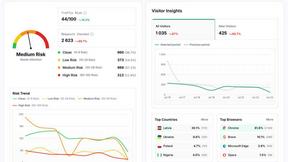
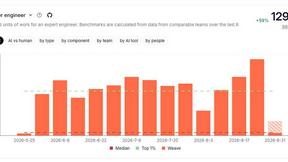

AppBanana
10,000+ Apps Approved, Yours Next With 10,000+ successful apps, we know exactly what Google wants, and how to get yours approved.


Firma.dev
Pay-as-you-go e-signature API and no-code sending. €0.049 per envelope, no monthly minimums, legally valid in 55+ countries.

Minimax H3
AI video and image generator TAGLINE: Turn simple prompts into stunning videos and images with Minimax H3’s powerful AI engine.
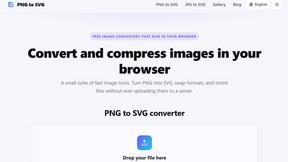

Ornold
Ornold MCP lets AI agents control Chromium and antidetect browsers: click, type, read screens, record workflows, replay profiles without scripts.
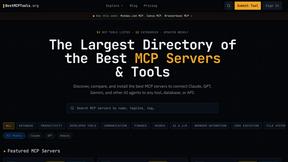

AIQualityHQ
AIQualityHQ instantly analyzes prompts across six dimensions to deliver deterministic scores and actionable fixes for safer, smarter AI outputs.

RedLinz
RedLinz turns screenshots into AI prompts by letting you circle and annotate exactly what you want an LLM to change.


About act101 Alternatives
In the rapidly evolving landscape of software development, tools that bridge the gap between human intent and machine execution are becoming indispensable. act101 is a specialized developer tool that operates within the category of AI-augmented code transformation and migration utilities. It distinguishes itself by offering a granular, grammar-based system that allows AI coding agents to perform complex refactoring and porting tasks across an extensive range of programming languages. Rather than relying on simple text replacement, act101 leverages abstract syntax trees (ASTs) and a library of over 180 specific operations to ensure that code transformations are structurally sound and syntactically correct. Users frequently seek out alternatives to act101 for a variety of practical reasons. Some may find the dependency on specific AI agents like Claude Code or Cursor limiting, preferring a more platform-agnostic or locally-hosted solution. Others might have pricing constraints, as commercial licenses for advanced features can be a barrier for independent developers or small teams. Additionally, the learning curve associated with configuring MCP servers and understanding the nuances of 163 different grammars can be steep, prompting a search for tools with a more streamlined or opinionated workflow. When evaluating an alternative, it is crucial to consider the depth of language support, the quality of the AST transformations (not just regex replacements), the ease of integration with your existing development environment, and whether the tool supports the specific refactoring or porting patterns your projects require.
FAQs about act101 Alternatives
What is act101?
act101 is a developer tool that provides 163 grammar definitions for AI coding agents, enabling them to perform accurate code refactoring and porting across a vast array of programming languages. It functions as a bridge between AI agents like Claude Code and Cursor and the underlying codebase, using Abstract Syntax Trees (ASTs) to ensure transformations are structurally sound. The tool exposes 183 refactoring operations, 30 codebase analyzers, and 8 porting operations through a built-in MCP server.
Who is act101 for?
act101 is designed for software developers and engineers who work with AI coding agents and need to perform complex, language-aware code transformations. It is particularly useful for those involved in large-scale refactoring projects, such as modernizing legacy codebases, or for porting entire applications from one programming language to another, like converting C to Rust or Ruby to Elixir. The tool is built for users who are comfortable with command-line interfaces and integrating MCP servers into their existing development workflows with agents like Claude Code, Cursor, Codex, or OpenCode.
Is act101 free?
act101 is free for personal use, allowing individual developers to leverage its powerful code transformation capabilities without upfront cost. However, commercial usage and advanced features likely require a paid license, which is a common reason users explore alternatives. The specific pricing tiers for professional or enterprise use are not detailed in the provided content, but the distinction between personal and commercial use is clearly stated.
What are the main features of act101?
The core features of act101 include support for 163 programming language grammars, 183 AST-based refactoring operations, 30 codebase analyzers, and 8 porting operations. These capabilities are exposed to popular AI coding agents through a built-in MCP (Model Context Protocol) server, enabling seamless integration with tools like Claude Code, Cursor, Codex, and OpenCode. This allows the AI agent to perform precise operations such as refactoring Python code or porting C code to Rust, ensuring the output is syntactically correct and structurally valid.