
Postproxy vs Proofapp
Side-by-side comparison to help you choose the right AI tool.

Postproxy
Postproxy's single API publishes your content reliably across all major social networks.
Last updated: February 28, 2026

Proofapp
Proofapp lets teams pin visual feedback directly on any website to replace endless emails.
Last updated: March 4, 2026
Visual Comparison
Postproxy
Proofapp

Feature Comparison
Postproxy
Unified Multi-Platform API
Postproxy's cornerstone feature is its single API endpoint that manages publishing across all supported social networks. This eliminates the need for developers to learn, implement, and maintain separate SDKs and integration logic for Facebook, Instagram, LinkedIn, X, and YouTube. A single POST request with your content and target profiles is all that's required, dramatically reducing code complexity and integration time while ensuring consistency across your publishing pipeline.
Automated Platform Compliance & Content Adaptation
Each social media platform has unique and often shifting rules regarding media formats, text limits, and post validation. Postproxy intelligently handles this "inconsistent rules" problem by automatically transforming and validating your content to meet each platform's specific requirements. This includes formatting text, resizing or converting media, and ensuring compliance, so the same core message publishes successfully everywhere without manual tweaking.
Robust Operational Reliability & Error Handling
Postproxy is engineered with operational failures in mind. It provides "delivery guarantees" by automatically managing rate limits, quotas, and flaky endpoints. The system includes intelligent retry mechanisms, clear publish state reporting, and handles silent drops or delayed errors that typically plague direct API integrations. This transforms publishing from an error-prone task into a deterministic process where success and failure states are explicit and actionable.
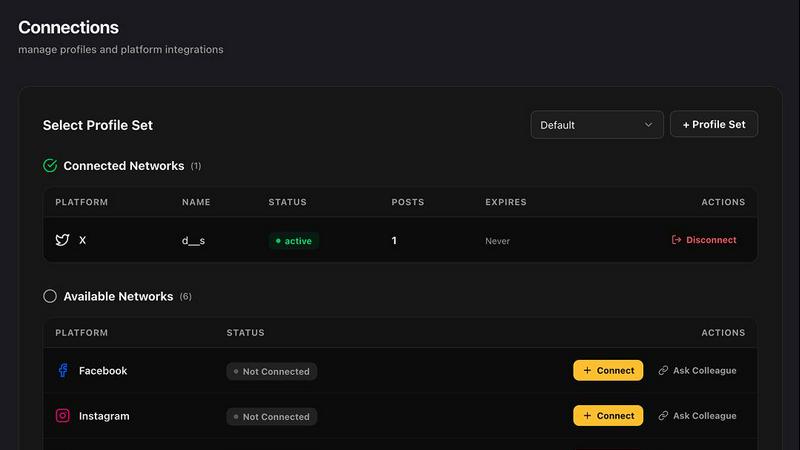
Centralized Authentication & Account Management
Dealing with OAuth tokens, app reviews, permission scopes, and account sprawl across multiple clients or brands is a significant burden. Postproxy centralizes all authentication, securely storing tokens and handling automatic refresh cycles. This simplifies connecting and managing dozens of social media profiles and pages, providing a single control plane for access and permissions without the platform-specific bureaucracy.
Proofapp
Visual Commenting & Annotation
This foundational feature allows any reviewer to click directly on a live screenshot of the website to leave a contextual comment. This action pins a visual marker to the exact element, whether it's a button, image, or text block, eliminating all ambiguity about location. Feedback threads can be created where team members can reply, discuss, and attach supporting files, ensuring every piece of input is tied directly to its visual context and remains organized within the platform's dashboard.
Multi-Breakpoint Screenshot Capture
Proofapp automates the tedious process of capturing website states by instantly generating screenshots for both desktop and mobile views upon project creation. This ensures that feedback accounts for responsive design from the very first review. Teams can toggle between these breakpoints to see how elements render on different devices, allowing for comprehensive feedback that covers the full user experience without manual screenshotting or resizing browser windows.
Secure, Account-Free Client Sharing
Facilitating seamless client collaboration, Proofapp enables project owners to generate secure, shareable links. The significant advantage is that clients or external stakeholders can view the project and leave detailed, pinned feedback without the friction of creating a user account. These links can be set to expire for added security, making it incredibly easy to gather input from anyone, regardless of their technical proficiency or willingness to sign up for another service.
Real-Time Collaboration & Notification
The platform operates in real-time, meaning when a comment is pinned or resolved, all project members can see the update instantly without refreshing the page. This creates a live collaborative environment akin to working in a shared document. Coupled with integrated notifications and Slack connectivity, teams stay perfectly synchronized, dramatically reducing the "waiting" period in feedback loops and ensuring everyone is always aligned on the latest changes and decisions.
Use Cases
Postproxy
Automating AI-Generated Content Workflows
Teams using Large Language Models (LLMs) or AI agents to generate social content can integrate Postproxy as the final, reliable output layer. Instead of building custom adapters for each platform to normalize AI output, they can send generated content directly to Postproxy's API. This enables fully automated pipelines where AI creates content and Postproxy ensures it is properly formatted and published across all chosen networks without manual intervention.
Powering Multi-Client Social Media Management Tools
Agencies and SaaS platforms that manage social media for multiple clients face immense complexity with account sprawl and platform access. Postproxy acts as a unified backend, allowing these tools to offer multi-platform publishing without building complex, fragile integrations in-house. It handles authentication for all client accounts and provides a stable interface, letting the tool focus on its core UI and client management features.
Enhancing No-Code/Low-Code Automation
Users of automation platforms like n8n, Zapier, or Make can leverage Postproxy to create robust, multi-step workflows that include social publishing. A workflow can trigger from a new blog post, CRM update, or scheduled event, generate a summary, and then use a single Postproxy action node to publish it everywhere, replacing multiple, less reliable platform-specific nodes and simplifying the entire automation build.
Enabling Event-Driven and Scheduled Publishing at Scale
Development teams can integrate Postproxy's API directly into their CI/CD pipelines, internal dashboards, or product-led growth engines. This allows for publishing based on system events—like a new product launch, version update, or milestone achievement—directly from their core systems. Whether publishing ten announcements or ten thousand promotional posts, the same reliable logic applies, enabling scalable, programmatic communication.
Proofapp
Freelancer-Client Website Approvals
Freelancers can use Proofapp to present website drafts to clients in a professional, organized manner. Instead of exchanging dozens of emails with attached, annotated images, the freelancer shares a single link. The client clicks directly on the site to leave clear, visual notes, which the freelancer can then address and mark as resolved. This streamlines the revision process, reduces miscommunication, and presents a polished, efficient workflow that enhances client trust and satisfaction.
In-House Design & Development Team Sprints
For product teams running agile sprints, Proofapp serves as the central review tool for new features and UI changes. Designers can upload mockup URLs, and developers and product managers can provide specific technical and UX feedback directly on the design. This visual collaboration ensures that everyone—from UX to QA—has a unified understanding of requirements and issues, leading to fewer misinterpretations and faster iteration cycles during critical sprint reviews.
Marketing Campaign Landing Page Reviews
Marketing teams tasked with launching campaign-specific landing pages can leverage Proofapp for cross-departmental reviews. Colleagues from copywriting, design, legal, and leadership can all access the same secure link to provide feedback on content, compliance, branding, and call-to-action placement. Having all comments visually pinned on the page consolidates disparate inputs into one actionable list, ensuring the final page is optimized and approved by all stakeholders before going live.
Agency Managing Multiple Client Projects
Digital agencies juggling multiple client projects simultaneously benefit from Proofapp's project organization and client-friendly interface. Each client project is kept separate and secure. Project managers can track feedback progress, see resolved items, and maintain a clear audit trail of all communications. This eliminates the risk of mixing client feedback and provides a scalable, professional system for delivering and receiving revisions, improving overall agency efficiency and client retention.
Overview
About Postproxy
Postproxy is a transformative infrastructure layer designed to solve the complex, operational nightmare of multi-platform social media publishing. At its core, it is a unified API that abstracts away the chaos of dealing with individual platform APIs like Instagram, Facebook, YouTube, LinkedIn, and X. For developers, automators, and businesses scaling their digital presence, Postproxy replaces a tangled web of platform-specific integrations, OAuth flows, and inconsistent rules with a single, reliable endpoint. Its primary value proposition is turning publishing from a fragile, high-maintenance task into predictable, scalable infrastructure. It is explicitly built for modern tech stacks, seamlessly integrating with automation tools like n8n and Zapier, content generation pipelines powered by LLMs, and CI/CD workflows. By handling authentication, rate limits, content adaptation, retries, and analytics automatically, Postproxy allows teams to focus on creating and strategizing content rather than debugging API failures and managing platform bureaucracy.
About Proofapp
Proofapp is a visual feedback and website review platform engineered to dismantle the inefficient feedback loops that plague digital project workflows. It serves as a centralized hub for designers, developers, marketers, and their clients to collaborate with precision and clarity. The core value proposition is eliminating the chaos of scattered email chains, vague text descriptions, and misplaced screenshot attachments by providing a system where all feedback is visual, contextual, and actionable. By simply entering a website URL, Proofapp automatically generates screenshots at key breakpoints, creating a canvas for stakeholders to pin comments directly onto the specific pixel in question. This process transforms subjective instructions like "move that thing to the left" into objective, location-specific tasks. Tailored for a spectrum of users from solo freelancers to agency teams, Proofapp democratizes professional-grade review tools with a focus on simplicity, real-time collaboration, and security, all while offering a generous free tier to get started. It's not just a tool for collecting feedback; it's a system designed to accelerate project velocity, reduce revision cycles by up to 60%, and restore sanity to the creative development process.
Frequently Asked Questions
Postproxy FAQ
What platforms does Postproxy support?
Postproxy currently supports publishing to Instagram, Facebook, YouTube, LinkedIn, and X (formerly Twitter). The platform handles each network's unique API, converting your content and media to meet their specific format requirements and publishing rules through a single, unified request.
How does Postproxy handle authentication for my social accounts?
Postproxy manages the entire OAuth flow for you. You connect your social media accounts through a secure onboarding process. Postproxy then securely stores the necessary tokens and automatically handles token refreshes in the background, eliminating the need for you to manage platform-specific authentication logic or worry about expired tokens.
What happens if a post fails on one platform?
Postproxy provides explicit publish states for every platform targeted in a request. If a post fails on one network due to a rate limit, quota, or content error, Postproxy will automatically retry according to its logic where possible and report the specific failure reason. Posts to other platforms in the same request will continue independently, and you receive clear, actionable status updates for each.
Is Postproxy suitable for high-volume publishing?
Absolutely. Postproxy is designed to turn publishing into scalable infrastructure. It handles rate limits and quotas intelligently, and its unified API means the process for publishing ten items is identical to publishing ten thousand. This deterministic logic, combined with robust error handling, makes it ideal for businesses and tools that need to publish content at scale reliably.
Proofapp FAQ
How do clients leave feedback without an account?
Proofapp utilizes a secure, shareable link system. When you create a project, you can generate a unique URL that you send to your clients or stakeholders. They simply click the link, which opens the project in their browser. From there, they can view the screenshots and click anywhere to leave a pinned comment, attach files, and participate in feedback threads—all without any sign-up form, login, or password required, making the barrier to entry virtually zero.
What website breakpoints does Proofapp capture?
Upon creating a project with a website URL, Proofapp automatically captures two essential breakpoints by default: a standard desktop view and a mobile view. This covers the primary ways users will interact with most sites. The automatic capture saves significant time and ensures that feedback accounts for responsive design considerations from the very beginning of the review process, providing a more complete picture of the site's presentation.
Is there a limit on projects or comments for free users?
Proofapp offers a generous free tier designed to allow users to fully experience the platform's core capabilities. While specific limits may be subject to the platform's current policy, the free tier typically supports a substantial number of projects and unlimited comments, making it perfectly viable for freelancers or small teams to manage ongoing work. For advanced features like unlimited projects, team roles, or premium support, upgrading to a paid plan is available.
How does Proofapp ensure the security of my projects?
Security is a priority for Proofapp. Features include secure, expirable share links for client access, role-based permissions for team members on paid plans, and secure data handling practices. For sensitive internal projects, you maintain control over who has access via these links. The platform is built to provide enterprise-grade security measures, such as audit logs and data encryption, giving teams and agencies peace of mind when sharing proprietary designs and in-development work.
Alternatives
Postproxy Alternatives
Postproxy is a developer-centric social media publishing API, falling into the category of automation and integration tools. It simplifies the complex process of posting to multiple platforms like Instagram, Facebook, and LinkedIn by providing a single, unified endpoint. This approach handles the technical intricacies of authentication, content formatting, and platform-specific rules behind the scenes. Users often explore alternatives for various practical reasons. These can include budget constraints, the need for different feature sets like advanced analytics or niche platform support, or a preference for a different user interface, such as a full dashboard versus a pure API. Some may seek tools that integrate more tightly with their existing marketing stack or offer different scalability options. When evaluating alternatives, key considerations should include the specific social platforms you need to support, the required level of technical integration (API vs. no-code builder), the robustness of features like scheduling, analytics, and content adaptation, and of course, the total cost of ownership. Security, reliability, and the quality of developer documentation are also critical factors for long-term success.
Proofapp Alternatives
Proofapp is a specialized tool in the design collaboration category, designed to streamline the review process for websites and digital designs. It allows teams and clients to provide precise, visual feedback directly on screenshots, moving conversations away from chaotic email threads and into a centralized, actionable workspace. Users often explore alternatives for several practical reasons. These can include budget constraints, the need for specific integrations with other project management or development tools, or requirements for more advanced features like video feedback or user testing capabilities. The search for the right fit is a natural part of finding a tool that aligns perfectly with a team's workflow and scale. When evaluating alternatives, key considerations should be the core functionality of visual commenting and annotation, the ease of use for both creators and reviewers, and the overall value within your pricing tier. It's also wise to assess how well a potential tool integrates into your existing software ecosystem and whether it can grow with your project complexity and team size.