
MeloLingua vs Polym
Side-by-side comparison to help you choose the right AI tool.

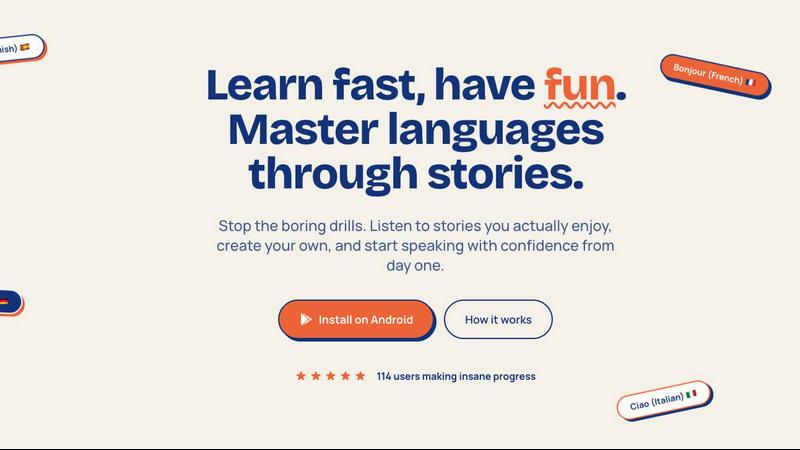
MeloLingua teaches languages through personalized stories, helping you listen, create, and speak confidently.
Last updated: February 28, 2026

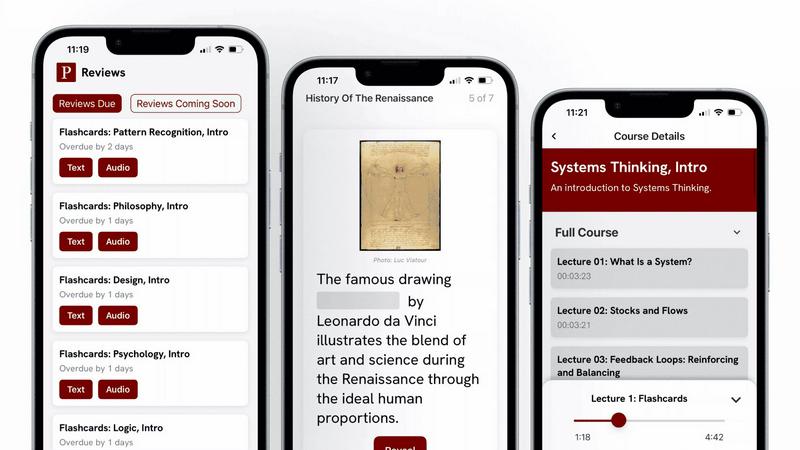
Polym uses cognitive science and audio to help you actively remember essential knowledge.
Last updated: March 1, 2026
Visual Comparison
MeloLingua
Polym
Feature Comparison
MeloLingua
AI-Powered Personal Story Generation
This is the engine of MeloLingua's innovative approach. Users input details about their interests, profession, or daily life, and the AI crafts coherent, level-appropriate short stories using that personal data. This ensures every lesson's vocabulary and grammar are immediately relevant, embedding language structures within the context of the learner's own world, which dramatically improves retention and emotional connection to the material.
Native Audio with Synchronized Text
Each personally generated story is accompanied by high-quality audio recorded by native speakers. Learners can listen while following along with perfectly synchronized text, creating a powerful dual-coding experience. This feature trains the ear to recognize the natural rhythm, intonation, and pronunciation of the language within a meaningful context, building listening comprehension skills far more effectively than artificial drills.
Interactive Tap-to-Learn Vocabulary
As users engage with their story's text, they can tap on any word or phrase to receive an instant definition, translation, and contextual example. This on-demand, in-context learning method allows for organic vocabulary acquisition exactly when curiosity strikes, eliminating the need to pause and switch to a separate dictionary app and keeping the flow of comprehension seamless.
AI Pronunciation Feedback & Speaking Practice
MeloLingua doesn't just teach passive comprehension; it actively builds speaking skills. Users can record themselves reading sentences or phrases from their story. The AI then analyzes their pronunciation, providing specific, actionable feedback on intonation, rhythm, and individual phonemes. This creates a safe, private space for deliberate practice, turning personal stories into tools for articulate self-expression.
Polym
Cognitive Science-Driven Audio Learning
Polym's foundational feature is its deliberate architecture around proven learning strategies. Unlike passive podcasts or audiobooks, every piece of content is structured to incorporate retrieval practice (active recall), spaced repetition (strategic review intervals), and interleaving (mixing related topics). This transforms listening from a passive activity into an active mental workout, scientifically optimized to cement knowledge into long-term memory and combat natural forgetting.
Curated Curriculum of Foundational Subjects
The app offers a thoughtfully selected library of medium-form courses, abbreviated versions, and audio flashcards across essential disciplines. Subjects range from technical fields like Statistics, Probability, and Algorithms to conceptual domains like Logic, Philosophy, and History. This curriculum is designed to build a versatile intellectual foundation that is relevant across professional fields and enriches everyday reasoning and decision-making.
Audio-Optimized Technical Content
Polym specifically tackles the challenge of presenting technical and mathematical concepts in an audio format. It focuses on the abstract principles and conceptual understandings of these fields, which translate effectively to listening. This approach allows learners to grasp the core ideas behind complex subjects without getting bogged down by notation, making advanced topics accessible during a commute or workout.
Focused Review with Term-Only Courses
Beyond conceptual courses, Polym provides "term-only" courses that serve as ultra-abbreviated audio flashcards. This feature allows for efficient, focused review of key definitions, theorems, and principles without any explanatory fluff. It's the perfect tool for quick reinforcement, memory priming before a deeper study session, or a rapid refresher on core vocabulary from any subject.
Use Cases
MeloLingua
The Professional Seeking Career Advancement
A marketing manager needing to present to international clients can generate stories about campaign strategies, market analysis, and client meetings. This allows them to learn precise business vocabulary and formal sentence structures within their professional domain, leading to more confident and nuanced communication in work settings, rather than relying on generic travel phrases.
The Hobbyist Connecting with a Global Community
A photographer, chef, or guitarist can create stories around their craft—describing techniques, equipment, or creative processes. This enables them to engage deeply with forums, tutorials, and social media communities in the target language, transforming a personal passion into a bridge for authentic cultural and social connection.
The Traveler Preparing for Immersive Experiences
Instead of learning phrases for fictitious scenarios, a traveler can generate stories about their actual itinerary, dining preferences, and planned activities. Practicing language related to their specific journey—from asking for directions to a particular landmark to discussing food allergies—leads to more practical, confident, and enriched travel experiences.
The Lifelong Learner with Specific Personal Goals
Someone aiming to read literature, understand films, or communicate with a partner's family can tailor content to those exact objectives. They can generate stories that incorporate cultural nuances, familial terms, or narrative styles found in media, creating a direct and motivating link between daily practice and their ultimate, personal fluency goals.
Polym
The Professional Skill Enhancer
A data analyst uses Polym during their daily commute to solidify their grasp of statistical inference and probability theory. The spaced repetition sessions ensure the core concepts behind their daily work remain sharp, while interleaving with logic courses improves their overall analytical reasoning, making them more effective and insightful in their role.
The Aspiring Polymath
A lifelong learner with interests spanning history, philosophy, and computer science uses Polym to build connective tissue between disparate fields. The app's curriculum allows them to systematically explore new domains, while the active recall features ensure that insights from philosophy inform their understanding of AI ethics, creating a rich, interconnected web of knowledge.
The Exam & Certification Preparer
A professional preparing for a certification exam (e.g., in economics or project management) uses Polym's abbreviated courses and term-only flashcards for on-the-go review. The retrieval practice strengthens memory recall for key models and definitions, complementing their textbook study and turning downtime into productive, high-yield revision sessions.
The Critical Thinker & Decision-Maker
An individual seeking to improve their everyday decision-making and media literacy uses Polym's courses on logical fallacies, cognitive biases, and scientific reasoning. The audio format makes it easy to absorb these mental models, and the app's system ensures they become ingrained, helping the user to instinctively identify flawed arguments and make more rational choices in their personal and professional life.
Overview
About MeloLingua
MeloLingua represents a paradigm shift in language acquisition, moving away from the sterile, one-size-fits-all approach of traditional apps. At its core, it is a language learning platform engineered around the profound power of personal narrative. The fundamental premise is simple yet revolutionary: you learn best when the material is intrinsically meaningful to you. Instead of drilling disconnected vocabulary lists or rehearsing scripted dialogues about booking hotels, MeloLingua generates short, natural stories based on your unique life—your career, hobbies, daily routines, and personal goals. This transforms the learning process from a chore into an engaging exploration of self-expression in a new language. By listening to native-level audio of your own story, following synchronized text, and practicing pronunciation with AI feedback, you build listening confidence and speaking fluency in a context that matters. It's designed for the motivated learner who finds generic content disengaging and seeks a deeper, more consistent, and personally resonant path to language mastery. The value proposition is clear: achieve natural, confident communication by making the language your own, from day one.
About Polym
Polym is not just another audio learning app; it is a paradigm shift in how adults acquire and, more importantly, retain foundational knowledge. It directly confronts the universal challenge of the "forgetting curve," where passively consumed information quickly fades. Polym's core mission is to transform fleeting exposure into durable understanding. It achieves this by delivering a curated curriculum in subjects like Statistics, Economics, Computer Science, AI, Philosophy, and History through a unique, science-backed audio format. The app is engineered for the perpetually curious professional, the aspiring polymath, and any lifelong learner who values depth over breadth. Its primary value proposition lies in seamlessly integrating three powerful cognitive science principles—retrieval practice, spaced repetition, and interleaving—into the listening experience. This means Polym doesn't just feed you information; it actively trains your brain to store and recall it, building a lasting mental framework of the world's most critical concepts. It's for those who believe true learning is measured not by what you've heard, but by what you remember and can apply.
Frequently Asked Questions
MeloLingua FAQ
How does learning through personal stories differ from traditional methods?
Traditional methods often rely on memorization and decontextualized exercises, which can feel abstract and forgettable. MeloLingua's story-based approach embeds grammar and vocabulary within narratives about your life. This creates emotional hooks and real-world context, which cognitive science shows significantly enhances memory encoding, retention, and the ability to recall and use language spontaneously.
What if I'm a complete beginner? Will the stories be too complex?
The AI is designed to scale complexity based on your designated proficiency level. For a true beginner, stories will utilize high-frequency vocabulary and simple sentence structures, gradually increasing in sophistication as you progress. The content remains personal and comprehensible, ensuring you are always learning within your "i+1" zone—understanding most of the input while being gently challenged.
Can I use MeloLingua to learn any language?
The available languages depend on MeloLingua's current library of native speaker audio and AI models. While the provided context doesn't specify a list, the platform's design is inherently multi-language. The core methodology—generating personal stories and providing synchronized audio—can be applied to any language for which the necessary linguistic infrastructure and voice recordings are in place.
Is the AI pronunciation feedback accurate and helpful?
The AI feedback system is engineered to analyze key aspects of speech, such as vowel/consonant accuracy, word stress, and sentence-level intonation patterns. While it may not replicate the nuanced ear of a human tutor, it provides consistent, immediate, and objective feedback on specific pronunciation points, allowing for targeted practice that builds muscle memory and auditory self-awareness effectively.
Polym FAQ
What research supports the learning strategies Polym uses?
The methodologies are deeply rooted in cognitive science. Retrieval practice, spaced repetition, and interleaving are among the most robustly studied and effective techniques for long-term retention. Extensive research, including meta-analyses published in peer-reviewed journals, demonstrates their superiority over passive review and massed practice (cramming). You can explore foundational research on these topics through resources like the National Institutes of Health (NIH) database.
Who is Polym really for?
Polym is designed for a broad audience of intellectually curious adults. It is ideal for professionals who want to reinforce and retain foundational knowledge relevant to their field; for lifelong learners and polymaths building a broad base of understanding; for students or exam-takers needing efficient review; and for anyone seeking to sharpen their critical thinking, reasoning, and decision-making skills through a structured, science-backed approach.
What subjects does Polym cover?
The curriculum focuses on foundational subjects that foster critical thinking and broad understanding. This includes Logic, Logical Fallacies, Cognitive Biases, Statistics, Probability, Scientific Research, Algorithms, Economics, Philosophy, and History. The selection prioritizes concepts that are widely applicable and form the bedrock of rational thought across multiple disciplines.
How does Polym handle technical/math content in audio format?
Polym takes a deliberate approach by focusing on the conceptual and abstract layers of technical subjects that are well-suited for audio. Instead of presenting dense equations or code, it emphasizes the underlying principles, intuitions, and applications. This allows listeners to grasp the "why" and "how" of complex ideas, strengthening their ability to apply concepts even if they aren't visually following along with written notation.
Alternatives
MeloLingua Alternatives
MeloLingua is a unique language learning app that focuses on personal storytelling. It belongs to the broader category of language acquisition tools, but it carves its own niche by generating lessons from a user's own life and interests, moving away from generic vocabulary drills. This approach makes learning deeply relevant and engaging from the very first lesson. Users may explore alternatives for various practical reasons. Common considerations include budget constraints and subscription pricing models, the need for specific features like offline access or support for less common languages, and compatibility with different devices or operating systems. Personal learning style preferences, such as a desire for more traditional grammar instruction or a different type of interactive content, also drive this search. When evaluating other options, it's wise to consider what truly motivates your learning journey. Look for a method that aligns with your goals, whether that's conversational fluency, travel preparation, or professional development. The ideal platform should fit seamlessly into your daily routine, offer content that holds your interest, and provide the right balance of instruction, practice, and feedback to build your confidence.
Polym Alternatives
Polym is an innovative audio learning app that belongs to the educational technology and lifelong learning category. It distinguishes itself by using active learning techniques like retrieval practice and spaced repetition to help users deeply retain foundational knowledge across subjects like philosophy, economics, and computer science, moving beyond passive content consumption. Users may seek alternatives for various reasons, including budget constraints, a preference for different content formats like video or text, the need for platform-specific apps, or a desire for learning paths focused on different skills or subjects. The search often stems from a need to find the right tool that aligns with an individual's specific learning style, goals, and practical circumstances. When evaluating alternatives, consider the core learning methodology. Does the platform facilitate active engagement or is it purely passive? Assess the breadth and depth of the content library to ensure it covers your areas of interest. Finally, examine the user experience, including platform availability, interface design, and how well the tool integrates into your daily routine for consistent, long-term learning.