
Decode This Text vs Polym
Side-by-side comparison to help you choose the right AI tool.

Decode This Text
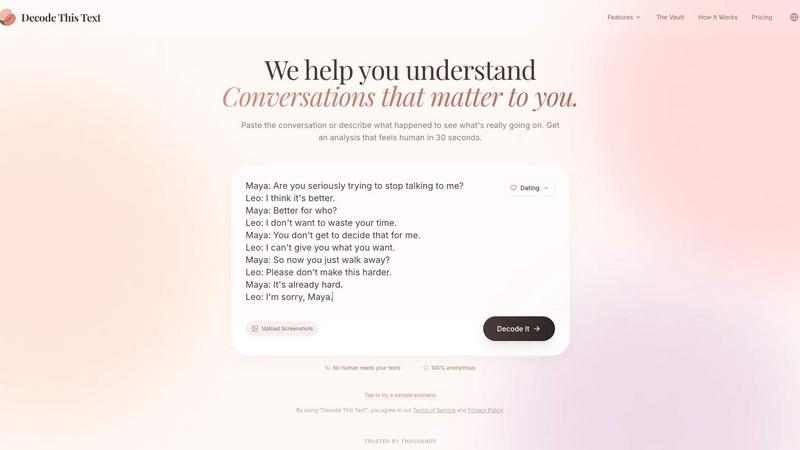
Decode This Text gives you a wise, anonymous reality check on any confusing conversation in just 30 seconds.
Last updated: February 28, 2026

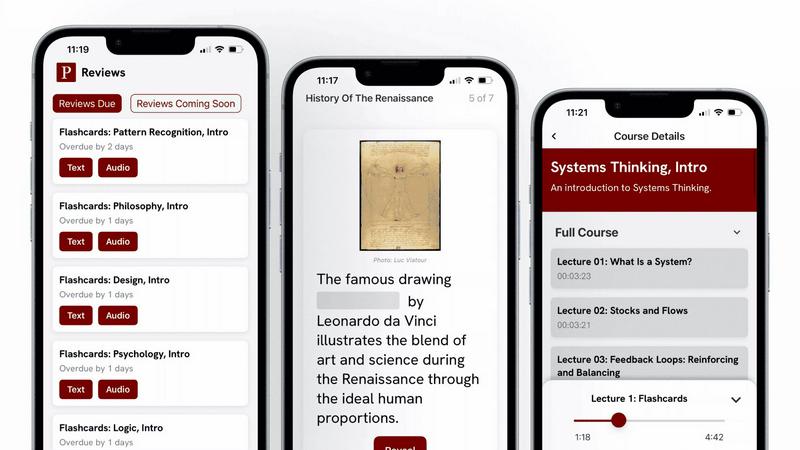
Polym uses cognitive science and audio to help you actively remember essential knowledge.
Last updated: March 1, 2026
Visual Comparison
Decode This Text
Polym
Feature Comparison
Decode This Text
Screenshot Analysis
Gone are the days of manually transcribing lengthy chat histories. With this featured functionality, users can simply upload a photo of their text conversation. The tool seamlessly reads and analyzes the entire visual context, extracting every word, timestamp, and emoji. This streamlines the process immensely, allowing for a quick and effortless entry point to understanding complex or emotionally charged exchanges without the barrier of retyping.
Tone & Intent Deciphering
This feature acts as an emotional barometer for digital communication. It goes beyond dictionary definitions to measure the true emotional temperature of a message—assessing whether the sender is being cold, sarcastic, genuinely friendly, or passively aggressive. By quantifying elements like tone, effort, and intent, it provides an objective lens, helping users avoid the common pitfall of projecting their own anxieties or hopes onto ambiguous words.
Behavioral Pattern Detection
Human communication is rife with subtle, recurring cues that are easy to miss in the moment. This intelligent feature scans conversations for these critical behavioral patterns. It can highlight if someone only messages late at night, consistently avoids direct questions, or is gradually shortening their replies over time. Identifying these trends offers a strategic, big-picture view of the dynamics at play, revealing intentions that single messages might conceal.
AI-Generated Response Crafting
Paralysis over what to say next is a common experience. Decode This Text directly addresses this by generating contextually appropriate response options. After its analysis, it provides users with multiple tailored replies—often categorized as calm, direct, or firm. This empowers individuals to choose a response that aligns with their desired outcome, turning uncertainty into confident action and closing the communication loop effectively.
Polym
Cognitive Science-Driven Audio Learning
Polym's foundational feature is its deliberate architecture around proven learning strategies. Unlike passive podcasts or audiobooks, every piece of content is structured to incorporate retrieval practice (active recall), spaced repetition (strategic review intervals), and interleaving (mixing related topics). This transforms listening from a passive activity into an active mental workout, scientifically optimized to cement knowledge into long-term memory and combat natural forgetting.
Curated Curriculum of Foundational Subjects
The app offers a thoughtfully selected library of medium-form courses, abbreviated versions, and audio flashcards across essential disciplines. Subjects range from technical fields like Statistics, Probability, and Algorithms to conceptual domains like Logic, Philosophy, and History. This curriculum is designed to build a versatile intellectual foundation that is relevant across professional fields and enriches everyday reasoning and decision-making.
Audio-Optimized Technical Content
Polym specifically tackles the challenge of presenting technical and mathematical concepts in an audio format. It focuses on the abstract principles and conceptual understandings of these fields, which translate effectively to listening. This approach allows learners to grasp the core ideas behind complex subjects without getting bogged down by notation, making advanced topics accessible during a commute or workout.
Focused Review with Term-Only Courses
Beyond conceptual courses, Polym provides "term-only" courses that serve as ultra-abbreviated audio flashcards. This feature allows for efficient, focused review of key definitions, theorems, and principles without any explanatory fluff. It's the perfect tool for quick reinforcement, memory priming before a deeper study session, or a rapid refresher on core vocabulary from any subject.
Use Cases
Decode This Text
Decoding Dating & Romantic Signals
Navigating the early stages of dating is fraught with mixed signals. Is "I'll let you know" a polite brush-off or a genuine statement from a busy person? When someone ghosts after a great date, what does it mean? This tool analyzes text exchanges to clarify interest levels, interpret silence, and explain confusing behaviors like breadcrumbing. It helps users understand the real subtext, saving them from overthinking and guiding them toward responses that protect their emotional well-being.
Interpreting Professional & Workplace Communication
Workplace communication often carries high stakes and hidden meanings. A terse one-word email from a boss, a vague "we'll keep your resume on file," or the challenge of saying "no" to a colleague without causing offense—all are ripe for misinterpretation. Decode This Text analyzes the tone and structure of professional messages, providing clarity on the sender's likely state of mind and suggesting diplomatically worded responses to navigate office politics with grace.
Understanding Friends & Family Dynamics
Group chats that go silent after your message, a friend's suddenly distant tone, or confusing family interactions can create social anxiety. This use case involves using the tool to parse conversations within personal circles. It helps determine if a comment was taken the wrong way, if someone is subtly upset, or if the silence is benign. The analysis fosters healthier relationships by providing an outside perspective on familiar dynamics, often more reliably than asking the same friends for advice repeatedly.
Analyzing Client & Business Correspondence
For freelancers, entrepreneurs, and sales professionals, clear client communication is crucial. Vague feedback, delayed responses, or ambiguous contract language can stall projects. Decode This Text can be used to analyze client emails or messages to discern their true level of satisfaction, urgency, or hesitation. Understanding the client's underlying tone and intent allows for more precise and effective follow-ups, ensuring projects stay on track and relationships remain positive.
Polym
The Professional Skill Enhancer
A data analyst uses Polym during their daily commute to solidify their grasp of statistical inference and probability theory. The spaced repetition sessions ensure the core concepts behind their daily work remain sharp, while interleaving with logic courses improves their overall analytical reasoning, making them more effective and insightful in their role.
The Aspiring Polymath
A lifelong learner with interests spanning history, philosophy, and computer science uses Polym to build connective tissue between disparate fields. The app's curriculum allows them to systematically explore new domains, while the active recall features ensure that insights from philosophy inform their understanding of AI ethics, creating a rich, interconnected web of knowledge.
The Exam & Certification Preparer
A professional preparing for a certification exam (e.g., in economics or project management) uses Polym's abbreviated courses and term-only flashcards for on-the-go review. The retrieval practice strengthens memory recall for key models and definitions, complementing their textbook study and turning downtime into productive, high-yield revision sessions.
The Critical Thinker & Decision-Maker
An individual seeking to improve their everyday decision-making and media literacy uses Polym's courses on logical fallacies, cognitive biases, and scientific reasoning. The audio format makes it easy to absorb these mental models, and the app's system ensures they become ingrained, helping the user to instinctively identify flawed arguments and make more rational choices in their personal and professional life.
Overview
About Decode This Text
In the intricate dance of modern communication, where subtext often outweighs the words on the screen, Decode This Text emerges as a vital digital confidant. This innovative tool is designed to demystify the ambiguous messages that populate our inboxes and chat threads, transforming confusion into clarity. At its core, it is an AI-powered analysis engine that interprets the true meaning behind cryptic emails, vague texts, and confusing professional correspondence. By simply pasting a conversation, uploading a screenshot, or describing a scenario, users receive a comprehensive, human-feeling breakdown in about 30 seconds. This analysis delves into the underlying intentions, emotional tone, and even the unspoken patterns within the dialogue, providing actionable advice on how to respond. It serves a diverse audience—from anyone navigating the uncertainties of modern dating and friendships to professionals aiming to decode workplace nuance. Its primary value proposition is profound: to eliminate the anxiety of misinterpretation, enhance communication skills, and empower users to interact with confidence, all within a framework that is 100% anonymous and private.
About Polym
Polym is not just another audio learning app; it is a paradigm shift in how adults acquire and, more importantly, retain foundational knowledge. It directly confronts the universal challenge of the "forgetting curve," where passively consumed information quickly fades. Polym's core mission is to transform fleeting exposure into durable understanding. It achieves this by delivering a curated curriculum in subjects like Statistics, Economics, Computer Science, AI, Philosophy, and History through a unique, science-backed audio format. The app is engineered for the perpetually curious professional, the aspiring polymath, and any lifelong learner who values depth over breadth. Its primary value proposition lies in seamlessly integrating three powerful cognitive science principles—retrieval practice, spaced repetition, and interleaving—into the listening experience. This means Polym doesn't just feed you information; it actively trains your brain to store and recall it, building a lasting mental framework of the world's most critical concepts. It's for those who believe true learning is measured not by what you've heard, but by what you remember and can apply.
Frequently Asked Questions
Decode This Text FAQ
How does Decode This Text protect my privacy?
Privacy is a foundational principle. The service is designed to be 100% anonymous. No human ever reads the texts, conversations, or screenshots you submit. All analysis is performed by secure AI algorithms. Furthermore, the company states that your data is not used to train their models, ensuring your personal conversations remain confidential and are not stored or reviewed by any person.
What kind of input does the tool accept?
The tool offers flexible input methods to suit your needs. You can directly paste the text of a conversation, write a descriptive summary of what happened, or use the featured Screenshot Analysis function to upload a photo of your chat. This allows you to analyze any digital interaction, whether it's a fresh text thread or a saved conversation from your camera roll.
Is the analysis really accurate if it's done by AI?
While not a substitute for human emotional intelligence, the AI is trained on vast datasets of communication patterns, linguistic cues, and social dynamics to provide highly insightful analysis. It excels at identifying consistent patterns, measuring tonal shifts, and offering probabilistic interpretations of intent based on common scenarios. Users report it feels like getting advice from a wise, objective third party, providing clarity that often cuts through personal bias.
Can it help me write a response?
Absolutely. One of the core features is the AI-generated response crafting. After analyzing the message, the tool provides you with several potential reply options tailored to the situation. These are typically framed with different strategic approaches (e.g., calm, direct, playful), giving you a starting point to communicate back with greater confidence and alignment with your goals.
Polym FAQ
What research supports the learning strategies Polym uses?
The methodologies are deeply rooted in cognitive science. Retrieval practice, spaced repetition, and interleaving are among the most robustly studied and effective techniques for long-term retention. Extensive research, including meta-analyses published in peer-reviewed journals, demonstrates their superiority over passive review and massed practice (cramming). You can explore foundational research on these topics through resources like the National Institutes of Health (NIH) database.
Who is Polym really for?
Polym is designed for a broad audience of intellectually curious adults. It is ideal for professionals who want to reinforce and retain foundational knowledge relevant to their field; for lifelong learners and polymaths building a broad base of understanding; for students or exam-takers needing efficient review; and for anyone seeking to sharpen their critical thinking, reasoning, and decision-making skills through a structured, science-backed approach.
What subjects does Polym cover?
The curriculum focuses on foundational subjects that foster critical thinking and broad understanding. This includes Logic, Logical Fallacies, Cognitive Biases, Statistics, Probability, Scientific Research, Algorithms, Economics, Philosophy, and History. The selection prioritizes concepts that are widely applicable and form the bedrock of rational thought across multiple disciplines.
How does Polym handle technical/math content in audio format?
Polym takes a deliberate approach by focusing on the conceptual and abstract layers of technical subjects that are well-suited for audio. Instead of presenting dense equations or code, it emphasizes the underlying principles, intuitions, and applications. This allows listeners to grasp the "why" and "how" of complex ideas, strengthening their ability to apply concepts even if they aren't visually following along with written notation.
Alternatives
Decode This Text Alternatives
Decode This Text is a productivity tool designed to cut through communication ambiguity. It falls into the category of digital clarity and interpersonal management tools, helping users analyze confusing messages to understand tone, intent, and optimal responses quickly. People often seek alternatives for various practical reasons. Some may need a solution that fits a specific budget, while others require different feature sets, such as integration with particular platforms or more advanced analytical capabilities. The search can also stem from a desire for a different user experience or output style. When evaluating other options, consider your core needs. Key factors include the accuracy and depth of the analysis, the tool's speed, data privacy policies, and ease of use. The best choice will align with how you typically encounter confusing communications, whether in professional emails, personal texts, or social media interactions.
Polym Alternatives
Polym is an innovative audio learning app that belongs to the educational technology and lifelong learning category. It distinguishes itself by using active learning techniques like retrieval practice and spaced repetition to help users deeply retain foundational knowledge across subjects like philosophy, economics, and computer science, moving beyond passive content consumption. Users may seek alternatives for various reasons, including budget constraints, a preference for different content formats like video or text, the need for platform-specific apps, or a desire for learning paths focused on different skills or subjects. The search often stems from a need to find the right tool that aligns with an individual's specific learning style, goals, and practical circumstances. When evaluating alternatives, consider the core learning methodology. Does the platform facilitate active engagement or is it purely passive? Assess the breadth and depth of the content library to ensure it covers your areas of interest. Finally, examine the user experience, including platform availability, interface design, and how well the tool integrates into your daily routine for consistent, long-term learning.