
OpenMark AI vs qtrl.ai
Side-by-side comparison to help you choose the right AI tool.

OpenMark AI benchmarks 100+ LLMs on your task: cost, speed, quality & stability. Browser-based; no provider API keys for hosted runs.

qtrl.ai
qtrl.ai scales QA with AI agents while ensuring full team control and governance.
Last updated: March 4, 2026
Visual Comparison
OpenMark AI
qtrl.ai
Overview
About OpenMark AI
OpenMark AI is a web application for task-level LLM benchmarking. You describe what you want to test in plain language, run the same prompts against many models in one session, and compare cost per request, latency, scored quality, and stability across repeat runs, so you see variance, not a single lucky output.
The product is built for developers and product teams who need to choose or validate a model before shipping an AI feature. Hosted benchmarking uses credits, so you do not need to configure separate OpenAI, Anthropic, or Google API keys for every comparison.
You get side-by-side results with real API calls to models, not cached marketing numbers. Use it when you care about cost efficiency (quality relative to what you pay), not just the cheapest token price on a datasheet.
OpenMark AI supports a large catalog of models and focuses on pre-deployment decisions: which model fits this workflow, at what cost, and whether outputs are consistent when you run the same task again. Free and paid plans are available; details are shown in the in-app billing section.
About qtrl.ai
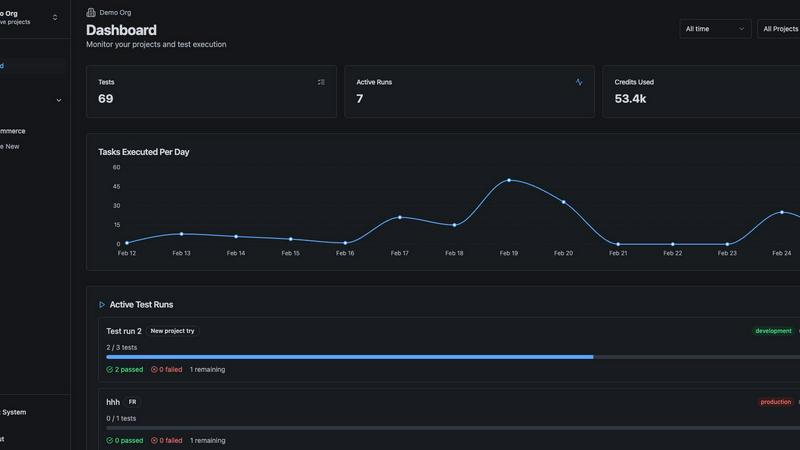
qtrl.ai is a modern, progressive QA platform engineered to solve the fundamental tension in software quality assurance: the need for both speed and control. It is not merely another test automation tool, but a unified platform that seamlessly integrates enterprise-grade test management with powerful, trustworthy AI automation. At its heart, qtrl provides a centralized command center for all quality activities. Teams can meticulously organize test cases, plan and execute test runs, trace requirements to ensure comprehensive coverage, and monitor quality health through real-time dashboards. This structured foundation offers engineering leads and QA managers unparalleled visibility into testing status, risk areas, and release readiness.
Where qtrl truly distinguishes itself is through its philosophy of "progressive automation." Rejecting the risky, all-or-nothing approach of "black-box" AI, qtrl allows teams to start with familiar, manual test management. When ready, they can incrementally leverage intelligent autonomous agents. These agents can generate robust UI tests from simple English instructions, autonomously maintain them against application changes, and execute them at scale across multiple browsers and environments. This makes qtrl an ideal solution for product-led engineering teams seeking velocity, QA groups transitioning from manual processes, organizations modernizing legacy workflows, and enterprises that demand strict compliance, audit trails, and governance. Ultimately, qtrl bridges the gap between the slow pace of manual testing and the brittle, expensive complexity of traditional scripted automation, offering a trusted, scalable path to intelligent quality assurance.