
Mod vs qtrl.ai
Side-by-side comparison to help you choose the right AI tool.

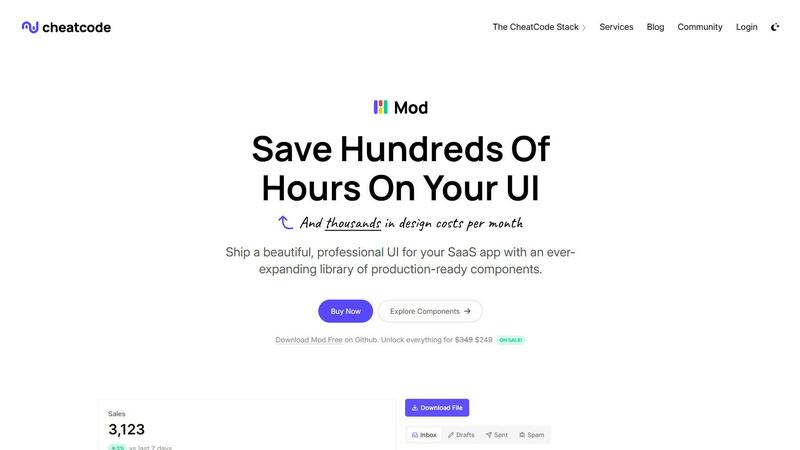
Mod is a CSS framework that helps developers build SaaS interfaces quickly with its library of components.

qtrl.ai
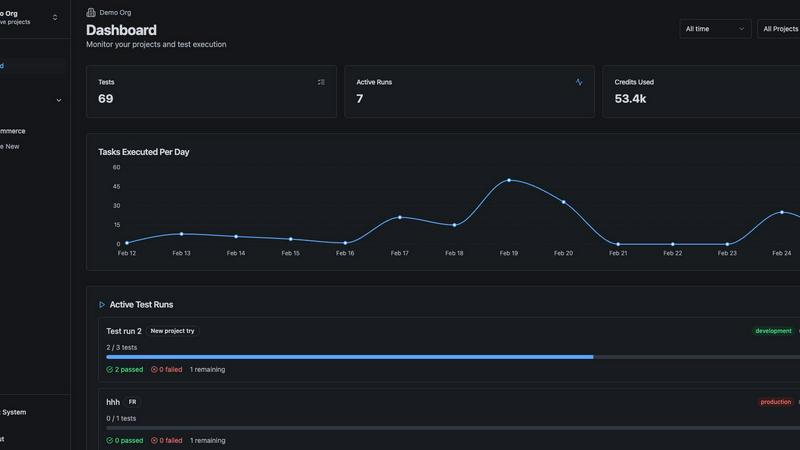
qtrl.ai scales QA with AI agents while ensuring full team control and governance.
Last updated: March 4, 2026
Visual Comparison
Mod
qtrl.ai
Feature Comparison
Mod
Extensive Pre-Built Component Library
Mod's foundation is its robust library of over 88 ready-to-use components, meticulously designed for SaaS applications. This includes everything from complex data tables, dashboards, and form elements to navigation bars, modals, and feedback widgets like alerts and toasts. Each component is built with accessibility and semantic HTML in mind, ensuring a solid baseline for user interaction. This depth eliminates the need to build common UI patterns from scratch, saving countless hours of development and testing while guaranteeing a consistent, professional look and feel across the entire application interface.
Framework-Agnostic Flexibility
A defining technical feature of Mod is its complete independence from any specific JavaScript framework or meta-framework. It delivers pure, well-structured CSS and component logic that can be seamlessly adopted by projects using React (via Next.js, Vite), Vue (via Nuxt), Svelte, or even traditional server-rendered applications in Ruby on Rails or Django. This architecture future-proofs your investment, as teams can migrate their underlying technology stack without abandoning their UI system. It empowers developers to choose the best tools for their job without being constrained by their design library's dependencies.
Comprehensive Theming and Style System
Beyond individual components, Mod provides a powerful, systematic approach to styling with 168 predefined styles and two core themes (light and dark). The theming engine allows for easy customization of color palettes, typography, spacing, and border radii to align with any brand identity. The built-in dark mode support is not an afterthought but a first-class feature, with all components designed to adapt gracefully. This system ensures visual consistency is maintainable at scale, enabling quick global changes from a single source of truth rather than hunting through thousands of lines of CSS.
Icon Suite and Responsive Foundations
Mod includes an extensive library of over 1,500 icons, covering a vast range of use cases from common actions (edit, delete, user) to more niche SaaS-related concepts. This integrated suite ensures visual consistency and saves developers from managing multiple third-party icon dependencies. Furthermore, every component and layout is built with a mobile-first, responsive design philosophy. This means interfaces automatically adapt and remain usable and aesthetically pleasing across all device sizes, from desktop monitors to smartphones, which is a non-negotiable requirement for modern web applications.
qtrl.ai
Enterprise-Grade Test Management
qtrl provides a robust, centralized hub for all QA artifacts. It enables teams to create, organize, and manage test cases, plans, and runs with full traceability back to requirements. This ensures clear audit trails, supports compliance needs, and offers a single source of truth for both manual and automated testing workflows, giving managers complete oversight and control over the quality process.
Autonomous QA Agents
This core feature introduces intelligent automation through AI agents that execute high-level instructions in real browsers. Teams can describe a test in plain English, and the agent performs the actions across defined environments. These agents operate at scale, run continuously or on-demand, and function within strict governance rules, providing automation power without the fragility of traditional script maintenance.
Progressive Automation & Adaptive Memory
qtrl champions a step-by-step journey to automation. Teams begin with human-written instructions, then progress to AI-generated tests, with full review capabilities at each stage. The platform's Adaptive Memory builds a living knowledge base of your application, learning from every interaction and execution to power smarter, more context-aware test suggestions and maintenance over time.
Multi-Environment Execution & Governance
The platform supports secure testing across development, staging, and production environments. It manages per-environment variables and encrypted secrets, ensuring sensitive data is never exposed to AI agents. Built-in governance features like permissioned autonomy levels, full agent visibility, and transparent decision-making ensure enterprise-ready security and foster trust in the automated processes.
Use Cases
Mod
Rapid Prototyping and MVP Development
For entrepreneurs and solo developers validating a business idea, speed is critical. Mod is an ideal tool for rapidly building a high-fidelity, functional prototype or Minimum Viable Product (MVP). Instead of spending weeks designing and coding basic UI elements, developers can leverage Mod's component library to assemble a professional-looking interface in days. This allows them to test core functionality with real users faster, gather feedback, and iterate on the product's unique value proposition without getting bogged down in frontend intricacies.
Scaling Design Consistency in Growing Teams
As a startup expands its engineering team, maintaining a consistent UI without a dedicated design system often leads to visual fragmentation and increased technical debt. Adopting Mod provides an instant, shared source of truth for all frontend developers. New team members can immediately contribute features with components that automatically adhere to the established design language. This scales design consistency effortlessly, improves collaboration between developers and designers, and reduces the time spent on code reviews for visual regressions.
Modernizing Legacy Application UIs
Many established businesses operate on older web applications with outdated, non-responsive user interfaces that harm user experience. A full rewrite may be cost-prohibitive. Mod offers a strategic path for incremental UI modernization. Its framework-agnostic CSS can be progressively integrated into legacy stacks (like a Rails monolith or a Django app) to refresh specific sections—like the admin dashboard or customer portal—with a modern, responsive design without a complete platform overhaul, delivering immediate UX improvements.
Building Internal Tools and Admin Panels
The development of internal tools, dashboards, and admin panels is often deprioritized, leading to clunky, poorly designed interfaces that hinder productivity. Mod is perfectly suited for this use case. Its comprehensive component set includes many elements crucial for admin interfaces: data grids, charts, complex forms, and filter controls. Developers can quickly assemble powerful, intuitive internal tools that employees enjoy using, thereby improving operational efficiency, all while maintaining a cohesive look with the customer-facing product if desired.
qtrl.ai
Scaling Beyond Manual Testing
For QA teams overwhelmed by repetitive manual test cycles, qtrl offers a graceful off-ramp. Teams can start by structuring their existing manual cases in the platform and then progressively introduce automation for the most tedious flows using autonomous agents, dramatically increasing test coverage and execution speed without a steep learning curve or loss of control.
Modernizing Legacy QA Workflows
Companies stuck with outdated, siloed, or script-heavy automation frameworks can use qtrl to consolidate and modernize. The platform integrates test management and execution, reduces maintenance burden via AI, and provides the dashboards and traceability missing from legacy setups, enabling a cohesive, data-driven quality strategy.
Ensuring Governance in Enterprise AI Adoption
Enterprises that require strict compliance, audit trails, and security for any AI tool find a safe partner in qtrl. Its "governance by design" philosophy, with features like permissioned autonomy, full visibility into agent actions, and encrypted secret management, allows large organizations to harness AI's power for QA without compromising on oversight or regulatory requirements.
Accelerating Product-Led Engineering Teams
Fast-moving product and engineering teams need to ensure quality without slowing down deployment. qtrl fits seamlessly into CI/CD pipelines, provides continuous quality feedback, and allows developers to create and run tests via simple instructions, enabling rapid iteration with confidence and shifting quality left in the development process.
Overview
About Mod
In the high-stakes arena of SaaS development, where user experience can make or break a product, Mod emerges as a specialized design system engineered for velocity and polish. It is not merely another CSS library; it is a comprehensive, production-ready toolkit for crafting sophisticated, business-grade user interfaces. At its core, Mod provides developers with a vast, pre-assembled collection of 88+ components, 168 distinct styles, and over 1,500 icons, all built with a mobile-first, responsive philosophy. Its framework-agnostic nature is a key strategic advantage, allowing seamless integration with modern stacks like Next.js, Nuxt, SvelteKit, and even backend-heavy frameworks such as Rails and Django. This eliminates the common friction of vendor lock-in, granting teams architectural freedom. Designed for solo developers, startups, and engineering teams, Mod's primary value proposition is the radical reduction of design debt and frontend development time. By offering meticulously styled, accessible, and themeable components out of the box—including built-in dark mode support—it enables builders to shift their focus from reinventing UI widgets to solving unique business logic and user experience challenges, ultimately accelerating the path from concept to a shipped, professional-grade application.
About qtrl.ai
qtrl.ai is a modern, progressive QA platform engineered to solve the fundamental tension in software quality assurance: the need for both speed and control. It is not merely another test automation tool, but a unified platform that seamlessly integrates enterprise-grade test management with powerful, trustworthy AI automation. At its heart, qtrl provides a centralized command center for all quality activities. Teams can meticulously organize test cases, plan and execute test runs, trace requirements to ensure comprehensive coverage, and monitor quality health through real-time dashboards. This structured foundation offers engineering leads and QA managers unparalleled visibility into testing status, risk areas, and release readiness.
Where qtrl truly distinguishes itself is through its philosophy of "progressive automation." Rejecting the risky, all-or-nothing approach of "black-box" AI, qtrl allows teams to start with familiar, manual test management. When ready, they can incrementally leverage intelligent autonomous agents. These agents can generate robust UI tests from simple English instructions, autonomously maintain them against application changes, and execute them at scale across multiple browsers and environments. This makes qtrl an ideal solution for product-led engineering teams seeking velocity, QA groups transitioning from manual processes, organizations modernizing legacy workflows, and enterprises that demand strict compliance, audit trails, and governance. Ultimately, qtrl bridges the gap between the slow pace of manual testing and the brittle, expensive complexity of traditional scripted automation, offering a trusted, scalable path to intelligent quality assurance.
Frequently Asked Questions
Mod FAQ
What makes Mod different from other CSS frameworks like Tailwind or Bootstrap?
While frameworks like Tailwind provide utility classes and Bootstrap offers generic components, Mod is specifically engineered for SaaS and business application interfaces. It provides a higher level of abstraction with complex, pre-composed components (e.g., data tables with sorting, detailed dashboard cards) that are not available in generic frameworks. Mod delivers opinionated, production-ready designs out of the box, whereas Tailwind requires you to design the aesthetics yourself. It's a complete design system, not just a set of low-level building blocks.
How does the framework-agnostic approach work in practice?
Mod is distributed as plain, well-structured CSS alongside component templates written in standard HTML/JavaScript (or JSX/Vue/Svelte snippets). There are no framework-specific dependencies or React/Vue component binaries. Developers copy the HTML structure and apply the provided CSS classes. This pure approach means the components render consistently regardless of your tech stack. Documentation provides examples for popular frameworks, but the underlying implementation remains standard web technologies, ensuring maximum compatibility and longevity.
Is Mod suitable for completely custom designs, or is it locked into its default look?
Mod is highly customizable. While it offers beautiful default themes, it is built with a systematic design token approach. Core variables for colors, fonts, spacing, and borders are centralized, allowing you to override them to match any brand guideline. You can create a completely custom theme that transforms the entire component library's appearance while retaining all the functional behavior, responsiveness, and accessibility features. It provides a structured foundation for customization, not a rigid template.
What is included in the "yearly updates" mentioned?
The yearly updates refer to ongoing maintenance and expansion of the Mod library. This typically includes adding new components based on emerging SaaS UI patterns, updating existing components for improved accessibility or browser compatibility, expanding the icon set, and refining the core themes. For subscribers, this ensures the design system stays modern and secure without requiring manual upgrades or patches from the development team, providing long-term value and reducing maintenance overhead.
qtrl.ai FAQ
How does qtrl.ai's AI differ from other "autonomous" testing tools?
qtrl.ai rejects the "black-box" AI-first approach that can be unpredictable and risky. Instead, it employs a progressive, trust-earning model. The AI operates as assistive agents that execute clear instructions or generate tests that are always reviewable and editable by humans. Governance controls, full transparency into agent actions, and a focus on augmenting (not replacing) human oversight make its AI practical and trustworthy for real enterprise workflows.
Can we use qtrl.ai if we currently only do manual testing?
Absolutely. qtrl is explicitly designed for this scenario. You can begin by using it as a powerful test management system to organize your existing manual cases and plans. When you're ready, you can start automating specific tests using plain English instructions with the AI agents, allowing you to scale your efforts incrementally without a disruptive, all-at-once transition.
How does qtrl handle testing across different environments and with sensitive data?
qtrl provides secure, multi-environment execution capabilities. You can define various environments (dev, staging, prod) with their own variables. Crucially, sensitive data like passwords and API keys can be stored as encrypted secrets that are injected at runtime. These secrets are never exposed to the AI agents, ensuring security and compliance are maintained throughout the testing process.
What kind of integration and traceability does qtrl support?
qtrl is built for real-world workflows. It supports requirements management integration, allowing you to trace tests back to specific features or user stories for coverage analysis. It also offers CI/CD pipeline support for automated test execution as part of your build process. Furthermore, its centralized nature provides inherent traceability from test cases to execution results and defects, all visible in comprehensive dashboards.