
Jottler vs Patrivox
Side-by-side comparison to help you choose the right AI tool.


Patrivox
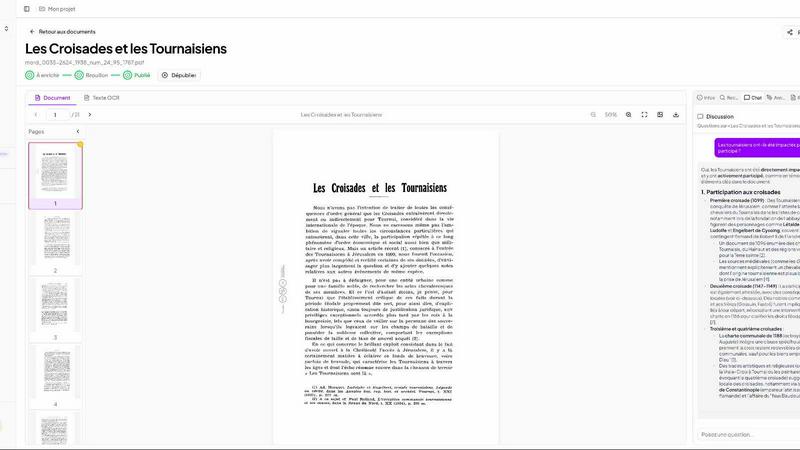
Patrivox uses AI to instantly digitize, search, and uncover connections within your document archives.
Last updated: March 4, 2026
Visual Comparison
Jottler

Patrivox
Overview
About Jottler
Jottler is an autonomous AI SEO agent that researches keywords, writes high-quality blog posts, and publishes them directly to your website to grow organic traffic automatically.
Built for founders, startups, and small teams, Jottler removes the complexity of SEO and content marketing by running the entire workflow for you—from keyword discovery to article publishing.
Key Features
• Fully automated SEO content pipeline
Jottler continuously discovers keyword opportunities, plans topics, and generates optimized articles for your blog.
• AI-powered keyword research & content planning
Identify high-value search opportunities and build a long-term content strategy automatically.
• Direct CMS publishing
Publish articles straight to platforms like Webflow, WordPress, and other CMS systems without manual work.
• Rich, structured content
Articles include images, formatting, internal links, tables, and SEO-optimized structure.
• Long-form, high-quality articles
About Patrivox
Patrivox emerges as a pivotal European SaaS platform, specifically engineered to liberate the latent knowledge trapped within physical and digital archives. It serves a critical need for heritage institutions, municipal archives, historical societies, and similar organizations burdened with vast collections of scanned documents that are, in practice, nearly impossible to search or analyze comprehensively. The platform's core function is to transform these static PDFs into a dynamic, intelligent, and fully searchable knowledge base. By leveraging cutting-edge Mistral AI for next-generation OCR and entity recognition, Patrivox automates the arduous tasks of text extraction and metadata enrichment. Its true innovation lies not just in making text searchable, but in constructing an interactive knowledge graph that visually maps connections between people, places, and organizations across the entire collection. This transforms archival research from a manual scavenger hunt into an intuitive process of discovery. The value proposition is multifaceted: it democratizes access to historical knowledge, dramatically accelerates research, preserves institutional memory, and fulfills public service mandates by making heritage accessible to all, not just specialist archivists.