
HookMesh vs qtrl.ai
Side-by-side comparison to help you choose the right AI tool.

Effortlessly streamline your SaaS with reliable webhook delivery, automatic retries, and a self-service customer portal.
Last updated: February 28, 2026

qtrl.ai
qtrl.ai scales QA with AI agents while ensuring full team control and governance.
Last updated: March 4, 2026
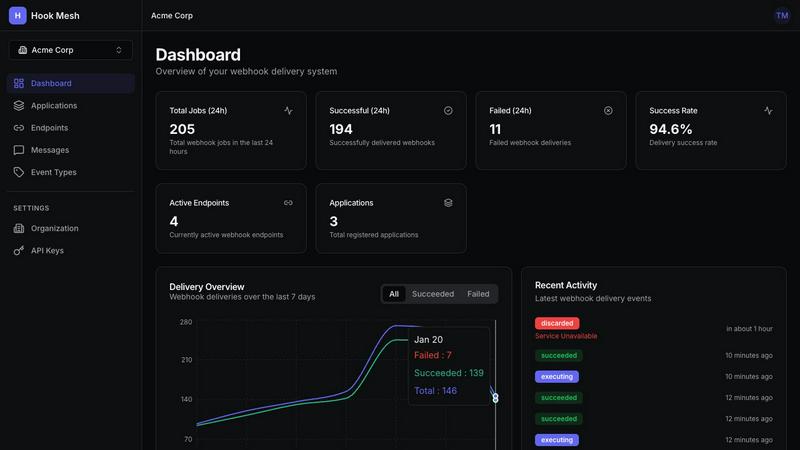
Visual Comparison
HookMesh
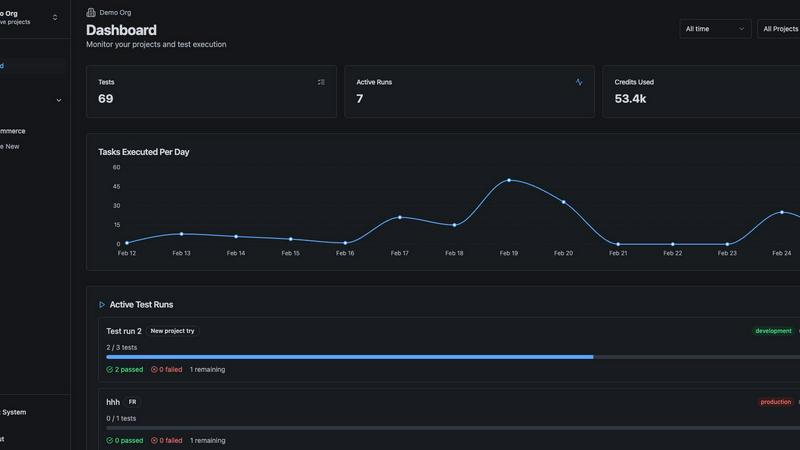
qtrl.ai
Feature Comparison
HookMesh
Reliable Delivery
HookMesh guarantees that no webhook is ever lost, thanks to its sophisticated delivery mechanisms. It employs automatic retries with exponential backoff, ensuring that if an endpoint is unavailable, the system will intelligently wait before attempting to resend the webhook. This feature supports up to 48 hours of retries, significantly reducing the risk of missed events.
Customer Portal
The self-service customer portal is a standout feature of HookMesh, allowing users to manage their webhook endpoints effortlessly. With an embeddable UI, customers can easily add or modify endpoints, view detailed delivery logs, and replay failed webhooks instantly, all without needing to contact support.
Developer Experience
HookMesh is engineered with developers in mind, providing a seamless experience for integrating webhook functionality. The REST API and various SDKs for languages like JavaScript, Python, and Go enable quick implementation. Developers can send events with just a few lines of code, allowing them to focus on building their applications rather than managing webhook logistics.
At-Least-Once Delivery
This feature guarantees that webhooks are delivered at least once, utilizing idempotency keys to prevent duplicate processing. This ensures that even in case of retries, the receiving system can safely handle the webhook data without causing inconsistencies or errors.
qtrl.ai
Enterprise-Grade Test Management
qtrl provides a robust, centralized hub for all QA artifacts. It enables teams to create, organize, and manage test cases, plans, and runs with full traceability back to requirements. This ensures clear audit trails, supports compliance needs, and offers a single source of truth for both manual and automated testing workflows, giving managers complete oversight and control over the quality process.
Autonomous QA Agents
This core feature introduces intelligent automation through AI agents that execute high-level instructions in real browsers. Teams can describe a test in plain English, and the agent performs the actions across defined environments. These agents operate at scale, run continuously or on-demand, and function within strict governance rules, providing automation power without the fragility of traditional script maintenance.
Progressive Automation & Adaptive Memory
qtrl champions a step-by-step journey to automation. Teams begin with human-written instructions, then progress to AI-generated tests, with full review capabilities at each stage. The platform's Adaptive Memory builds a living knowledge base of your application, learning from every interaction and execution to power smarter, more context-aware test suggestions and maintenance over time.
Multi-Environment Execution & Governance
The platform supports secure testing across development, staging, and production environments. It manages per-environment variables and encrypted secrets, ensuring sensitive data is never exposed to AI agents. Built-in governance features like permissioned autonomy levels, full agent visibility, and transparent decision-making ensure enterprise-ready security and foster trust in the automated processes.
Use Cases
HookMesh
E-commerce Order Notifications
In e-commerce platforms, timely order notifications are crucial for both customer satisfaction and operational efficiency. HookMesh can be used to deliver real-time order updates to customers or third-party services, ensuring that every order status change is communicated without fail.
Payment Processing Confirmation
For businesses dealing with payment processing, confirming transactions in real-time is essential. HookMesh can facilitate the reliable delivery of payment confirmation webhooks, enabling merchants to process orders and update inventories promptly, thus enhancing the overall customer experience.
SaaS Integrations
Many SaaS products rely on webhooks to integrate with other services. HookMesh simplifies these integrations by providing a robust system for delivering webhook events, allowing businesses to connect with various tools and platforms without the hassle of managing webhook complexities themselves.
Event-Driven Architecture
In scenarios where applications rely on an event-driven architecture, HookMesh can serve as a backbone for delivering critical events across systems. Its ability to handle retries and provide visibility into webhook delivery ensures that events are processed consistently, supporting seamless inter-system communication.
qtrl.ai
Scaling Beyond Manual Testing
For QA teams overwhelmed by repetitive manual test cycles, qtrl offers a graceful off-ramp. Teams can start by structuring their existing manual cases in the platform and then progressively introduce automation for the most tedious flows using autonomous agents, dramatically increasing test coverage and execution speed without a steep learning curve or loss of control.
Modernizing Legacy QA Workflows
Companies stuck with outdated, siloed, or script-heavy automation frameworks can use qtrl to consolidate and modernize. The platform integrates test management and execution, reduces maintenance burden via AI, and provides the dashboards and traceability missing from legacy setups, enabling a cohesive, data-driven quality strategy.
Ensuring Governance in Enterprise AI Adoption
Enterprises that require strict compliance, audit trails, and security for any AI tool find a safe partner in qtrl. Its "governance by design" philosophy, with features like permissioned autonomy, full visibility into agent actions, and encrypted secret management, allows large organizations to harness AI's power for QA without compromising on oversight or regulatory requirements.
Accelerating Product-Led Engineering Teams
Fast-moving product and engineering teams need to ensure quality without slowing down deployment. qtrl fits seamlessly into CI/CD pipelines, provides continuous quality feedback, and allows developers to create and run tests via simple instructions, enabling rapid iteration with confidence and shifting quality left in the development process.
Overview
About HookMesh
HookMesh is a cutting-edge solution meticulously designed to streamline and optimize webhook delivery for modern SaaS applications. In an era where real-time data transfer is crucial, HookMesh alleviates the burdens associated with in-house webhook management, such as complex retry logic, circuit breaker mechanisms, and the often frustrating task of debugging delivery failures. By leveraging HookMesh, businesses can concentrate on their core competencies without being encumbered by the intricate technical challenges that webhook management entails. This platform not only ensures reliable delivery through features like automatic retries and exponential backoff but also enhances user experience with its self-service capabilities. Designed for developers and product teams, HookMesh provides a robust infrastructure that guarantees consistent and reliable webhook delivery, thereby allowing organizations to focus on delivering exceptional customer experiences. The self-service portal offers endpoint management and visibility and simplifies the process of replaying failed webhooks with just a click. In essence, HookMesh is the optimal choice for teams seeking a dependable and efficient webhook strategy.
About qtrl.ai
qtrl.ai is a modern, progressive QA platform engineered to solve the fundamental tension in software quality assurance: the need for both speed and control. It is not merely another test automation tool, but a unified platform that seamlessly integrates enterprise-grade test management with powerful, trustworthy AI automation. At its heart, qtrl provides a centralized command center for all quality activities. Teams can meticulously organize test cases, plan and execute test runs, trace requirements to ensure comprehensive coverage, and monitor quality health through real-time dashboards. This structured foundation offers engineering leads and QA managers unparalleled visibility into testing status, risk areas, and release readiness.
Where qtrl truly distinguishes itself is through its philosophy of "progressive automation." Rejecting the risky, all-or-nothing approach of "black-box" AI, qtrl allows teams to start with familiar, manual test management. When ready, they can incrementally leverage intelligent autonomous agents. These agents can generate robust UI tests from simple English instructions, autonomously maintain them against application changes, and execute them at scale across multiple browsers and environments. This makes qtrl an ideal solution for product-led engineering teams seeking velocity, QA groups transitioning from manual processes, organizations modernizing legacy workflows, and enterprises that demand strict compliance, audit trails, and governance. Ultimately, qtrl bridges the gap between the slow pace of manual testing and the brittle, expensive complexity of traditional scripted automation, offering a trusted, scalable path to intelligent quality assurance.
Frequently Asked Questions
HookMesh FAQ
What is HookMesh?
HookMesh is a platform designed to simplify webhook delivery for SaaS products, providing reliable infrastructure and self-service capabilities for developers and product teams.
How does HookMesh ensure reliable delivery?
HookMesh ensures reliable delivery through features like automatic retries, exponential backoff, circuit breakers, and idempotency keys, which collectively minimize the risk of lost webhooks.
Can I manage webhook endpoints myself?
Yes, HookMesh offers a self-service portal that allows customers to manage their webhook endpoints, view delivery logs, and replay failed webhooks with ease.
What programming languages does HookMesh support?
HookMesh provides SDKs for popular programming languages including JavaScript, Python, and Go, making it easy for developers to integrate webhook functionality into their applications.
qtrl.ai FAQ
How does qtrl.ai's AI differ from other "autonomous" testing tools?
qtrl.ai rejects the "black-box" AI-first approach that can be unpredictable and risky. Instead, it employs a progressive, trust-earning model. The AI operates as assistive agents that execute clear instructions or generate tests that are always reviewable and editable by humans. Governance controls, full transparency into agent actions, and a focus on augmenting (not replacing) human oversight make its AI practical and trustworthy for real enterprise workflows.
Can we use qtrl.ai if we currently only do manual testing?
Absolutely. qtrl is explicitly designed for this scenario. You can begin by using it as a powerful test management system to organize your existing manual cases and plans. When you're ready, you can start automating specific tests using plain English instructions with the AI agents, allowing you to scale your efforts incrementally without a disruptive, all-at-once transition.
How does qtrl handle testing across different environments and with sensitive data?
qtrl provides secure, multi-environment execution capabilities. You can define various environments (dev, staging, prod) with their own variables. Crucially, sensitive data like passwords and API keys can be stored as encrypted secrets that are injected at runtime. These secrets are never exposed to the AI agents, ensuring security and compliance are maintained throughout the testing process.
What kind of integration and traceability does qtrl support?
qtrl is built for real-world workflows. It supports requirements management integration, allowing you to trace tests back to specific features or user stories for coverage analysis. It also offers CI/CD pipeline support for automated test execution as part of your build process. Furthermore, its centralized nature provides inherent traceability from test cases to execution results and defects, all visible in comprehensive dashboards.
Alternatives
HookMesh Alternatives
HookMesh is an innovative platform that specializes in streamlining webhook delivery for SaaS products. Designed to handle the complexities involved in managing webhooks, it provides features like automatic retries, a self-service customer portal, and robust infrastructure to ensure reliable event delivery. As businesses increasingly rely on webhooks for real-time data transfer, the demand for reliable solutions has grown, prompting users to seek alternatives that better suit their specific needs. Users often look for alternatives to HookMesh for various reasons, including pricing structures, specific feature sets, or compatibility with existing platforms. Each organization has unique requirements, and a one-size-fits-all solution may not always align with their operational objectives. When exploring alternatives, it's essential to consider factors such as reliability, ease of use, customer support, and the overall developer experience to ensure the chosen solution meets their webhook management needs effectively.
qtrl.ai Alternatives
qtrl.ai is a modern QA platform in the automation and dev tools space. It uniquely blends enterprise-grade test management with a progressive, trustworthy AI layer, allowing teams to scale their testing efforts while maintaining full control and governance over the process. Users often explore alternatives for various reasons. These can include budget constraints, the need for a different feature mix, or specific platform requirements like deeper integrations with an existing toolchain. Some teams may also seek a solution that is either purely manual, fully open-source, or takes a more aggressive, AI-first approach to automation. When evaluating alternatives, consider your team's primary goals. Key factors include the balance between structured test management and automation capabilities, the level of AI integration and transparency desired, and the importance of enterprise features like audit trails and compliance. The ideal choice should align with your team's maturity, from manual testing to advanced autonomous agents.