
GPT Image 2 vs Image to Animation
Side-by-side comparison to help you choose the right AI tool.

GPT Image 2
GPT Image 2 is a free AI image generator that creates photorealistic images with unmatched realism and razor-sharp text.
Last updated: April 13, 2026

Image to Animation
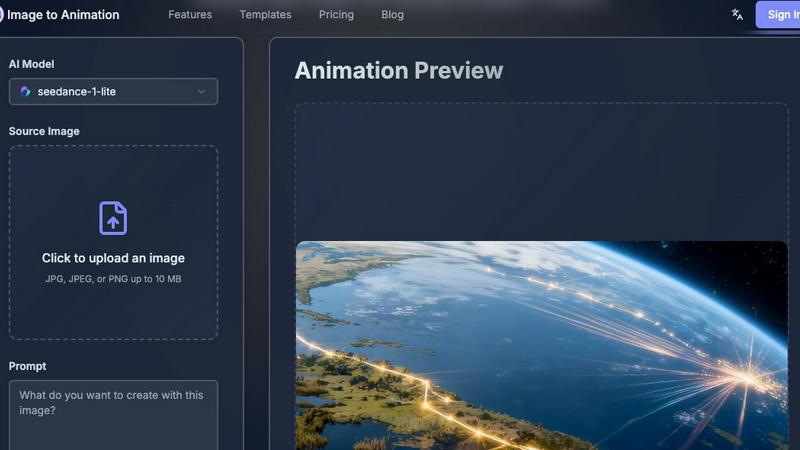
Unify top AI engines to instantly animate any static image into a professional video.
Last updated: March 1, 2026
Visual Comparison
GPT Image 2
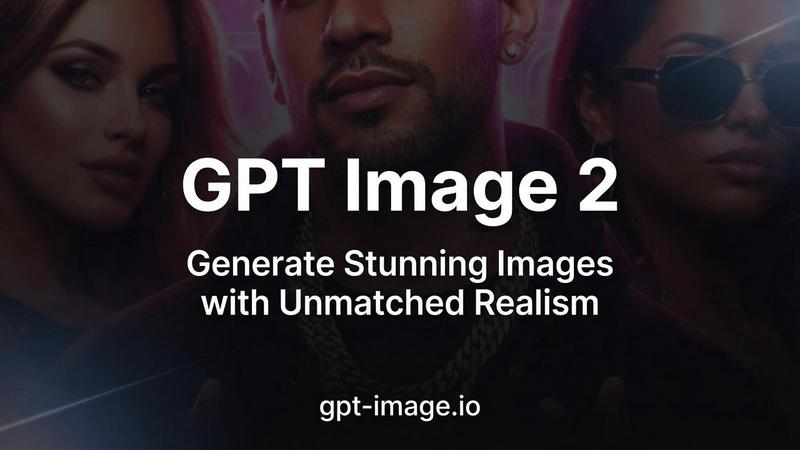
Image to Animation
Feature Comparison
GPT Image 2
Razor-Sharp Text Rendering
This feature directly tackles one of the most notorious weaknesses in AI image generation. GPT Image 2 achieves a groundbreaking text accuracy rate of over 95%, rendering words and letters with crystal-clear legibility within the image itself. This capability transforms the model from a general-purpose art tool into a specialized asset for creating posters, social media graphics, product mockups with labels, and any design where embedded text is non-negotiable. It understands typography and context, ensuring that text integrates naturally and correctly into the visual composition.
Photorealistic 4K Output
GPT Image 2 excels at generating images that are nearly indistinguishable from high-resolution photographs. Capable of producing visuals up to 4096x4096 pixels, it captures lifelike detail, accurate lighting, realistic shadows, and natural textures. This photorealism is validated by user studies where it was preferred by over 90% of participants for realism. For professionals, this means the ability to generate stock photography, conceptual product shots, or architectural visualizations that meet commercial quality standards without a photoshoot.
True Color Accuracy Engine
Moving beyond common AI artifacts like a persistent warm yellow color cast, GPT Image 2 incorporates advanced color science for neutral and faithful color reproduction. This ensures that the hues, saturation, and contrast in the generated image accurately reflect the user's prompt and creative intent. Designers and artists can rely on consistent and predictable color output, which is critical for brand consistency and achieving a specific visual mood or tone in their projects.
Deep Contextual World Knowledge
The model is built upon a foundation of rich world knowledge, allowing it to understand and visualize complex scenes, cultural nuances, historical contexts, and intricate real-world details. This goes beyond simple object recognition; it enables the AI to generate contextually accurate and richly nuanced imagery. Whether prompting for a bustling Tokyo street in the rain or a serene Renaissance-era painting, GPT Image 2 composes scenes with a coherent understanding of elements, style, and atmosphere.
Image to Animation
Unified AI Model Hub
This feature eliminates the complexity of choosing between disparate AI tools. Image to Animation integrates multiple state-of-the-art animation models like Kling, Veo3, and Sora2 into one platform. Users benefit from a consolidated powerhouse, accessing varied stylistic and technical strengths without needing separate subscriptions or mastering different interfaces, ensuring the best possible motion output for any given image.
One-Click Animation Generation
Designed for ultimate simplicity, this feature allows users to transform static images into dynamic videos with a single click. After uploading a photo and optionally providing a text prompt, the platform's AI handles the intricate analysis and rendering processes automatically. This dramatically lowers the barrier to entry, enabling rapid content creation and iteration for users of all skill levels.
Context-Aware Motion Intelligence
Beyond simple looping effects, the platform's AI deeply analyzes the content of the uploaded image—recognizing elements like water, foliage, hair, or fabric—and interprets user prompts to apply fluid, natural, and contextually appropriate motion. This ensures that animations feel organic and believable, enhancing realism and emotional impact rather than appearing as generic, applied filters.
Watermark-Free, Studio-Quality Output
Professional creators require clean, branded content. Image to Animation delivers high-resolution, watermark-free video files suitable for commercial use. This commitment to quality ensures that the final animations meet professional standards for social media campaigns, digital advertisements, and presentations, providing immense value without the need for expensive post-production software or services.
Use Cases
GPT Image 2
Marketing and Advertising Creative
Marketing teams can leverage GPT Image 2 to rapidly prototype and produce high-quality ad creatives, social media banners, and promotional graphics. The razor-sharp text feature allows for the seamless integration of headlines and slogans, while the photorealistic output ensures product visuals and conceptual scenes look professional and engaging, significantly reducing dependency on stock photo libraries and lengthy design cycles.
Product Design and Mockup Generation
Designers and e-commerce businesses can use the tool to create photorealistic mockups of products in various contexts. Imagine generating a custom-branded water bottle on a desk, a new sneaker design from multiple angles, or packaging concepts on a retail shelf. The fine detail control and accurate color reproduction make these mockups viable for client presentations, crowdfunding campaigns, and early-stage marketing.
Concept Art and Storyboarding
Artists, filmmakers, and game developers can utilize GPT Image 2 to quickly visualize concepts and iterate on storyboard frames. By describing a scene—"a cyberpunk detective standing in a neon-lit alley at night"—the model can produce multiple stylistic interpretations, from photorealistic to illustrated. This accelerates the pre-production process, helping teams align on visual direction and explore creative possibilities efficiently.
Educational and Editorial Content Creation
Educators, bloggers, and publishers can generate custom, royalty-free illustrations to accompany articles, textbooks, or online courses. The deep world knowledge ensures historically or scientifically accurate depictions, while the versatile styles allow matching the visual tone of the content, whether it requires a detailed diagram, a watercolor painting, or a clean 3D render to explain complex concepts.
Image to Animation
Social Media Content Creation
In the fiercely competitive social media landscape, motion captures attention. Influencers, brands, and marketers can use Image to Animation to instantly transform product photos, travel snapshots, or portraits into eye-catching, shareable video clips. This boosts engagement rates, increases dwell time, and helps content stand out in crowded feeds like Instagram Reels, TikTok, and YouTube Shorts.
Enhanced Digital Marketing and Advertising
Marketing professionals can revitalize static ad banners, email campaign graphics, and website hero images. Animating key visuals for digital ads can significantly improve click-through and conversion rates. The ability to quickly prototype and produce animated concepts allows for more dynamic A/B testing and more memorable brand storytelling across all digital touchpoints.
Creative Storytelling for Educators and Presenters
Educators, trainers, and corporate presenters can bring educational materials, historical photos, data visualizations, and presentation slides to life. Animated elements can illustrate processes, highlight key information, and make complex subjects more understandable and engaging for students or stakeholders, transforming passive viewing into an immersive learning experience.
Personal Art and Portfolio Development
Digital artists, photographers, and hobbyists can explore new creative dimensions by animating their existing artwork or photographs. This tool allows for the creation of living portfolios, digital art displays, and personalized greeting cards or gifts. It opens a new avenue for artistic expression, enabling creators to add a layer of narrative and emotion to their still work.
Overview
About GPT Image 2
GPT Image 2 represents a paradigm shift in the field of AI-powered visual creation. It is not merely an incremental update but a foundational leap, engineered to address the most persistent pain points that have plagued earlier generative models. At its core, GPT Image 2 is a state-of-the-art text-to-image and image-to-image model that synthesizes deep world knowledge with an advanced neural architecture to produce visuals of unprecedented fidelity and accuracy. Its primary value proposition lies in delivering production-ready, studio-quality images that professionals can trust, all within a remarkably fast sub-30-second generation window. This tool is meticulously crafted for a discerning audience: graphic designers seeking flawless mockups, marketers needing photorealistic ad creatives, content creators aiming for unique illustrations, and developers building applications that require reliable visual generation. By setting a new benchmark in text rendering clarity, color accuracy, and photorealistic detail, GPT Image 2 moves AI image generation from a novel experiment to an indispensable professional tool, empowering users to bring even the most complex and nuanced creative visions to life without compromise.
About Image to Animation
Image to Animation is not merely another digital effect tool; it is a comprehensive reimagining of creative agency in the visual domain. This platform represents a significant leap from static imagery, employing a sophisticated, AI-driven engine to breathe life into photographs, transforming them into dynamic, engaging video animations with remarkable ease. It effectively democratizes a process once gatekept by high-end studios, requiring extensive technical skill and resources. The tool is engineered for a vast spectrum of users: from individual content creators and social media influencers seeking viral-ready content, to marketing teams, educators, and businesses aiming to enhance their storytelling and audience engagement without a prohibitive learning curve. Its core value lies in its powerful aggregation. Instead of forcing users to navigate a fragmented landscape of specialized AI models, Image to Animation consolidates multiple cutting-edge technologies—including Kling, Veo3, Sora2, Wan, and Seedance—into a single, intuitive interface. This unified approach allows anyone to generate studio-quality, watermark-free animations in seconds by simply uploading an image and providing a creative prompt. By intelligently analyzing visual content and interpreting user intent, the platform infuses photos with fluid, natural motion, seamlessly bridging the gap between creative vision and polished, professional execution for social media, advertisements, presentations, and beyond.
Frequently Asked Questions
GPT Image 2 FAQ
How accurate is the text rendering in GPT Image 2?
GPT Image 2 sets a new industry standard with over 95% text accuracy in generated images. It is specifically engineered to understand and render words, numbers, and typographic elements with exceptional clarity and legibility. While perfect accuracy cannot be guaranteed for every single character in extremely complex or stylized fonts, it represents a monumental leap over previous models, making it highly reliable for text-in-image tasks.
What resolutions does GPT Image 2 support?
The model supports high-resolution outputs, with a maximum capability of up to 4K resolution (4096x4096 pixels). Users can typically select from various preset aspect ratios and resolutions, such as 1K, to suit their specific project needs, from web graphics to large-format prints, ensuring detail and quality are maintained.
Can I use GPT Image 2 for free?
Yes, new users are offered free credits to try GPT Image 2 online. The platform often runs promotional offers, such as providing initial free credits and discounts like 50% off all plans for a limited time for new users. This allows you to test the model's capabilities and generate several images before committing to a paid plan.
What is the difference between Text-to-Image and Image-to-Image?
Text-to-Image generation creates a completely new image from a written description (prompt). Image-to-Image generation uses an existing uploaded image as a starting point or reference, allowing you to modify it, change its style, or enhance it based on an additional text prompt. GPT Image 2 supports both modes, offering greater creative flexibility.
Image to Animation FAQ
What kind of images work best with Image to Animation?
High-quality, well-lit images with clear subjects and distinct elements (like flowing water, clouds, or hair) typically yield the best results. The AI uses these details to generate natural motion. Complex, cluttered, or very low-resolution images may produce less defined animations. For optimal outcomes, use photos with good contrast and a focal point you wish to animate.
Do I need any animation or video editing experience to use this tool?
Absolutely not. Image to Animation is specifically designed to require zero prior expertise. The process is built around a simple upload-and-click workflow. While you can use text prompts to guide the animation style, the AI handles all the complex technical rendering, making professional animation accessible to complete beginners.
Can I use the animated videos for commercial purposes?
Yes, based on the platform's commitment to delivering watermark-free, studio-quality output, the animations you create are intended for personal and commercial use. This means you can legally incorporate them into social media ads, marketing campaigns, client projects, and other revenue-generating activities without concern for licensing issues typically associated with stock animation.
How does the platform's AI choose which motion model to use?
The platform intelligently routes your image and prompt through its aggregated model hub. It likely analyzes the content of your image and the nature of your request to select the most suitable AI model (e.g., Kling for certain motions, Veo3 for others) from its suite. This automated decision-making ensures users receive the highest quality animation without needing to understand the technical differences between each underlying model.
Alternatives
GPT Image 2 Alternatives
GPT Image 2 is a prominent player in the AI image generation category, specifically designed to create photorealistic images from text descriptions. It distinguishes itself with a focus on sharp text rendering and leveraging deep world knowledge to produce highly detailed and coherent visuals. This places it among a growing suite of tools that transform creative prompts into digital art and realistic scenes. Users often explore alternatives for a variety of practical reasons. While a tool may excel in photorealism, another might offer superior artistic styles, more granular control over outputs, or different licensing terms for commercial use. Needs can vary widely, from a hobbyist seeking a free tool for casual projects to a professional requiring specific integrations, higher resolution outputs, or a different pricing model that better fits sustained usage. When evaluating other options, it's crucial to align the tool's capabilities with your primary objectives. Key considerations include the quality and style of the generated images, the accuracy of text-to-image rendering, the available customization features, and the overall cost structure. Assessing the user experience, output speed, and the privacy policies regarding your data and generated images will also lead to a more informed and satisfactory choice.
Image to Animation Alternatives
Image to Animation is a unified software platform in the generative art and video category. It aggregates multiple top AI engines to transform static images into professional, dynamic animations with a single click, democratizing a process that once required significant technical skill. Users often explore alternatives for various reasons. These can include budget constraints, a need for different feature sets like specific animation styles or control levels, or compatibility requirements with other software in their workflow. The desire for a free tier, different subscription models, or platform-specific applications also drives this search. When evaluating alternatives, key considerations should include the quality and realism of the generated motion, the range of available animation styles and controls, pricing transparency, and output format flexibility. It’s also crucial to assess the underlying AI technology's reliability and the tool's ease of use to ensure it aligns with your creative goals and technical comfort level.