
Glossa vs YouTube to Transcript
Side-by-side comparison to help you choose the right AI tool.

Glossa instantly translates sermons into over 100 languages, uniting your global congregation with AI.
Last updated: February 28, 2026

YouTube to Transcript
Instantly extract and translate any YouTube video's transcript for free with no login required.
Last updated: March 3, 2026
Visual Comparison
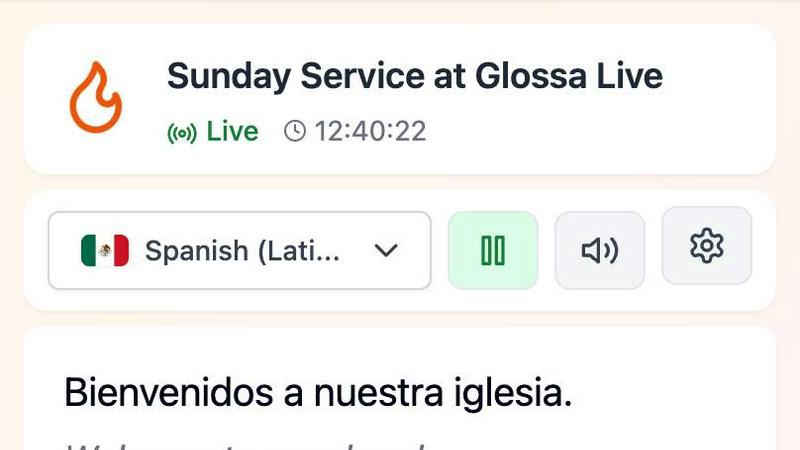
Glossa
YouTube to Transcript
Feature Comparison
Glossa
Real-Time, Ultra-Low Latency Translation
Glossa's core engine is built for synchronization. It processes speech, transcription, and translation with minimal delay, ensuring the translated audio stays in tight sync with the live speaker. This is critical for maintaining the natural flow of a sermon, allowing listeners to follow along with gestures and emotional cues, rather than receiving a disjointed, delayed message that breaks the immersive worship experience.
Biblically-Trained AI Model
Unlike generic translation services, Glossa's AI has been specifically trained on biblical texts, theological literature, and common church terminology. This specialized training allows it to accurately translate complex concepts like "grace," "redemption," or "sanctification" with appropriate contextual meaning, ensuring doctrinal precision and preserving the spiritual intent of the original message across all supported languages.
No-Hardware, Mobile-First Experience
Glossa dramatically lowers the barrier to entry by requiring no specialized interpretation equipment. Setup involves simply connecting a laptop to the church's audio system. For listeners, the experience is entirely app-free; they connect via a web link on their personal smartphones and use their own earbuds. This removes five-figure capital expenses and complex logistics, making professional-grade translation accessible to churches of any size.
Voice Cloning Technology
Available in higher-tier plans, this advanced feature allows the translated speech to be delivered in a synthetic voice that mimics the original speaker's vocal characteristics. This preserves the pastor's unique tone, cadence, and emotional delivery in the translation, fostering a more personal and authentic connection with the congregation, even when they are listening in a different language.
YouTube to Transcript
100% Free, No Registration
This is the cornerstone feature that sets YouTube to Transcript apart in a market of freemium models and sign-up walls. The service operates on a truly free-forever model with no hidden costs, premium tiers, or mandatory account creation. Users can access the full power of the tool immediately upon visiting the website, ensuring instant utility without the typical data entry or email verification hurdles. This commitment removes barriers for one-time users and empowers high-volume professionals alike.
Multi-Language Support & Translation
The tool excels in global accessibility by supporting transcription for videos in any language that YouTube itself supports. Beyond mere extraction, it features a powerful one-click translation capability into over 125 languages. This transforms a monolingual video into a multilingual resource, enabling users to understand foreign-language content, localize research materials, or reach a broader audience with translated subtitles and scripts, all within the same streamlined interface.
Unlimited Usage & No Video Length Restrictions
YouTube to Transcript imposes no artificial constraints on user activity. There are no caps on the number of transcripts generated per day or month, and critically, no restrictions on the duration of the source video. Whether transcribing a 60-second short or a multi-hour lecture, documentary, or livestream, the tool processes the request with the same efficiency. This "no limits" policy is essential for researchers dealing with long-form content and creators who need consistent, reliable access.
Clean Export for Content Repurposing
The tool doesn't just provide a raw text dump; it delivers a cleanly formatted transcript ready for immediate application. The output is structured for clarity, making it easy to copy for SEO-friendly blog articles, detailed study notes, closed captioning files, or script outlines for new video content. This focus on production-ready formatting saves users significant time in post-processing, directly enabling efficient content repurposing and workflow integration.
Use Cases
Glossa
Multilingual Sunday Services
The primary use case is for weekly worship services in churches with diverse linguistic demographics. A single pastor can deliver a sermon in English, while congregants simultaneously listen in Spanish, Mandarin, Korean, or Arabic. This unifies the congregation, allows families of mixed language proficiency to worship together, and ensures everyone receives the same message with equal clarity and impact.
International Conferences and Mission Events
Large-scale Christian conferences, crusades, or missionary events that draw a global audience can leverage Glossa to break down language barriers in real-time. Speakers can address thousands of attendees who each hear the translation in their native language through their phones, facilitating cross-cultural fellowship and learning without the cost and delay of hiring human interpreters for dozens of languages.
Integrating and Welcoming New Immigrant Families
Churches located in immigrant communities can use Glossa to immediately welcome and integrate non-native speakers. New families can attend and understand the service from their first visit, dramatically accelerating their sense of belonging and connection to the church body without requiring them to first achieve fluency in the local language.
Broadcasting and Streaming Translated Services
With RTMP streaming integration, churches can broadcast their live service to platforms like YouTube or Facebook, while Glossa provides real-time translated captions or audio tracks. This expands the church's reach to a global online audience, allowing international viewers to participate in worship and sermons in their own language, effectively supporting digital ministry efforts.
YouTube to Transcript
Academic Research and Study
Students and academics can leverage the tool to transcribe lectures, documentary footage, or expert interviews. This creates accurate, searchable notes for revision, enables precise quoting in papers and theses, and aids in the analysis of complex spoken material. It transforms passive listening into an active, text-based research process, enhancing comprehension and citation accuracy while saving countless hours of manual note-taking.
Content Creation and SEO
Bloggers, marketers, and video creators can repurpose video content into various text-based formats. A single YouTube video can be transformed into a detailed blog post, a series of social media snippets, newsletter content, or optimized website copy. The transcript provides the exact wording for accurate closed captions, improving accessibility and SEO, as search engines can index the textual content derived from the video.
Language Learning and Accessibility
Language learners can use transcripts alongside videos to improve reading and listening comprehension, look up unfamiliar vocabulary, and practice pronunciation. Furthermore, the translation feature opens up foreign content for understanding. Crucially, the tool serves as an accessibility aid for individuals who are deaf or hard of hearing, providing a textual alternative to audio content, and for those who prefer reading to listening.
Professional Analysis and Journalism
Professionals, analysts, and journalists can use the service to transcribe earnings calls, conference presentations, political speeches, or competitor product reviews. Having a precise text record allows for detailed analysis, easy extraction of key quotes, fact-checking, and efficient summarization of lengthy discussions. It enables thorough preparation and creates a verifiable record of spoken statements.
Overview
About Glossa
Glossa is a revolutionary AI-powered translation service engineered specifically for the unique acoustic and spiritual environment of churches and religious events. It addresses a profound challenge faced by modern, diverse congregations: the language barrier that can prevent members from fully participating in worship and understanding the sermon. The platform operates in real-time, capturing the speaker's audio, transcribing it, and translating it into over 100 languages simultaneously with ultra-low latency. The core value proposition is accessibility and inclusion without the traditional burdens. Congregants simply use their own smartphones and earbuds to listen in their heart language, eliminating the need for costly hardware installations, dedicated interpretation booths, or a team of volunteer translators. From small immigrant churches to large international ministries, Glossa democratizes understanding, ensuring that every individual, regardless of native tongue, can receive the Word and feel an integral part of the faith community. Its biblically-trained AI model ensures nuanced handling of theological terms, making it more than just a translator, but a tool for authentic spiritual connection.
About YouTube to Transcript
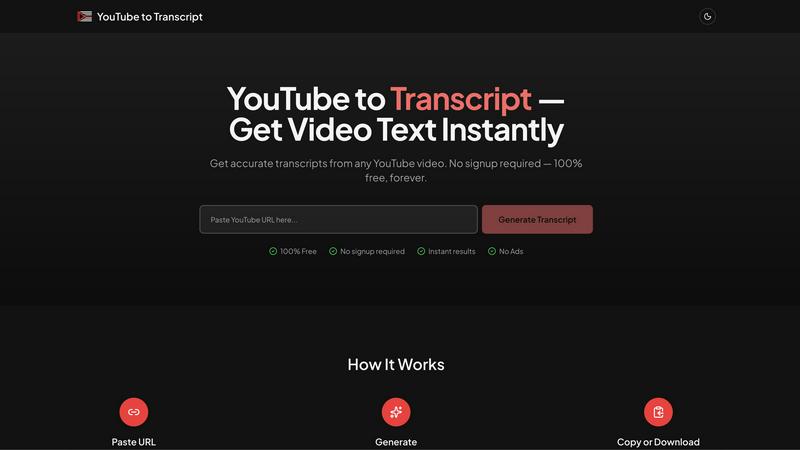
In the digital age, video content is a primary source of information, education, and entertainment. However, its fleeting, audio-visual nature often creates barriers for deep analysis, accessibility, and content repurposing. YouTube to Transcript emerges as a critical bridge between the dynamic world of video and the tangible, versatile world of text. This powerful, web-based utility is engineered to democratize access to video content by instantly converting any YouTube video into a high-quality, accurate transcript with a simple URL paste. It serves a diverse audience: content creators seeking to repurpose videos into blog posts or captions, students and researchers needing accurate notes and citations, professionals analyzing market trends or interviews, and language learners or individuals with hearing impairments requiring textual access. Its core value proposition is unparalleled simplicity and freedom—offering a robust, feature-rich service that is completely free, requires no registration, and imposes no usage limits, thereby removing all traditional friction points associated with transcription services.
Frequently Asked Questions
Glossa FAQ
How does the pricing work? What is a "translation hour"?
Glossa uses a unique "translation hour" metric. One translation hour is consumed for each language you translate into for each hour of active speech. For example, if your 1-hour sermon is translated into Spanish and French, that consumes 2 translation hours (1 hour x 2 languages). Importantly, silence, music, and songs do not count toward this usage, so you only pay for the time the pastor or speaker is actually talking.
What equipment do I need to get started?
You need minimal equipment: a computer (laptop or desktop) with an internet connection and a way to connect it to your church's audio source. This is typically done via an audio cable from your soundboard into the computer's microphone input or via a USB audio interface. No specialized hardware, receivers, or headsets for the congregation are required.
How do attendees access the translation?
Attendees do not need to download an app. The church provides a simple web link (or a QR code). Attendees open this link on their smartphone's web browser, select their preferred language, and listen using their personal earphones or headphones. The interface is designed to be intuitive and accessible for all ages.
Is the translation accurate for complex biblical terms?
Yes, this is a key differentiator for Glossa. Its AI model is specifically trained on a vast corpus of biblical texts, sermons, and theological resources. This specialized training allows it to understand context and translate complex religious terminology, names, and concepts far more accurately than a standard, general-purpose translation tool like Google Translate.
YouTube to Transcript FAQ
Is YouTube to Transcript completely free to use?
Yes, YouTube to Transcript is 100% free to use with no hidden fees or premium tiers. The service operates on a free-forever model, meaning there are no plans to charge for core transcription features. You can generate unlimited transcripts without any payment or subscription required.
How do I get a transcript from a YouTube video?
The process is straightforward. First, copy the URL of the YouTube video you want to transcribe. Then, navigate to the YouTube to Transcript website and paste the URL into the provided input field. Finally, click the "Generate Transcript" button. The system will process the video and display the text transcript for you to copy or download, usually within seconds.
Can I download the transcript text?
Absolutely. Once the transcript is generated, you have two primary options. You can directly copy the entire text to your computer's clipboard with one click for immediate pasting into another document. Alternatively, you can download the transcript as a plain text (.TXT) file, which can be opened and edited in any text editor or word processor.
What if the YouTube video has no subtitles?
YouTube to Transcript is designed to extract text from the subtitle tracks that are either manually added by the uploader or automatically generated by YouTube's speech recognition. If a video has absolutely no subtitles available (neither manual nor auto-generated), the tool will not be able to produce a transcript, as it relies on this existing textual data from YouTube's system.
Alternatives
Glossa Alternatives
Glossa is a specialized AI translation service designed for multilingual church services, operating in the language and translation technology category. It enables real-time sermon translation for congregation members to access via their smartphones. Users often explore alternatives for various reasons, such as budget constraints that require a different pricing model, the need for specific features not offered, or a preference for a different technological platform or integration method. The search for the right tool is highly personal to a ministry's unique context. When evaluating alternatives, key considerations include the accuracy and speed of translation, the range of languages supported, the overall cost and pricing structure, and the ease of setup and use for both the church staff and the congregation. The goal is to find a solution that effectively bridges the language gap without creating technical or financial burdens.
YouTube to Transcript Alternatives
YouTube to Transcript is a specialized online tool in the productivity and content creation space. It provides a straightforward, no-cost method for extracting text from YouTube videos, which is invaluable for creating notes, generating content, or overcoming language barriers through translation. Users often seek alternatives for various reasons. Some may require advanced features like bulk processing or direct integration with other software. Others might prioritize a different user interface or have specific concerns about data privacy and how their queries are handled. The needs of a professional subtitler differ greatly from those of a casual student. When evaluating different tools, key considerations include the core functionality's reliability, the range of supported languages, and the flexibility of export formats. It's also wise to assess any usage limits, cost structures, and the overall ease of use to find a solution that aligns perfectly with your individual workflow and project demands.