
Glossa vs MeloLingua
Side-by-side comparison to help you choose the right AI tool.

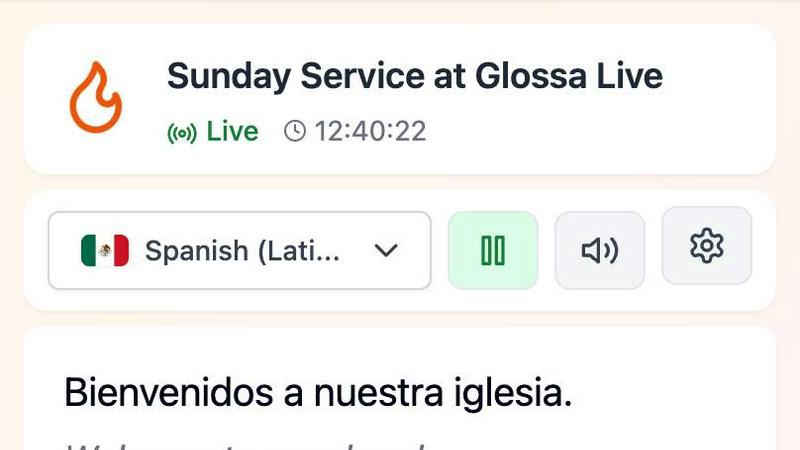
Glossa instantly translates sermons into over 100 languages, uniting your global congregation with AI.
Last updated: February 28, 2026

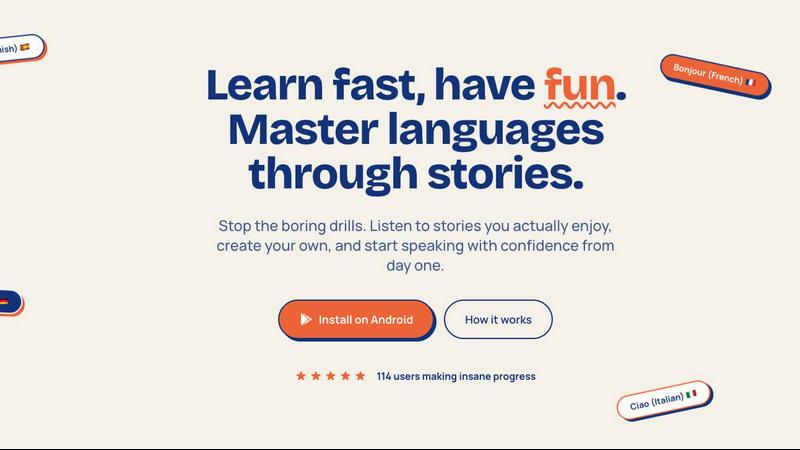
MeloLingua teaches languages through personalized stories, helping you listen, create, and speak confidently.
Last updated: February 28, 2026
Visual Comparison
Glossa
MeloLingua
Feature Comparison
Glossa
Real-Time, Ultra-Low Latency Translation
Glossa's core engine is built for synchronization. It processes speech, transcription, and translation with minimal delay, ensuring the translated audio stays in tight sync with the live speaker. This is critical for maintaining the natural flow of a sermon, allowing listeners to follow along with gestures and emotional cues, rather than receiving a disjointed, delayed message that breaks the immersive worship experience.
Biblically-Trained AI Model
Unlike generic translation services, Glossa's AI has been specifically trained on biblical texts, theological literature, and common church terminology. This specialized training allows it to accurately translate complex concepts like "grace," "redemption," or "sanctification" with appropriate contextual meaning, ensuring doctrinal precision and preserving the spiritual intent of the original message across all supported languages.
No-Hardware, Mobile-First Experience
Glossa dramatically lowers the barrier to entry by requiring no specialized interpretation equipment. Setup involves simply connecting a laptop to the church's audio system. For listeners, the experience is entirely app-free; they connect via a web link on their personal smartphones and use their own earbuds. This removes five-figure capital expenses and complex logistics, making professional-grade translation accessible to churches of any size.
Voice Cloning Technology
Available in higher-tier plans, this advanced feature allows the translated speech to be delivered in a synthetic voice that mimics the original speaker's vocal characteristics. This preserves the pastor's unique tone, cadence, and emotional delivery in the translation, fostering a more personal and authentic connection with the congregation, even when they are listening in a different language.
MeloLingua
AI-Powered Personal Story Generation
This is the engine of MeloLingua's innovative approach. Users input details about their interests, profession, or daily life, and the AI crafts coherent, level-appropriate short stories using that personal data. This ensures every lesson's vocabulary and grammar are immediately relevant, embedding language structures within the context of the learner's own world, which dramatically improves retention and emotional connection to the material.
Native Audio with Synchronized Text
Each personally generated story is accompanied by high-quality audio recorded by native speakers. Learners can listen while following along with perfectly synchronized text, creating a powerful dual-coding experience. This feature trains the ear to recognize the natural rhythm, intonation, and pronunciation of the language within a meaningful context, building listening comprehension skills far more effectively than artificial drills.
Interactive Tap-to-Learn Vocabulary
As users engage with their story's text, they can tap on any word or phrase to receive an instant definition, translation, and contextual example. This on-demand, in-context learning method allows for organic vocabulary acquisition exactly when curiosity strikes, eliminating the need to pause and switch to a separate dictionary app and keeping the flow of comprehension seamless.
AI Pronunciation Feedback & Speaking Practice
MeloLingua doesn't just teach passive comprehension; it actively builds speaking skills. Users can record themselves reading sentences or phrases from their story. The AI then analyzes their pronunciation, providing specific, actionable feedback on intonation, rhythm, and individual phonemes. This creates a safe, private space for deliberate practice, turning personal stories into tools for articulate self-expression.
Use Cases
Glossa
Multilingual Sunday Services
The primary use case is for weekly worship services in churches with diverse linguistic demographics. A single pastor can deliver a sermon in English, while congregants simultaneously listen in Spanish, Mandarin, Korean, or Arabic. This unifies the congregation, allows families of mixed language proficiency to worship together, and ensures everyone receives the same message with equal clarity and impact.
International Conferences and Mission Events
Large-scale Christian conferences, crusades, or missionary events that draw a global audience can leverage Glossa to break down language barriers in real-time. Speakers can address thousands of attendees who each hear the translation in their native language through their phones, facilitating cross-cultural fellowship and learning without the cost and delay of hiring human interpreters for dozens of languages.
Integrating and Welcoming New Immigrant Families
Churches located in immigrant communities can use Glossa to immediately welcome and integrate non-native speakers. New families can attend and understand the service from their first visit, dramatically accelerating their sense of belonging and connection to the church body without requiring them to first achieve fluency in the local language.
Broadcasting and Streaming Translated Services
With RTMP streaming integration, churches can broadcast their live service to platforms like YouTube or Facebook, while Glossa provides real-time translated captions or audio tracks. This expands the church's reach to a global online audience, allowing international viewers to participate in worship and sermons in their own language, effectively supporting digital ministry efforts.
MeloLingua
The Professional Seeking Career Advancement
A marketing manager needing to present to international clients can generate stories about campaign strategies, market analysis, and client meetings. This allows them to learn precise business vocabulary and formal sentence structures within their professional domain, leading to more confident and nuanced communication in work settings, rather than relying on generic travel phrases.
The Hobbyist Connecting with a Global Community
A photographer, chef, or guitarist can create stories around their craft—describing techniques, equipment, or creative processes. This enables them to engage deeply with forums, tutorials, and social media communities in the target language, transforming a personal passion into a bridge for authentic cultural and social connection.
The Traveler Preparing for Immersive Experiences
Instead of learning phrases for fictitious scenarios, a traveler can generate stories about their actual itinerary, dining preferences, and planned activities. Practicing language related to their specific journey—from asking for directions to a particular landmark to discussing food allergies—leads to more practical, confident, and enriched travel experiences.
The Lifelong Learner with Specific Personal Goals
Someone aiming to read literature, understand films, or communicate with a partner's family can tailor content to those exact objectives. They can generate stories that incorporate cultural nuances, familial terms, or narrative styles found in media, creating a direct and motivating link between daily practice and their ultimate, personal fluency goals.
Overview
About Glossa
Glossa is a revolutionary AI-powered translation service engineered specifically for the unique acoustic and spiritual environment of churches and religious events. It addresses a profound challenge faced by modern, diverse congregations: the language barrier that can prevent members from fully participating in worship and understanding the sermon. The platform operates in real-time, capturing the speaker's audio, transcribing it, and translating it into over 100 languages simultaneously with ultra-low latency. The core value proposition is accessibility and inclusion without the traditional burdens. Congregants simply use their own smartphones and earbuds to listen in their heart language, eliminating the need for costly hardware installations, dedicated interpretation booths, or a team of volunteer translators. From small immigrant churches to large international ministries, Glossa democratizes understanding, ensuring that every individual, regardless of native tongue, can receive the Word and feel an integral part of the faith community. Its biblically-trained AI model ensures nuanced handling of theological terms, making it more than just a translator, but a tool for authentic spiritual connection.
About MeloLingua
MeloLingua represents a paradigm shift in language acquisition, moving away from the sterile, one-size-fits-all approach of traditional apps. At its core, it is a language learning platform engineered around the profound power of personal narrative. The fundamental premise is simple yet revolutionary: you learn best when the material is intrinsically meaningful to you. Instead of drilling disconnected vocabulary lists or rehearsing scripted dialogues about booking hotels, MeloLingua generates short, natural stories based on your unique life—your career, hobbies, daily routines, and personal goals. This transforms the learning process from a chore into an engaging exploration of self-expression in a new language. By listening to native-level audio of your own story, following synchronized text, and practicing pronunciation with AI feedback, you build listening confidence and speaking fluency in a context that matters. It's designed for the motivated learner who finds generic content disengaging and seeks a deeper, more consistent, and personally resonant path to language mastery. The value proposition is clear: achieve natural, confident communication by making the language your own, from day one.
Frequently Asked Questions
Glossa FAQ
How does the pricing work? What is a "translation hour"?
Glossa uses a unique "translation hour" metric. One translation hour is consumed for each language you translate into for each hour of active speech. For example, if your 1-hour sermon is translated into Spanish and French, that consumes 2 translation hours (1 hour x 2 languages). Importantly, silence, music, and songs do not count toward this usage, so you only pay for the time the pastor or speaker is actually talking.
What equipment do I need to get started?
You need minimal equipment: a computer (laptop or desktop) with an internet connection and a way to connect it to your church's audio source. This is typically done via an audio cable from your soundboard into the computer's microphone input or via a USB audio interface. No specialized hardware, receivers, or headsets for the congregation are required.
How do attendees access the translation?
Attendees do not need to download an app. The church provides a simple web link (or a QR code). Attendees open this link on their smartphone's web browser, select their preferred language, and listen using their personal earphones or headphones. The interface is designed to be intuitive and accessible for all ages.
Is the translation accurate for complex biblical terms?
Yes, this is a key differentiator for Glossa. Its AI model is specifically trained on a vast corpus of biblical texts, sermons, and theological resources. This specialized training allows it to understand context and translate complex religious terminology, names, and concepts far more accurately than a standard, general-purpose translation tool like Google Translate.
MeloLingua FAQ
How does learning through personal stories differ from traditional methods?
Traditional methods often rely on memorization and decontextualized exercises, which can feel abstract and forgettable. MeloLingua's story-based approach embeds grammar and vocabulary within narratives about your life. This creates emotional hooks and real-world context, which cognitive science shows significantly enhances memory encoding, retention, and the ability to recall and use language spontaneously.
What if I'm a complete beginner? Will the stories be too complex?
The AI is designed to scale complexity based on your designated proficiency level. For a true beginner, stories will utilize high-frequency vocabulary and simple sentence structures, gradually increasing in sophistication as you progress. The content remains personal and comprehensible, ensuring you are always learning within your "i+1" zone—understanding most of the input while being gently challenged.
Can I use MeloLingua to learn any language?
The available languages depend on MeloLingua's current library of native speaker audio and AI models. While the provided context doesn't specify a list, the platform's design is inherently multi-language. The core methodology—generating personal stories and providing synchronized audio—can be applied to any language for which the necessary linguistic infrastructure and voice recordings are in place.
Is the AI pronunciation feedback accurate and helpful?
The AI feedback system is engineered to analyze key aspects of speech, such as vowel/consonant accuracy, word stress, and sentence-level intonation patterns. While it may not replicate the nuanced ear of a human tutor, it provides consistent, immediate, and objective feedback on specific pronunciation points, allowing for targeted practice that builds muscle memory and auditory self-awareness effectively.
Alternatives
Glossa Alternatives
Glossa is a specialized AI translation service designed for multilingual church services, operating in the language and translation technology category. It enables real-time sermon translation for congregation members to access via their smartphones. Users often explore alternatives for various reasons, such as budget constraints that require a different pricing model, the need for specific features not offered, or a preference for a different technological platform or integration method. The search for the right tool is highly personal to a ministry's unique context. When evaluating alternatives, key considerations include the accuracy and speed of translation, the range of languages supported, the overall cost and pricing structure, and the ease of setup and use for both the church staff and the congregation. The goal is to find a solution that effectively bridges the language gap without creating technical or financial burdens.
MeloLingua Alternatives
MeloLingua is a unique language learning app that focuses on personal storytelling. It belongs to the broader category of language acquisition tools, but it carves its own niche by generating lessons from a user's own life and interests, moving away from generic vocabulary drills. This approach makes learning deeply relevant and engaging from the very first lesson. Users may explore alternatives for various practical reasons. Common considerations include budget constraints and subscription pricing models, the need for specific features like offline access or support for less common languages, and compatibility with different devices or operating systems. Personal learning style preferences, such as a desire for more traditional grammar instruction or a different type of interactive content, also drive this search. When evaluating other options, it's wise to consider what truly motivates your learning journey. Look for a method that aligns with your goals, whether that's conversational fluency, travel preparation, or professional development. The ideal platform should fit seamlessly into your daily routine, offer content that holds your interest, and provide the right balance of instruction, practice, and feedback to build your confidence.