Fusedash vs Redbark
Side-by-side comparison to help you choose the right AI tool.
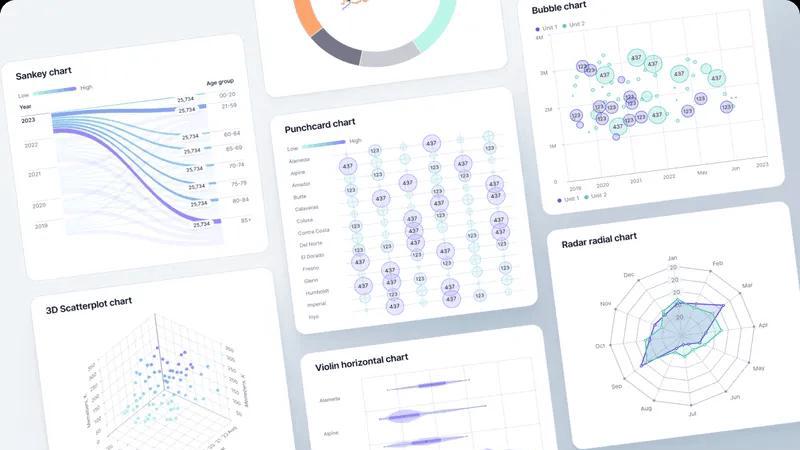
Fusedash transforms raw data into intuitive dashboards and charts, enabling quick insights and informed team actions.
Last updated: March 4, 2026
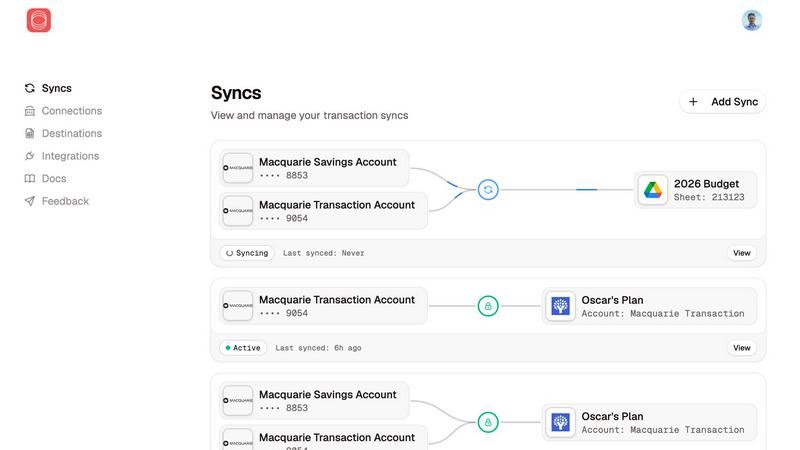
Redbark automatically syncs your Australian bank data to Google Sheets and YNAB in real time.
Last updated: March 4, 2026
Visual Comparison
Fusedash

Redbark

Feature Comparison
Fusedash
Flexible Views
Fusedash offers the ability to build the right dashboard view tailored to different audiences. By allowing users to transform the same dataset into dashboards, charts, maps, or report-style views, stakeholders can easily access the information that matters most to them without unnecessary back-and-forth discussions.
AI Chart Generator
The AI Chart Generator enables users to create clear and informative visuals from CSVs or APIs in a matter of minutes. This feature simplifies the chart creation process by allowing users to select the appropriate chart type, apply comparisons, and refine labels, ensuring that each chart effectively communicates its intended story.
Dashboard Software
Fusedash combines dashboards with narrative reporting within one seamless workspace. This feature allows users to not only monitor KPIs but also provide context about performance changes through storytelling, keeping teams aligned and minimizing the chances of conflicting reports.
AI Chat
The AI Chat feature enhances the user experience by allowing team members to ask questions about their data in plain language. This innovative tool provides suggestions for metrics, charts, and breakdowns, facilitating a quicker understanding of the data and helping users turn insights into shareable dashboard views.
Redbark
Pass-Through Data Architecture
This foundational feature ensures maximum privacy and security by design. Your sensitive financial data—transactions, balances, account details—never lands on or passes through Redbark's permanent storage. It flows directly from your bank or brokerage to your chosen destination like Google Sheets or YNAB. This architecture minimizes data liability, aligns with strict data sovereignty principles, and guarantees that Redbark cannot view, sell, or retain your personal financial information, setting a new standard for trust in financial data piping.
Multi-Destination & Multi-Account Support
Redbark provides unparalleled flexibility in data routing. You can sync a single bank account to multiple destinations simultaneously—for instance, sending transactions to both a Google Sheets ledger and your YNAB budget, each with customized formatting. Conversely, you can direct different accounts (e.g., savings, credit card, loan) to separate sheets or databases within one destination. This granular control allows for sophisticated, organized financial systems tailored to complex personal or business needs without creating data silos.
Automated Background Sync with Smart Deduplication
Moving beyond manual refreshes, Redbark employs automated background syncing triggered by bank webhooks where possible, pushing new transactions in near real-time. This is paired with intelligent, ID-based deduplication logic that includes overlap buffers to catch late-posting transactions. The result is a constantly updated dataset in your tools where you never have to worry about duplicate entries or missing data, ensuring the integrity and accuracy of your financial records is maintained automatically.
Secure, Regulated Connectivity (CDR & Open Banking)
Redbark prioritizes secure, compliant access over outdated methods. For Australian banks, it uses the official Consumer Data Right (CDR) framework via an ACCC-accredited intermediary like Fiskil. This means connections are bank-approved, regulated, and transparent, with clear consumer consent and revocation rights. For global brokerages and NZ banks, it uses secure API providers like SnapTrade and Akahu. This approach eliminates the risks and instability of screen-scraping, providing a reliable and future-proof connection channel.
Use Cases
Fusedash
Marketing Performance Tracking
Marketing teams can leverage Fusedash to create interactive dashboards that monitor campaign performance in real-time. By visualizing key metrics such as conversion rates and ROI, marketers can quickly adapt strategies based on data-driven insights.
Sales Analysis
Sales teams can utilize Fusedash to analyze sales data across different regions or time periods. By drilling down into specific segments and visualizing trends, sales professionals can identify opportunities for growth and adjust their tactics accordingly.
Operational Efficiency Monitoring
Operations teams can harness Fusedash to track key operational metrics, such as production efficiency and supply chain performance. By consolidating data from various sources into clear dashboards, they can quickly identify inefficiencies and implement improvements.
Financial Reporting
Finance departments can use Fusedash to create comprehensive financial reports that combine historical data with real-time insights. By standardizing KPIs and metrics across the organization, finance teams can ensure consistency in reporting and facilitate better decision-making at all levels.
Redbark
Automated Business Cash Flow Management
Small business owners and freelancers can automate their bookkeeping and cash flow tracking. By connecting their business transaction accounts, Redbark automatically pipes all income and expenses into a Google Sheets or Airtable database. This eliminates manual data entry from bank statements, enabling real-time profit/loss views, automated invoice reconciliation, and streamlined reporting for accountants, all within a customizable and familiar spreadsheet environment.
Consolidated Investment Portfolio Dashboard
Investors with holdings across multiple platforms (e.g., CommSec for ASX shares, Stake for US stocks, a crypto exchange) can unify their portfolio view. Redbark syncs holding and transaction data from each brokerage into a single Google Sheets workbook. This allows for the creation of a live, custom dashboard that tracks total portfolio value, asset allocation, performance across accounts, and dividend income without logging into multiple websites or handling CSV files.
Personal Budgeting with Live Bank Data
Individuals seeking control over their finances can supercharge budgeting apps like YNAB or Actual Budget. Instead of manually entering transactions, Redbark automatically syncs spending from all connected accounts (checking, savings, credit cards) directly into the budget. This provides a true, real-time picture of category balances and spending against budget goals, removing the friction that often causes budgeting efforts to fail and turning intention into effortless habit.
Financial Reporting and Data Analysis
Financial analysts, consultants, or savvy individuals can build powerful, automated reports. By streaming clean, deduplicated transaction data into Google Sheets or Notion databases, users can leverage formulas, pivot tables, and connected data visualization tools to generate monthly spending reports, analyze expense categories over time, track tax-deductible items, or model future savings scenarios—all with data that updates itself, turning static reports into dynamic financial insights engines.
Overview
About Fusedash
Fusedash is an innovative AI-powered data visualization platform designed to streamline the way teams interact with their data. By transforming connected data into clear and actionable insights, Fusedash serves as a unified workspace that allows users to create decision-ready dashboards, interactive charts, detailed maps, and narrative reports without the hassle of using multiple disconnected tools. This platform is ideal for organizations looking to enhance consistency and efficiency in their reporting processes. With Fusedash, users can define their key metrics and KPIs once and reuse these definitions across various views and reports, ensuring that everyone, from leadership to operational teams, is aligned and referencing the same trusted numbers. It caters to teams that are weary of manual reporting cycles and discrepancies in data storytelling, empowering them to monitor real-time events and delve into the reasons behind the data trends by segmenting information by region or time. Integrated AI features, such as natural language data chat and smart visualization assistance, make data exploration faster and more accessible, turning raw data into a shared source of truth that drives alignment and action across the organization.
About Redbark
Redbark redefines financial data management by acting as a secure, intelligent conduit between your money and your productivity tools. It solves a universal pain point: the tedious, error-prone process of manually exporting, downloading, and importing financial data from banks and brokerages into spreadsheets or budgeting apps. By leveraging Australia's official Consumer Data Right (CDR) framework and global brokerage integrations, Redbark provides a bank-approved, secure alternative to risky screen-scraping. Its core innovation is a privacy-first, pass-through architecture where your transaction, balance, and investment data flows directly from your financial institution to destinations like Google Sheets, Notion, YNAB, and Airtable without ever being stored on Redbark's servers. This automated sync, controlled on your schedule, delivers real-time financial visibility. Designed for simplicity without code, it empowers a diverse user base: freelancers automating invoice tracking, investors monitoring multi-asset portfolios, small business owners gaining instant cash flow clarity, and personal finance enthusiasts building custom dashboards. Ultimately, Redbark isn't just a connector; it's a foundational layer for financial automation, turning fragmented data into actionable insight within the tools you already trust.
Frequently Asked Questions
Fusedash FAQ
What types of data sources can I connect to Fusedash?
Fusedash allows users to connect various data sources, including CSV files, APIs, and databases. This flexibility ensures that you can integrate all relevant data into one platform for comprehensive analysis.
How does Fusedash ensure data consistency across reports?
Fusedash enables users to define key metrics and KPIs once, which can then be reused across all dashboards and reports. This standardization helps maintain consistent data representation, reducing the risk of conflicting information.
Can I customize the visualizations in Fusedash?
Absolutely! Fusedash offers a range of customization options, allowing users to tailor dashboards, charts, and reports based on their specific needs. You can adjust layouts, filters, and time ranges to create the most relevant views for your audience.
Is there support for real-time data monitoring in Fusedash?
Yes, Fusedash provides real-time monitoring capabilities, allowing teams to stay updated with the latest data. This feature ensures that users can react swiftly to changes and make informed decisions based on live insights.
Redbark FAQ
Is my financial data stored on Redbark's servers?
No. Redbark uses a unique pass-through data architecture. Your sensitive data—including transaction details, account balances, and holdings—flows directly from your financial institution (your bank or brokerage) to your chosen destination (like Google Sheets or YNAB). Redbark acts only as the secure conduit facilitating this connection and does not store your financial data on its servers, ensuring maximum privacy and data minimization.
How does Redbark connect to my bank, and is it safe?
For Australian banks, Redbark connects exclusively via the Consumer Data Right (CDR) framework through an ACCC-accredited data recipient partner. This is the official, government-regulated open banking system, not screen-scraping. It is bank-approved, requires your explicit consent, and you can revoke access at any time. For global brokerages, secure API providers like SnapTrade are used. All credentials are encrypted with AES-256, and the entire infrastructure is hosted in Australia.
Can I sync data to multiple tools at once?
Yes, Redbark's multi-destination support is a key feature. You can configure a single bank or investment account to sync simultaneously to multiple endpoints. For example, you could send your transaction data to a Google Sheets spreadsheet for custom analysis, to YNAB for budgeting, and to a Notion database for logging—all from the same source connection, with the ability to customize the format for each destination.
What happens if my bank isn't listed as supported?
Redbark supports over 100 Australian financial institutions via the CDR system, covering all major banks and many credit unions. If your Australian bank participates in CDR (most do), it will be supported. For non-Australian banks or specific institutions, support depends on partnerships with API providers like Akahu for New Zealand. The connections page on the Redbark website provides the most current and comprehensive list of supported institutions.
Alternatives
Fusedash Alternatives
Fusedash is an innovative AI-powered data visualization platform that helps teams turn raw data into actionable insights through clear dashboards and charts. Positioned within the Analytics & Data and Business Intelligence categories, it serves as a unified workspace, allowing users to create decision-ready visualizations without the hassle of managing multiple disconnected tools. Users often seek alternatives to Fusedash for various reasons, including pricing considerations, feature requirements, or specific platform needs. When evaluating an alternative, it's important to consider factors such as ease of use, integration capabilities, scalability, and the level of data customization offered. An ideal alternative should align with your team's workflow and enhance your ability to make data-driven decisions.
Redbark Alternatives
Redbark is a financial data automation tool that securely syncs transaction and investment data from Australian banks and global brokerages directly into apps like Google Sheets and Notion. It operates within the personal and business finance category, focusing on eliminating manual data entry through automated, secure connections. Users often explore alternatives for various reasons. These can include budget constraints, a need for different integration platforms beyond what's offered, or specific feature requirements like more advanced reporting, support for non-Australian financial institutions, or a different user interface. The search is typically driven by finding the perfect fit for one's unique financial workflow and tech stack. When evaluating other options, key considerations should be security methodology, the range of supported banks and destinations, automation reliability, and overall value for money. It's crucial to assess how the tool accesses your data, ensuring it uses official, secure APIs rather than less reliable methods, and that it aligns with your need for simplicity or advanced functionality.