
Fallom vs qtrl.ai
Side-by-side comparison to help you choose the right AI tool.

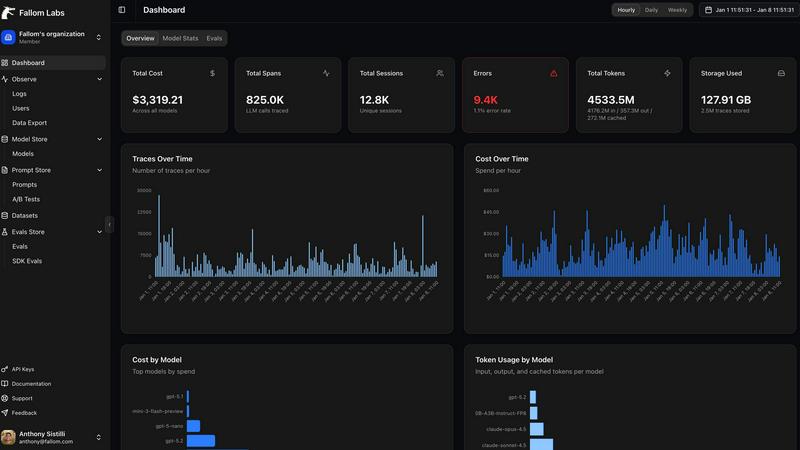
Fallom provides real-time observability for AI agents, ensuring complete visibility and cost transparency into LLM.
Last updated: February 28, 2026

qtrl.ai
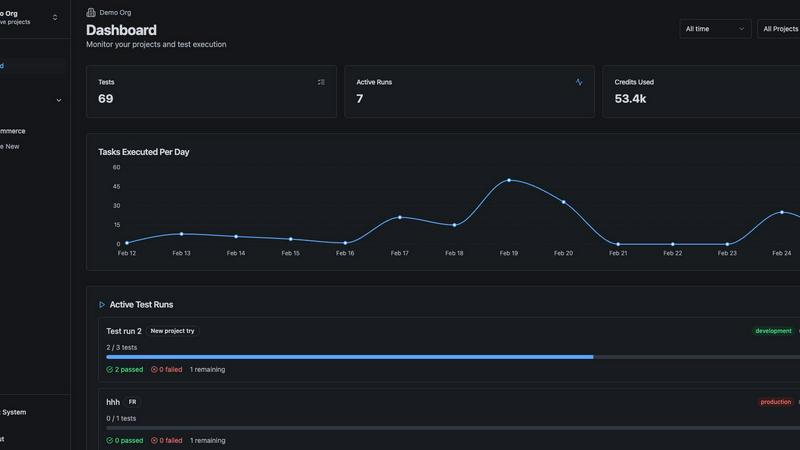
qtrl.ai scales QA with AI agents while ensuring full team control and governance.
Last updated: March 4, 2026
Visual Comparison
Fallom
qtrl.ai
Feature Comparison
Fallom
End-to-End Tracing
Fallom's end-to-end tracing feature enables teams to monitor every LLM call comprehensively. This includes tracking prompts, outputs, and tool function calls, allowing users to gain a complete understanding of LLM interactions and performance metrics.
Real-Time Observability
With real-time observability, Fallom provides live tracking of AI agent activities, enabling users to analyze timing, debug issues, and monitor tool calls instantly. This empowers teams to act quickly and effectively when anomalies arise.
Cost Attribution
Fallom's cost attribution feature allows organizations to track spending on LLMs by model, user, or team. This transparency aids in budgeting and chargeback processes, ensuring that costs are allocated accurately and efficiently.
Compliance Ready
Built with compliance in mind, Fallom offers comprehensive audit trails, input/output logging, and user consent tracking. This functionality ensures that organizations can meet regulatory requirements such as the EU AI Act and GDPR, making Fallom a reliable choice for regulated industries.
qtrl.ai
Enterprise-Grade Test Management
qtrl provides a robust, centralized hub for all QA artifacts. It enables teams to create, organize, and manage test cases, plans, and runs with full traceability back to requirements. This ensures clear audit trails, supports compliance needs, and offers a single source of truth for both manual and automated testing workflows, giving managers complete oversight and control over the quality process.
Autonomous QA Agents
This core feature introduces intelligent automation through AI agents that execute high-level instructions in real browsers. Teams can describe a test in plain English, and the agent performs the actions across defined environments. These agents operate at scale, run continuously or on-demand, and function within strict governance rules, providing automation power without the fragility of traditional script maintenance.
Progressive Automation & Adaptive Memory
qtrl champions a step-by-step journey to automation. Teams begin with human-written instructions, then progress to AI-generated tests, with full review capabilities at each stage. The platform's Adaptive Memory builds a living knowledge base of your application, learning from every interaction and execution to power smarter, more context-aware test suggestions and maintenance over time.
Multi-Environment Execution & Governance
The platform supports secure testing across development, staging, and production environments. It manages per-environment variables and encrypted secrets, ensuring sensitive data is never exposed to AI agents. Built-in governance features like permissioned autonomy levels, full agent visibility, and transparent decision-making ensure enterprise-ready security and foster trust in the automated processes.
Use Cases
Fallom
Debugging AI Systems
Fallom is invaluable for teams debugging AI systems, as it provides granular insights into LLM calls and tool interactions. This allows engineers to identify and resolve issues quickly, ensuring the reliability of AI features in production.
Performance Optimization
Organizations can use Fallom to analyze performance metrics and identify bottlenecks in their AI workflows. By understanding latency and cost per call, teams can make informed decisions to optimize their AI operations for better efficiency.
Compliance Management
For businesses operating in regulated environments, Fallom assists in maintaining compliance with legal requirements. Its audit trails and consent tracking features help organizations navigate complex regulations with confidence.
Session Tracking and Analytics
Fallom enables teams to track sessions and user interactions, providing valuable insights into usage patterns and power users. This data helps organizations to tailor their AI offerings and improve user experiences effectively.
qtrl.ai
Scaling Beyond Manual Testing
For QA teams overwhelmed by repetitive manual test cycles, qtrl offers a graceful off-ramp. Teams can start by structuring their existing manual cases in the platform and then progressively introduce automation for the most tedious flows using autonomous agents, dramatically increasing test coverage and execution speed without a steep learning curve or loss of control.
Modernizing Legacy QA Workflows
Companies stuck with outdated, siloed, or script-heavy automation frameworks can use qtrl to consolidate and modernize. The platform integrates test management and execution, reduces maintenance burden via AI, and provides the dashboards and traceability missing from legacy setups, enabling a cohesive, data-driven quality strategy.
Ensuring Governance in Enterprise AI Adoption
Enterprises that require strict compliance, audit trails, and security for any AI tool find a safe partner in qtrl. Its "governance by design" philosophy, with features like permissioned autonomy, full visibility into agent actions, and encrypted secret management, allows large organizations to harness AI's power for QA without compromising on oversight or regulatory requirements.
Accelerating Product-Led Engineering Teams
Fast-moving product and engineering teams need to ensure quality without slowing down deployment. qtrl fits seamlessly into CI/CD pipelines, provides continuous quality feedback, and allows developers to create and run tests via simple instructions, enabling rapid iteration with confidence and shifting quality left in the development process.
Overview
About Fallom
Fallom is an innovative AI-native observability platform tailored for the dynamic and complex landscape of Large Language Model (LLM) and AI agent applications. Designed to provide critical visibility, Fallom empowers engineering and product teams to operate AI-driven features reliably and efficiently in production environments. By delivering comprehensive end-to-end tracing for every LLM call, Fallom captures essential data such as prompts, outputs, tool and function calls, token usage, latency, and cost per call. This granular visibility is crucial for organizations striving to demystify AI systems, moving away from the traditional "black box" approach. Built on the open standard OpenTelemetry, Fallom ensures vendor neutrality and seamless integration, allowing teams to work with leading model providers such as OpenAI, Anthropic, and Google. With actionable insights structured from telemetry data, Fallom offers features like session-level context, timing waterfalls for multi-step workflows, and enterprise-grade compliance tools. These capabilities not only support adherence to regulations like the EU AI Act and GDPR but also enable organizations to debug issues promptly, optimize performance and costs, and confidently scale their AI initiatives.
About qtrl.ai
qtrl.ai is a modern, progressive QA platform engineered to solve the fundamental tension in software quality assurance: the need for both speed and control. It is not merely another test automation tool, but a unified platform that seamlessly integrates enterprise-grade test management with powerful, trustworthy AI automation. At its heart, qtrl provides a centralized command center for all quality activities. Teams can meticulously organize test cases, plan and execute test runs, trace requirements to ensure comprehensive coverage, and monitor quality health through real-time dashboards. This structured foundation offers engineering leads and QA managers unparalleled visibility into testing status, risk areas, and release readiness.
Where qtrl truly distinguishes itself is through its philosophy of "progressive automation." Rejecting the risky, all-or-nothing approach of "black-box" AI, qtrl allows teams to start with familiar, manual test management. When ready, they can incrementally leverage intelligent autonomous agents. These agents can generate robust UI tests from simple English instructions, autonomously maintain them against application changes, and execute them at scale across multiple browsers and environments. This makes qtrl an ideal solution for product-led engineering teams seeking velocity, QA groups transitioning from manual processes, organizations modernizing legacy workflows, and enterprises that demand strict compliance, audit trails, and governance. Ultimately, qtrl bridges the gap between the slow pace of manual testing and the brittle, expensive complexity of traditional scripted automation, offering a trusted, scalable path to intelligent quality assurance.
Frequently Asked Questions
Fallom FAQ
What makes Fallom different from other observability tools?
Fallom is specifically designed for LLM and AI agent applications, providing tailored insights and observability that general-purpose tools do not offer. Its focus on AI workflows ensures that users gain relevant and actionable data.
How does Fallom ensure compliance with regulations?
Fallom includes features such as comprehensive audit trails, input/output logging, and user consent tracking, which are essential for meeting regulatory requirements like the EU AI Act and GDPR.
Can Fallom work with multiple AI model providers?
Yes, Fallom is built on the open standard OpenTelemetry, allowing it to integrate seamlessly with any major model provider, ensuring vendor neutrality and flexibility for users.
How quickly can teams start using Fallom?
Fallom is designed for quick setup, with an estimated setup time of under five minutes. This enables teams to start tracing their AI agents and gaining insights without extensive preparation or delays.
qtrl.ai FAQ
How does qtrl.ai's AI differ from other "autonomous" testing tools?
qtrl.ai rejects the "black-box" AI-first approach that can be unpredictable and risky. Instead, it employs a progressive, trust-earning model. The AI operates as assistive agents that execute clear instructions or generate tests that are always reviewable and editable by humans. Governance controls, full transparency into agent actions, and a focus on augmenting (not replacing) human oversight make its AI practical and trustworthy for real enterprise workflows.
Can we use qtrl.ai if we currently only do manual testing?
Absolutely. qtrl is explicitly designed for this scenario. You can begin by using it as a powerful test management system to organize your existing manual cases and plans. When you're ready, you can start automating specific tests using plain English instructions with the AI agents, allowing you to scale your efforts incrementally without a disruptive, all-at-once transition.
How does qtrl handle testing across different environments and with sensitive data?
qtrl provides secure, multi-environment execution capabilities. You can define various environments (dev, staging, prod) with their own variables. Crucially, sensitive data like passwords and API keys can be stored as encrypted secrets that are injected at runtime. These secrets are never exposed to the AI agents, ensuring security and compliance are maintained throughout the testing process.
What kind of integration and traceability does qtrl support?
qtrl is built for real-world workflows. It supports requirements management integration, allowing you to trace tests back to specific features or user stories for coverage analysis. It also offers CI/CD pipeline support for automated test execution as part of your build process. Furthermore, its centralized nature provides inherent traceability from test cases to execution results and defects, all visible in comprehensive dashboards.
Alternatives
Fallom Alternatives
Fallom is an AI-native observability platform that provides critical visibility into Large Language Model (LLM) and AI agent applications. As teams work to integrate AI technologies into their products, they often seek alternatives due to various reasons, including pricing, feature sets, and specific platform needs. Users may find that existing solutions do not fully meet their requirements for compliance, scalability, or ease of integration, prompting them to explore other options in the market. When searching for an alternative, it is essential to consider factors such as end-to-end visibility, compliance capabilities, and the ability to integrate with multiple model providers. A solution that offers detailed tracing, actionable insights, and enterprise-ready features can significantly enhance the performance and reliability of AI-powered applications. Additionally, vendor neutrality and the flexibility to adapt to evolving needs should be high on the list of priorities.
qtrl.ai Alternatives
qtrl.ai is a modern QA platform in the automation and dev tools space. It uniquely blends enterprise-grade test management with a progressive, trustworthy AI layer, allowing teams to scale their testing efforts while maintaining full control and governance over the process. Users often explore alternatives for various reasons. These can include budget constraints, the need for a different feature mix, or specific platform requirements like deeper integrations with an existing toolchain. Some teams may also seek a solution that is either purely manual, fully open-source, or takes a more aggressive, AI-first approach to automation. When evaluating alternatives, consider your team's primary goals. Key factors include the balance between structured test management and automation capabilities, the level of AI integration and transparency desired, and the importance of enterprise features like audit trails and compliance. The ideal choice should align with your team's maturity, from manual testing to advanced autonomous agents.