
diffray vs HookMesh
Side-by-side comparison to help you choose the right AI tool.

diffray
Diffray's AI agents review code with high accuracy, catching real bugs while drastically reducing false alarms.
Last updated: February 28, 2026

Effortlessly streamline your SaaS with reliable webhook delivery, automatic retries, and a self-service customer portal.
Last updated: February 28, 2026
Visual Comparison
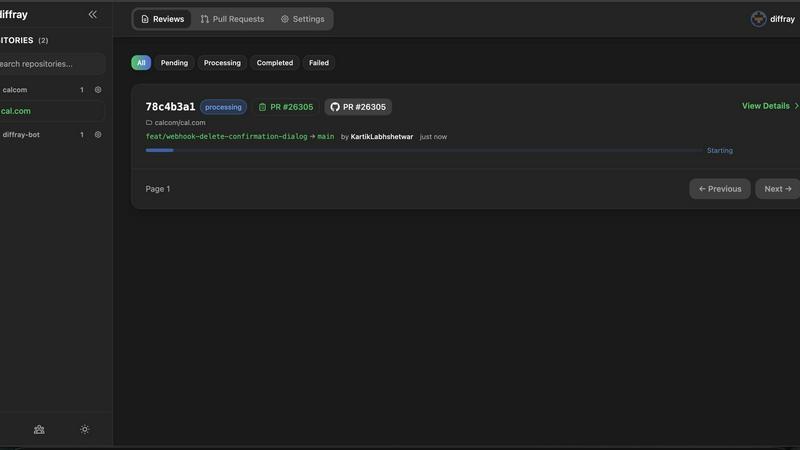
diffray
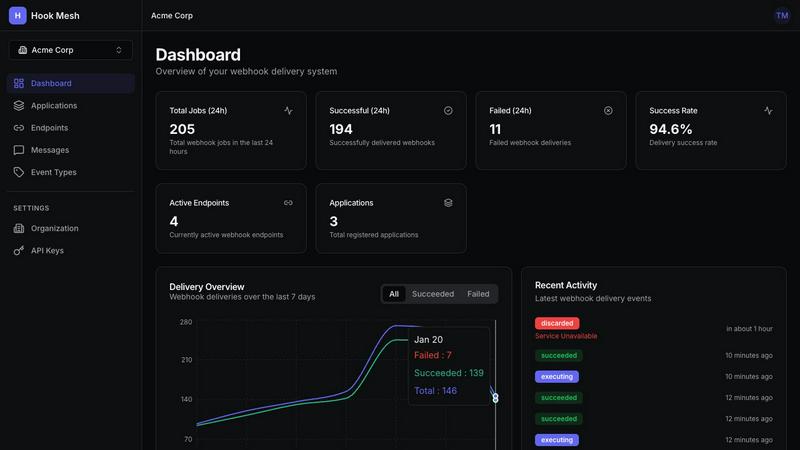
HookMesh
Feature Comparison
diffray
Multi-Agent Specialized Architecture
Unlike monolithic AI tools that use a single model for all tasks, diffray's power stems from its orchestrated fleet of over 30 specialized agents. Each agent is fine-tuned to excel in a specific niche, such as detecting SQL injection vulnerabilities, identifying memory leaks in specific languages, flagging code style deviations, or analyzing front-end code for SEO best practices. This division of labor ensures that every aspect of a code change is examined by an expert, leading to incredibly accurate and context-aware feedback that generic models simply cannot match.
Drastic Noise and False Positive Reduction
A primary pain point in automated code review is the deluge of irrelevant or incorrect warnings. diffray's targeted agent strategy directly combats this, achieving a documented 87% reduction in false positives. By having agents that understand the specific context and rules of their domain, the tool filters out the "noise" that plagues other systems. This means developers spend virtually no time dismissing bogus alerts and can immediately trust and act upon the issues diffray surfaces, streamlining the review workflow significantly.
Comprehensive Issue Detection Matrix
diffray's multi-faceted analysis ensures a 360-degree review of every pull request. The system concurrently checks for security flaws, performance bottlenecks, logical bugs, adherence to coding standards, and maintainability concerns. This holistic approach means that a single PR pass can uncover a wide spectrum of potential problems—from a critical authentication bypass to a simple but costly inefficient loop—that might be missed in a manual review or by a less comprehensive tool, ultimately leading to more robust and higher-quality software.
Seamless Integration and Actionable Feedback
diffray is built for the developer's workflow, integrating directly into popular version control platforms like GitHub and GitLab. It provides clear, concise, and actionable comments directly on the pull request diff. Feedback is not just a generic warning; it often includes explanations of why something is an issue and may suggest concrete fixes or best practice examples. This educational aspect accelerates developer learning and team standardization, turning every code review into a learning opportunity.
HookMesh
Reliable Delivery
HookMesh guarantees that no webhook is ever lost, thanks to its sophisticated delivery mechanisms. It employs automatic retries with exponential backoff, ensuring that if an endpoint is unavailable, the system will intelligently wait before attempting to resend the webhook. This feature supports up to 48 hours of retries, significantly reducing the risk of missed events.
Customer Portal
The self-service customer portal is a standout feature of HookMesh, allowing users to manage their webhook endpoints effortlessly. With an embeddable UI, customers can easily add or modify endpoints, view detailed delivery logs, and replay failed webhooks instantly, all without needing to contact support.
Developer Experience
HookMesh is engineered with developers in mind, providing a seamless experience for integrating webhook functionality. The REST API and various SDKs for languages like JavaScript, Python, and Go enable quick implementation. Developers can send events with just a few lines of code, allowing them to focus on building their applications rather than managing webhook logistics.
At-Least-Once Delivery
This feature guarantees that webhooks are delivered at least once, utilizing idempotency keys to prevent duplicate processing. This ensures that even in case of retries, the receiving system can safely handle the webhook data without causing inconsistencies or errors.
Use Cases
diffray
Accelerating Enterprise Development Cycles
For large organizations with multiple teams and high PR volume, manual review backlogs can cripple velocity. diffray acts as a first-line, expert reviewer that never sleeps. It automatically analyzes every PR, providing immediate, high-quality feedback to authors before human reviewers even begin. This pre-qualification reduces the cognitive load on senior engineers, cuts average review time by over 70%, and allows enterprises to maintain high code quality while shipping features faster.
Onboarding Junior Developers and Enforcing Standards
New team members often struggle with codebase-specific conventions and best practices. diffray serves as an always-available mentor, providing instant feedback on code style, architecture patterns, and potential pitfalls as they write code. This real-time guidance helps juniors learn faster and produce code that aligns with team standards from day one, reducing the review burden on senior developers and improving overall code consistency.
Proactive Security and Compliance Auditing
In regulated industries or for applications handling sensitive data, security cannot be an afterthought. diffray's dedicated security agents continuously scan every code change for vulnerabilities like injection flaws, insecure dependencies, and misconfigurations. This integrates security directly into the development process (shifting it left), enabling teams to identify and remediate risks early, often before the code is even merged, which is far more efficient and secure than post-hoc penetration testing.
Maintaining Code Quality in Fast-Paced Startups
Startup development teams need to move quickly without accruing technical debt. diffray provides the scalable "quality gate" that a small team lacks. It ensures that even under tight deadlines, fundamental best practices, performance considerations, and bug-prone patterns are caught automatically. This allows small, agile teams to maintain a high standard of code health and long-term maintainability without sacrificing their crucial development speed.
HookMesh
E-commerce Order Notifications
In e-commerce platforms, timely order notifications are crucial for both customer satisfaction and operational efficiency. HookMesh can be used to deliver real-time order updates to customers or third-party services, ensuring that every order status change is communicated without fail.
Payment Processing Confirmation
For businesses dealing with payment processing, confirming transactions in real-time is essential. HookMesh can facilitate the reliable delivery of payment confirmation webhooks, enabling merchants to process orders and update inventories promptly, thus enhancing the overall customer experience.
SaaS Integrations
Many SaaS products rely on webhooks to integrate with other services. HookMesh simplifies these integrations by providing a robust system for delivering webhook events, allowing businesses to connect with various tools and platforms without the hassle of managing webhook complexities themselves.
Event-Driven Architecture
In scenarios where applications rely on an event-driven architecture, HookMesh can serve as a backbone for delivering critical events across systems. Its ability to handle retries and provide visibility into webhook delivery ensures that events are processed consistently, supporting seamless inter-system communication.
Overview
About diffray
In the modern software development lifecycle, the code review process stands as a critical but often time-consuming bottleneck. diffray reimagines this essential practice through the lens of specialized artificial intelligence. It is not merely another AI code reviewer; it is a sophisticated, multi-agent system engineered to dissect pull requests with surgical precision. At its core, diffray addresses the fundamental flaw of generic AI models: overwhelming noise and false positives that frustrate developers and obscure genuine issues. By deploying a dedicated ensemble of over 30 specialized AI agents, each an expert in a distinct domain like security vulnerabilities, performance anti-patterns, bug detection, language-specific best practices, and even SEO considerations for web code, diffray delivers hyper-targeted, actionable feedback. This architectural choice is its primary value proposition, transforming code review from a broad, shallow scan into a deep, multi-faceted analysis. It is designed for development teams of all sizes who seek to enhance code quality, accelerate release cycles, and empower their engineers. The results speak volumes: an 87% reduction in false positives, the identification of three times more genuine issues, and a dramatic cut in average PR review time from 45 to just 12 minutes per week. diffray shifts the developer's role from tedious line-by-line scrutiny to strategic oversight, allowing them to focus on architecture, innovation, and what truly matters in their code.
About HookMesh
HookMesh is a cutting-edge solution meticulously designed to streamline and optimize webhook delivery for modern SaaS applications. In an era where real-time data transfer is crucial, HookMesh alleviates the burdens associated with in-house webhook management, such as complex retry logic, circuit breaker mechanisms, and the often frustrating task of debugging delivery failures. By leveraging HookMesh, businesses can concentrate on their core competencies without being encumbered by the intricate technical challenges that webhook management entails. This platform not only ensures reliable delivery through features like automatic retries and exponential backoff but also enhances user experience with its self-service capabilities. Designed for developers and product teams, HookMesh provides a robust infrastructure that guarantees consistent and reliable webhook delivery, thereby allowing organizations to focus on delivering exceptional customer experiences. The self-service portal offers endpoint management and visibility and simplifies the process of replaying failed webhooks with just a click. In essence, HookMesh is the optimal choice for teams seeking a dependable and efficient webhook strategy.
Frequently Asked Questions
diffray FAQ
How is diffray different from other AI code review tools like GitHub Copilot or SonarQube?
diffray's fundamental difference is its multi-agent, specialized architecture. Tools like GitHub Copilot are primarily AI pair programmers focused on code generation, not deep analysis. Traditional static analysis tools like SonarQube often rely on rule-based engines that can generate significant noise. diffray uses multiple, fine-tuned AI models each designed for a specific review domain (security, performance, etc.), resulting in more accurate, context-aware, and actionable feedback with dramatically fewer false positives than these alternatives.
What programming languages and frameworks does diffray support?
diffray is designed to be broad and versatile. Its multi-agent system includes specialists for all major programming languages and popular web frameworks. This includes, but is not limited to, JavaScript/TypeScript (React, Vue, Angular), Python (Django, Flask), Java, C#, Go, Ruby on Rails, and PHP. The specialized agents understand the unique idioms, best practices, and common pitfalls associated with each language and ecosystem.
How does diffray handle the privacy and security of our source code?
Code privacy and security are paramount. diffray can be deployed following strict data handling protocols. Typically, it operates by receiving only the diff (the changed code) from a pull request for analysis, not the entire codebase. Many deployments use secure, encrypted connections, and data retention policies can be configured. It is advisable to review diffray's specific security whitepaper and compliance certifications (like SOC 2) for detailed information on their data protection measures.
Can we customize the rules or feedback provided by diffray's agents?
Yes, diffray is built for adaptability. While its core agents provide expert out-of-the-box analysis, teams can often customize severity levels, ignore specific patterns that are accepted in their codebase, and even define custom rules or guidelines. This ensures that the tool aligns perfectly with your team's specific coding standards and project requirements, making the feedback 100% relevant to your context.
HookMesh FAQ
What is HookMesh?
HookMesh is a platform designed to simplify webhook delivery for SaaS products, providing reliable infrastructure and self-service capabilities for developers and product teams.
How does HookMesh ensure reliable delivery?
HookMesh ensures reliable delivery through features like automatic retries, exponential backoff, circuit breakers, and idempotency keys, which collectively minimize the risk of lost webhooks.
Can I manage webhook endpoints myself?
Yes, HookMesh offers a self-service portal that allows customers to manage their webhook endpoints, view delivery logs, and replay failed webhooks with ease.
What programming languages does HookMesh support?
HookMesh provides SDKs for popular programming languages including JavaScript, Python, and Go, making it easy for developers to integrate webhook functionality into their applications.
Alternatives
diffray Alternatives
diffray is an AI-powered code review tool within the development and DevOps category. It stands out by utilizing a multi-agent architecture to analyze code for security, performance, and best practices, aiming to drastically reduce false positives and review time. Users often explore alternatives for various reasons. These can include budget constraints and specific pricing models, the need for integration with platforms beyond GitHub, or a desire for different feature sets like support for additional programming languages or different reporting interfaces. When evaluating alternatives, key considerations should include the accuracy of the AI and its reduction of false positives, the depth of codebase context and integration capabilities, and the overall clarity and actionability of the feedback provided to developers. The goal is to find a tool that enhances code quality without disrupting the development workflow.
HookMesh Alternatives
HookMesh is an innovative platform that specializes in streamlining webhook delivery for SaaS products. Designed to handle the complexities involved in managing webhooks, it provides features like automatic retries, a self-service customer portal, and robust infrastructure to ensure reliable event delivery. As businesses increasingly rely on webhooks for real-time data transfer, the demand for reliable solutions has grown, prompting users to seek alternatives that better suit their specific needs. Users often look for alternatives to HookMesh for various reasons, including pricing structures, specific feature sets, or compatibility with existing platforms. Each organization has unique requirements, and a one-size-fits-all solution may not always align with their operational objectives. When exploring alternatives, it's essential to consider factors such as reliability, ease of use, customer support, and the overall developer experience to ensure the chosen solution meets their webhook management needs effectively.