
Deeploy vs iGPT
Side-by-side comparison to help you choose the right AI tool.

Deeploy
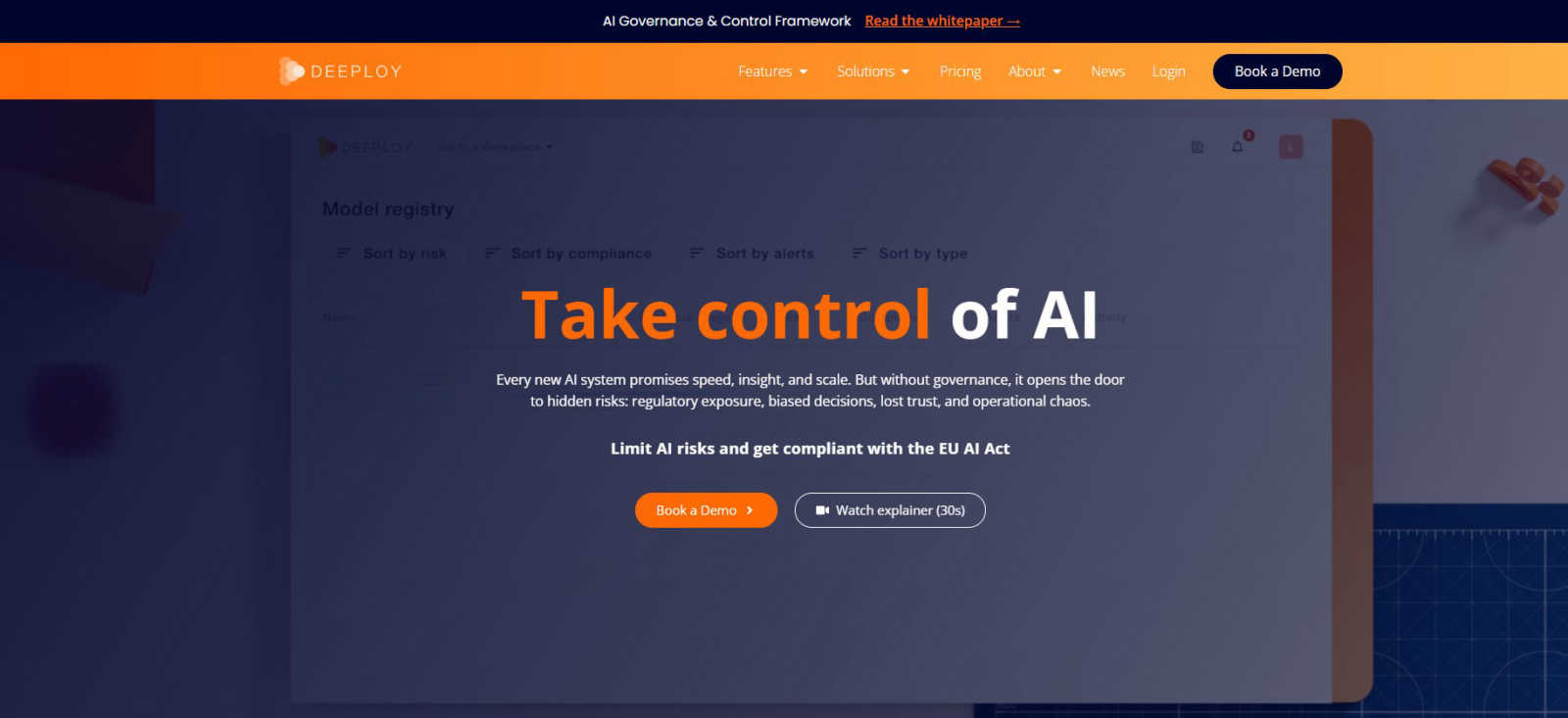
Deeploy provides the essential governance layer to safely scale and control AI across your organization.
Last updated: March 1, 2026

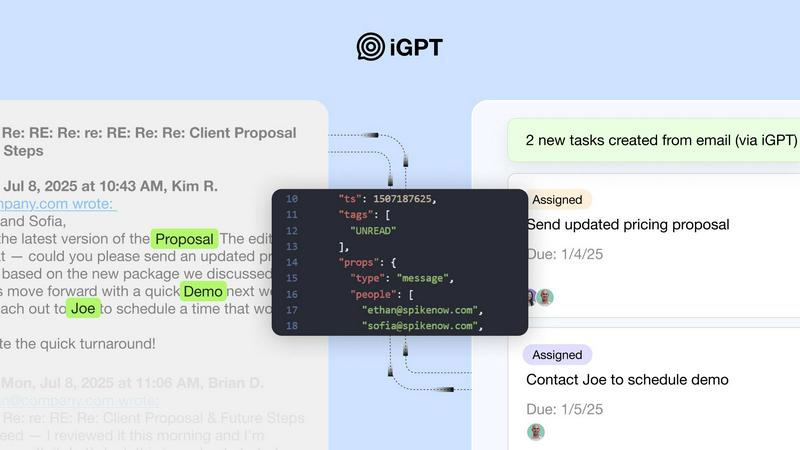
iGPT transforms chaotic email data into reliable, context-aware insights for enterprise agents and workflows.
Last updated: March 1, 2026
Visual Comparison
Deeploy
iGPT
Feature Comparison
Deeploy
AI Discovery and Onboarding
This feature provides complete visibility across an organization's AI landscape. It allows teams to discover, onboard, and manage every AI system from a single, unified interface. By connecting to any MLOps or GenAI platform, it eliminates blind spots and creates a centralized AI inventory without requiring painful migrations. This foundational visibility is the first critical step toward effective governance, ensuring no AI application operates in the shadows.
Control Frameworks
Deeploy simplifies navigating complex AI regulations with guided workflows that make compliance straightforward. Organizations can choose from default, recognized frameworks like ISO 42001 and NIST AI RMF or build custom ones tailored to their needs. The platform enables rapid AI system risk classification in minutes and establishes clear accountability through structured approval processes, turning abstract regulatory requirements into a manageable operational reality.
Control Implementation
This feature translates governance frameworks into enforceable, engineer-friendly controls. It ensures every deployed AI system automatically receives the correct, actionable requirements without manual overhead. By leveraging templates and auto-collected evidence, it can accelerate compliance processes by up to 90%. Furthermore, AI-powered assessments handle repetitive work, allowing human experts to focus on higher-value oversight and exception handling.
Real-Time Monitoring
Deeploy provides proactive oversight to prevent AI incidents before they impact users or create compliance risks. It monitors AI performance in real-time, offering instant alerts for critical issues like model drift or performance degradation. The system identifies errors and anomalies proactively and allows for the addition of tracing and guardrails to protect LLM outputs, ensuring AI systems behave as intended in production.
iGPT
Immediate Integration
iGPT offers an SDK and a live playground, enabling developers to quickly test requests and responses. This immediate integration capability accelerates the development process, allowing teams to focus on building applications without the hassle of complex setup procedures.
Contextual Responses
With iGPT, organizations receive responses that are ready for reasoning and automation. Each response is contextualized with citations back to the original emails and attachments, ensuring that users can trace information back to its source, enhancing reliability and transparency in decision-making.
Hybrid Retrieval
iGPT utilizes a sophisticated hybrid retrieval system that combines semantic understanding with keyword searches and filters. This multifaceted approach allows users to retrieve relevant information efficiently, scoring and reranking results all in one API call, significantly streamlining the data retrieval process.
Continuous Data Indexing
One of the standout features of iGPT is its ability to continuously index new messages and attachments in real-time. This ensures that the information and insights derived from emails remain up-to-date, making it easier for organizations to act on the most current data without delays.
Use Cases
Deeploy
Enterprise-Wide AI Inventory and Audit
Large organizations with AI scattered across departments use Deeploy to create a single source of truth for all AI assets. This central registry enables complete discovery and documentation, which is essential for internal audits, risk assessments, and providing transparency to executive leadership and regulators. It turns a fragmented portfolio into a catalogued, manageable ecosystem.
Streamlining EU AI Act Compliance
Companies operating in or selling to the European Union leverage Deeploy's guided workflows to navigate the stringent requirements of the EU AI Act. The platform helps classify AI systems by risk level, implement necessary controls, and automatically collect the evidence required for conformity assessments, transforming a complex legal mandate into a systematic, efficient process.
Implementing Human-in-the-Loop Oversight
In high-stakes industries like healthcare or finance, Deeploy facilitates effective human oversight. It provides explainability features that allow subject matter experts, such as clinicians or compliance officers, to understand AI reasoning and provide feedback. This creates a robust feedback loop, ensuring AI systems remain aligned with ethical guidelines and domain-specific standards.
Accelerating Safe Model Deployment
ML engineering teams use Deeploy to reduce the time from model development to governed production deployment from weeks to hours. The platform provides the necessary observability, monitoring, and control frameworks as part of the deployment pipeline, allowing data scientists to iterate quickly while giving assurance to risk and business teams that all safeguards are in place.
iGPT
Email Assistants
Organizations can build intelligent email assistants using iGPT, enabling them to draft, prioritize, and act on emails with complete context. This capability not only improves productivity but also enhances communication effectiveness within teams.
Workflow Automation
iGPT allows businesses to transform email threads into actionable tasks and deadlines. By flagging items that are stuck, organizations can streamline their workflows, ensuring that important actions are not overlooked and that operations run smoothly.
Support Copilots
With iGPT, support teams can reconstruct the full customer narrative across extended email chains. This includes understanding changes in tone and context, which can significantly enhance customer service and relationship management.
Compliance and Audit Trail
iGPT provides a robust framework for maintaining compliance by allowing organizations to trace feedback, approvals, and decisions back to their original email conversations. This audit trail is crucial for maintaining accountability and transparency in business processes.
Overview
About Deeploy
Deeploy is an enterprise-grade AI governance platform engineered to bring order, compliance, and trust to organizations scaling artificial intelligence. It acts as the central nervous system for an organization's entire AI portfolio, providing the critical oversight infrastructure that is often missing in today's fragmented AI landscape. Designed for Chief Technology Officers, Heads of AI, Risk & Compliance Officers, and engineering teams, Deeploy addresses the core challenge of managing AI deployed across various models, vendors, and embedded systems. Its fundamental value proposition is enabling businesses to innovate with AI faster while systematically managing the associated operational, ethical, and regulatory risks. By offering a unified interface for discovery, control, monitoring, and documentation, Deeploy transforms a chaotic "jungle of AI systems" into a governed, auditable, and compliant ecosystem. It directly tackles stringent regulatory demands like the EU AI Act, turning compliance from a burdensome, manual cost center into an integrated and efficient process through guided workflows and automated evidence collection. Ultimately, Deeploy empowers organizations to maintain complete transparency and control over their AI initiatives, ensuring they can scale with confidence and build genuinely trustworthy AI systems.
About iGPT
iGPT is an advanced email intelligence API that empowers enterprises to harness the untapped potential of their email communications. It serves as a pivotal solution designed specifically for developers and businesses seeking to transform disorganized email data into actionable insights. By acting as a secure and auditable gateway, iGPT allows AI agents and automated workflows to access, interpret, and utilize the rich context embedded within email conversations and attachments. The primary value proposition lies in its ability to bridge the divide between the complexity of business communications and the simplicity of AI integration. Unlike traditional AI systems that struggle with unstructured email data, iGPT provides a seamless experience through a unified API call, eliminating the need for cumbersome processes like manual parsing or prompt engineering. This allows organizations to confidently deploy intelligent systems in various domains, including sales, customer success, and compliance, all while maintaining stringent security measures and comprehensive audit trails.
Frequently Asked Questions
Deeploy FAQ
Who is Deeploy designed for?
Deeploy is built for enterprise roles responsible for the safe and compliant scaling of AI. Primary users include Chief Technology Officers (CTOs), Heads of AI, Risk & Compliance Officers, and the engineering or MLOps teams that deploy and maintain production AI systems. It serves organizations that use multiple AI models or vendors and need centralized oversight.
How does Deeploy help with AI regulations like the EU AI Act?
Deeploy provides structured, guided workflows aligned with major regulatory frameworks. It helps organizations classify their AI systems by risk level, map applicable requirements, and implement corresponding controls. Crucially, it automates the collection of evidence needed to demonstrate compliance, turning a documentation-heavy burden into an integrated, continuous process.
Can Deeploy integrate with our existing AI and MLOps tools?
Yes, a core feature of Deeploy is its ability to connect with any MLOps or Generative AI platform. It is designed to provide a governance layer over your existing AI stack without requiring you to migrate your systems. This approach eliminates blind spots and establishes central control without disrupting current workflows or investments.
What kind of monitoring and alerts does Deeploy provide?
Deeploy offers real-time monitoring of AI system performance and behavior. It alerts teams to critical issues such as model drift, significant drops in performance metrics, data anomalies, and potential breaches of predefined guardrails for LLMs. This enables proactive incident prevention rather than reactive firefighting.
iGPT FAQ
What types of data can iGPT process?
iGPT can process various types of data found in emails, including text, attachments, and structured documents like PDFs and spreadsheets. This versatility makes it an invaluable tool for extracting insights from diverse sources.
How does iGPT ensure data security?
iGPT employs several security measures, including zero data training, role-based access control (RBAC), and zero data retention. These features ensure that user data remains private and secure, with no risk of unauthorized access.
Can iGPT integrate with existing systems?
Yes, iGPT is designed for seamless integration with existing enterprise systems. Its SDK and unified API endpoint allow developers to easily connect and implement the service alongside their current workflows and applications.
What kind of support is available for iGPT users?
iGPT provides comprehensive documentation and a live playground for testing API requests. Additionally, users can book a demo and engage with experts to better understand how to maximize the platform's capabilities for their specific needs.
Alternatives
Deeploy Alternatives
Deeploy is an enterprise-grade AI governance platform, a critical category of software for businesses scaling artificial intelligence responsibly. It provides the essential oversight layer to manage risk, ensure compliance, and maintain control across a diverse portfolio of AI models and systems. Users may explore alternatives for various reasons, including budget constraints, specific feature requirements not covered by a single platform, or the need for a solution that integrates more tightly with their existing technology stack. The search often stems from a need to balance comprehensive governance with operational flexibility and cost. When evaluating alternatives, key considerations should include the platform's ability to provide unified visibility and control, its adaptability to both internal policies and external regulations like the EU AI Act, and the depth of its monitoring and documentation capabilities. The ideal solution should transform governance from a bottleneck into an enabler of safe, scalable innovation.
iGPT Alternatives
iGPT is an enterprise-grade email intelligence API designed to transform messy, unstructured email data into trusted, context-aware answers for business agents. As part of the Business Intelligence category, it serves to bridge the gap between AI capabilities and the intricate realities of business communication, streamlining access to valuable insights trapped within email exchanges. Users often seek alternatives to iGPT for various reasons, including pricing, specific feature requirements, or compatibility with existing platforms. When evaluating alternatives, it's crucial to consider factors such as ease of integration, the comprehensiveness of the features offered, scalability, and the ability to maintain security and compliance standards while managing sensitive communication data.