
AllForms vs Miget
Side-by-side comparison to help you choose the right AI tool.

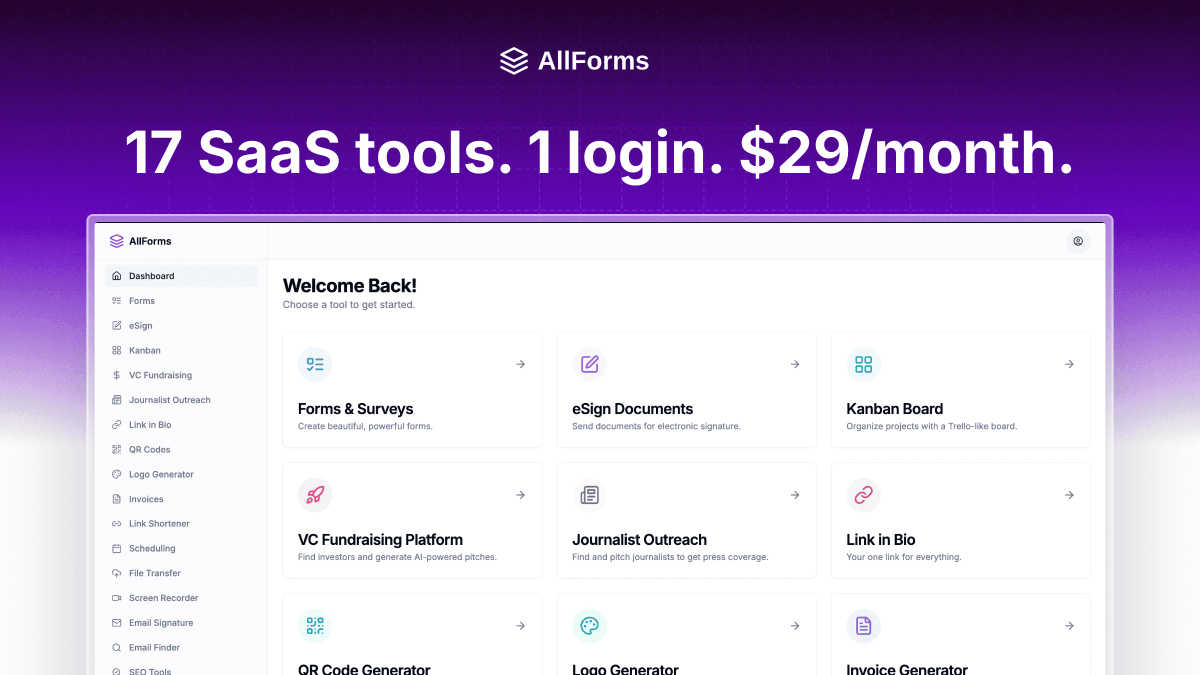
AllForms consolidates 17 essential tools into one elegant platform for just $29 a month, saving you time and money.
Last updated: March 1, 2026

Miget
Deploy unlimited services on one flat-rate plan.
Visual Comparison
AllForms
Miget
Overview
About AllForms
AllForms is an innovative all-in-one Software as a Service (SaaS) platform designed to transform how modern businesses handle essential operations. In a landscape often plagued by "tool sprawl," where teams manage multiple costly and disconnected subscriptions, AllForms consolidates the functionalities of over 17 popular tools into a single, intuitive interface. This platform primarily targets startups, small to medium-sized businesses, freelancers, and entrepreneurs who face the dual burden of high software costs and the inefficiencies of switching between applications. The value proposition of AllForms is compelling: it promises significant cost reductions, operational simplification, and improved workflow efficiency. With an emphasis on user experience, AllForms combines functionality with aesthetics, creating a beautiful and lightning-fast platform. The integration of an AI chat assistant further enhances its appeal, positioning AllForms as a forward-thinking hub for business automation, thereby redefining how businesses manage their daily operations.
About Miget
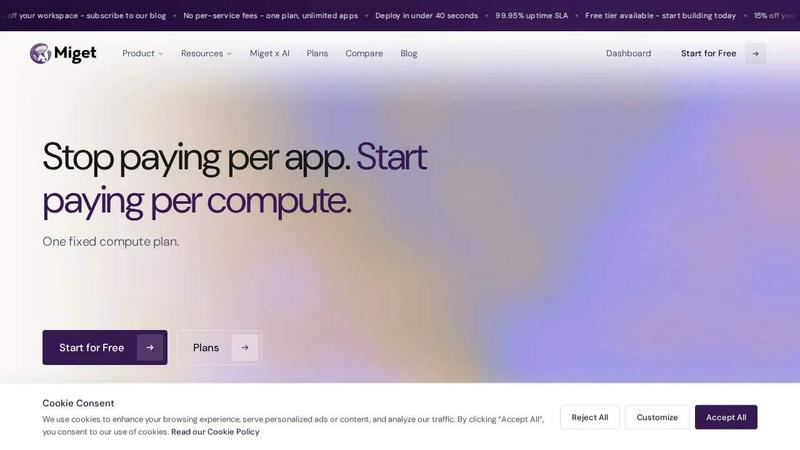
Miget – Stop paying per app. Start paying per compute.
Traditional PaaS platforms charge you for every app, database, and worker separately. Miget flips that model: pick a fixed compute plan, then deploy as many services as you want inside it.
- Unlimited apps, databases, and background workers per plan
- No per-service billing surprises
- Built on Kubernetes with full isolation between tenants
- Deploy from Git, GitHub, Registry with zero-config builds
- Managed PostgreSQL, Redis, and more
- Custom domains with automatic TLS
Whether you're running a single side project or a full production stack, you only pay for the compute you reserve—not the number of things you run on it.