
3DAIStudio vs Vidgo API
Side-by-side comparison to help you choose the right AI tool.

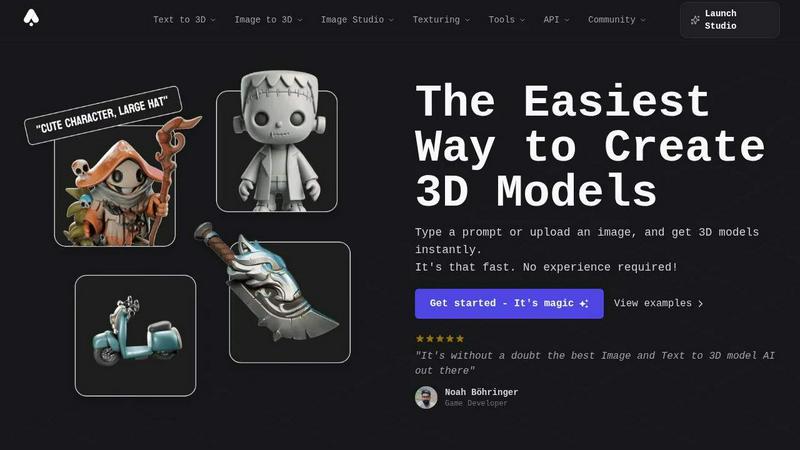
3DAIStudio
Effortlessly transform images and text into stunning 3D models in seconds with 3DAIStudio, no experience needed.
Last updated: April 4, 2026

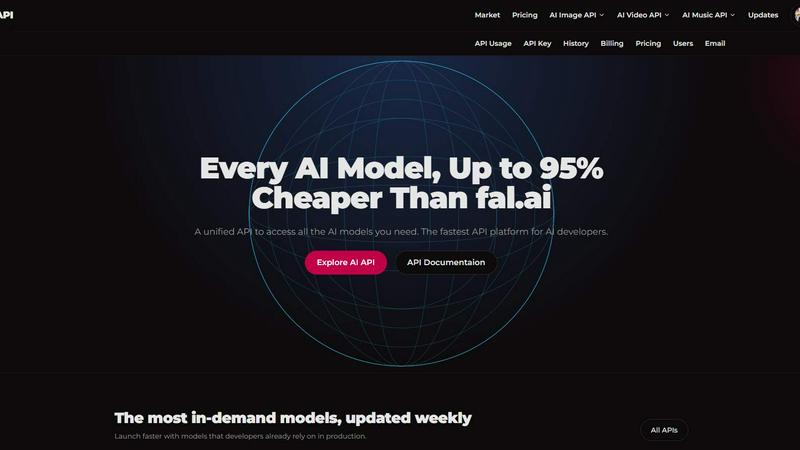
Vidgo API
Vidgo API offers every AI model up to 95% cheaper than fal.ai for developers.
Last updated: February 28, 2026
Visual Comparison
3DAIStudio
Vidgo API
Feature Comparison
3DAIStudio
Text to 3D
With the Text to 3D feature, users can simply type a description of the desired model, and the AI will generate a fully textured 3D asset in seconds. This feature is perfect for those who may not have artistic skills but possess creative ideas, enabling them to manifest their concepts instantly.
Image to 3D
The Image to 3D functionality allows users to upload any 2D image—be it a sketch, photograph, or illustration—and convert it into a high-quality 3D model. This feature is ideal for visual artists and designers looking to bring their 2D works to life with minimal effort.
AI Texturing
AI Texturing automates the process of applying realistic textures to 3D models. Users can generate textures from text prompts or edit existing ones directly on their models. This feature helps ensure that the final assets are visually stunning and ready for use in various applications.
Quad-Remesh
The Quad-Remesh feature optimizes mesh topology, cleaning up the model's structure and reducing polygon counts for efficient use in production. This automated retopology process ensures that the generated assets meet industry standards for performance and quality, making them suitable for various platforms.
Vidgo API
Unified AI Model Marketplace
Vidgo API consolidates access to a premier selection of over 35 top-tier generative AI models into one dashboard. This marketplace spans video generation (e.g., Sora 2, Kling 2.6), image creation (e.g., Nano Banana Pro, Seedream 4.5), and music synthesis (e.g., Suno v5), all updated weekly. It eliminates the need for developers to source, evaluate, and integrate with each provider individually, offering a one-stop-shop for the most in-demand and production-ready AI capabilities available on the market today.
Production-Ready API Infrastructure
Built for technical teams requiring stability at scale, the platform guarantees 99.9% uptime and boasts an average response time of 120ms. This reliability is underpinned by a consistent REST API interface, unified authentication with a single API key, and consolidated billing. Developers can integrate once and scale confidently, knowing the underlying infrastructure is optimized for high throughput and minimal latency, which is critical for user-facing applications and automated production workflows.
Intelligent Cost Optimization
A core pillar of Vidgo API's value proposition is delivering state-of-the-art AI capabilities at a significantly reduced cost. The platform advertises savings of 15-95% compared to going directly through other aggregated services like Fal.ai. This is achieved through strategic partnerships and volume efficiencies. Furthermore, the unified billing and transparent per-request pricing for each model allow for precise cost forecasting and management, removing the unpredictability of using multiple separate AI services.
Developer-First Integration & Support
The platform is designed to minimize integration friction and accelerate development. It provides clear, comprehensive documentation, a straightforward process to get started with instant API key generation, and production-ready code examples. Beyond self-service, Vidgo API offers dedicated 1:1 human support and performance tuning assistance, ensuring teams can optimize their implementation for both cost and output quality, reducing the operational burden on in-house engineers.
Use Cases
3DAIStudio
Game Development
In the fast-paced world of game development, 3DAIStudio allows developers to quickly create and implement high-quality 3D assets. This capability accelerates the game design process, enabling developers to iterate on their ideas and bring their games to market faster.
Film Production
Filmmakers can utilize 3DAIStudio to generate realistic 3D models for visual effects, set design, or character creation. The ability to produce assets quickly and efficiently allows studios to save time and resources during production.
Product Design
Product designers can leverage 3DAIStudio to visualize their concepts in 3D, facilitating better presentations and decision-making. The rapid model generation enables teams to collaborate more effectively and refine designs based on realistic representations.
Education
Educators in design and technology fields can use 3DAIStudio as a teaching tool, helping students understand the principles of 3D modeling without the steep learning curve. The software provides an engaging way for students to explore creativity and technical skills simultaneously.
Vidgo API
Dynamic Marketing & Advertising Content
Marketing teams and agencies can leverage Vidgo API to generate personalized video ads, social media visuals, and branded music snippets at scale. By programmatically calling different models, they can A/B test styles, instantly create variations for different demographics, and produce high-quality content for campaigns without the time and cost of traditional production, enabling rapid iteration and hyper-personalized marketing strategies.
AI-Powered Creative Tools & Platforms
SaaS companies and indie developers can build next-generation creative applications—such as automated video editors, AI-assisted design tools, or interactive music composition apps—using Vidgo API as their core engine. The unified API allows them to offer users a choice of the best models for different tasks (e.g., realistic video vs. animated styles) without managing the complex backend, focusing their resources on user experience and innovation.
Personalized Entertainment & Media
Streaming services, game developers, and content platforms can use the API to create unique, on-demand experiences. This includes generating custom video sequences for users, creating dynamic in-game cutscenes based on player actions, or producing tailored music tracks for podcasts and videos. The low latency and reliability ensure these features can be delivered seamlessly within interactive applications.
Rapid Prototyping & Product Development
Product teams across industries can use Vidgo API to quickly prototype and validate ideas that incorporate generative AI. Whether testing a new feature for generating product mockups, creating explainer videos from text, or adding an audio branding element, the single API allows for fast experimentation with multiple models to find the best fit before committing to a full-scale, costly integration with a single provider.
Overview
About 3DAIStudio
3DAIStudio is an innovative AI-powered toolkit designed to revolutionize the creation of 3D models from simple text prompts or images. This cutting-edge software enables designers, developers, and creative professionals to generate high-quality 3D assets in a matter of seconds, making it an essential tool for anyone involved in 3D content creation. With its user-friendly interface, 3DAIStudio eliminates the steep learning curve often associated with traditional 3D modeling software. Users can easily transform their ideas into stunning 3D visuals without any prior experience. The main value proposition lies in its ability to drastically reduce the time and effort needed to create production-ready 3D models, allowing creators to focus on their vision rather than the technical complexities of 3D design.
About Vidgo API
Vidgo API is a transformative, unified platform designed to streamline the integration of cutting-edge generative AI into applications and workflows. It serves as a single, intelligent gateway to a curated marketplace of over 35 world-leading AI models for video, image, and music creation, including powerhouses like OpenAI's Sora 2 Pro, Kling 2.6, Google's Nano Banana Pro, and Suno v5. This platform directly addresses the significant operational headaches developers and technical teams face: the fragmentation of managing multiple vendor APIs, separate authentication keys, inconsistent billing, and the constant pressure to keep up with the rapidly evolving model landscape.
From a strategic business perspective, Vidgo API is engineered for production-scale deployment, offering a compelling trifecta of value: substantial cost efficiency (advertised as 15-95% cheaper than direct competitors), operational simplicity through a single REST API, and enterprise-grade reliability with 99.9% uptime and an average 120ms response time. For developers, it acts as an abstraction layer that future-proofs applications, allowing them to build innovative features—from dynamic content generation to personalized media tools—without vendor lock-in. For business leaders, it translates to faster time-to-market, predictable scaling costs, and the ability to always leverage the most cost-effective and advanced AI technology available, turning a complex infrastructure challenge into a simple, strategic advantage.
Frequently Asked Questions
3DAIStudio FAQ
How does 3DAIStudio generate 3D models?
3DAIStudio uses advanced AI algorithms to analyze text prompts or images provided by the user. It then creates detailed 3D models based on this input, streamlining the modeling process.
Is prior experience in 3D modeling necessary to use 3DAIStudio?
No, 3DAIStudio is designed to be user-friendly and accessible to everyone. Even those with no prior experience can create high-quality 3D models quickly and easily.
What types of files can I export from 3DAIStudio?
Users can export their generated 3D models in various formats compatible with major engines like Unity, Unreal Engine, and Three.js, ensuring versatility for different projects.
Can I customize the textures applied to my models?
Yes, the AI Texturing feature allows users to apply and customize textures on their models. Users can generate textures from prompts or make manual adjustments to achieve the desired look.
Vidgo API FAQ
How does Vidgo API achieve lower prices than competitors?
Vidgo API leverages strategic volume-based partnerships with leading AI model providers and optimizes its own infrastructure for efficiency. By aggregating demand across its entire user base, it negotiates better rates and passes these savings directly to customers. Its intelligent routing and operational scale allow it to offer the same top-tier models at a significantly reduced per-request cost compared to both direct and aggregated alternatives.
Is there a lock-in period or minimum spend commitment?
No, based on the provided content, Vidgo API emphasizes flexibility with a transparent pay-as-you-go pricing model. You are billed only for the API calls you make to specific models, with no mentioned lock-in contracts or mandatory minimum spends. This allows developers and businesses of all sizes to start small, experiment freely, and scale their usage precisely in line with their application's growth and demands.
How do I choose the right model for my task?
The Vidgo API dashboard acts as a curated marketplace, providing detailed descriptions, sample outputs, and specific pricing for each model (e.g., Kling 2.6 for motion control, Sora 2 Pro for high-fidelity video). Developers can browse models by category (Video, Image, Music) and compare capabilities. For complex decisions, the platform offers 1:1 human support and performance tuning guidance to help select the optimal model based on your desired output quality, style, and cost parameters.
How does billing work with so many different models?
Vidgo API simplifies billing entirely. You have one central account and one billing dashboard. Each model has a clear, per-request cost (e.g., $0.04 for Kling 2.6). Your usage across all models—video, image, and music—is aggregated into a single, predictable invoice. This eliminates the nightmare of managing dozens of separate subscriptions and payment methods, providing full visibility and control over your total AI expenditure.
Alternatives
3DAIStudio Alternatives
3DAIStudio is an innovative AI-powered toolkit designed to convert images and text into high-quality 3D models within seconds. This platform caters to designers, developers, and creatives who need efficient solutions for generating custom 3D assets. As the demand for diverse and unique 3D content rises, users often seek alternatives due to factors such as pricing structures, available features, and compatibility with their specific platforms or workflows. When looking for alternatives to 3DAIStudio, it’s essential to consider various aspects such as the ease of use, the quality of output, and the range of customization options available. Users should also evaluate the support and resources offered by the alternative platforms, ensuring they align with their project requirements and creative goals. Ultimately, the right choice will depend on individual needs and the particular context in which the 3D modeling tool will be utilized.
Vidgo API Alternatives
Vidgo API is a unified platform in the AI development tools category, providing streamlined access to a marketplace of over 35 leading generative AI models for video, image, and music creation through a single API. It aims to simplify integration and reduce costs for technical teams. Developers may seek alternatives for various reasons, including specific budget constraints, the need for different model selections not available on the platform, or unique technical requirements like custom deployment options. Some may also look for providers with different pricing structures or specialized support for niche use cases. When evaluating other platforms, key considerations should include the breadth and quality of the available AI models, the reliability and speed of the API infrastructure, the transparency and predictability of the pricing model, and the overall ease of integration into existing development workflows. The goal is to find a solution that balances cost, capability, and operational simplicity for your specific project.