

Microplastic Intake App
Deplasto's research-backed app empowers you to measure, track, and avoid microplastic intake from your daily foods and drinks.
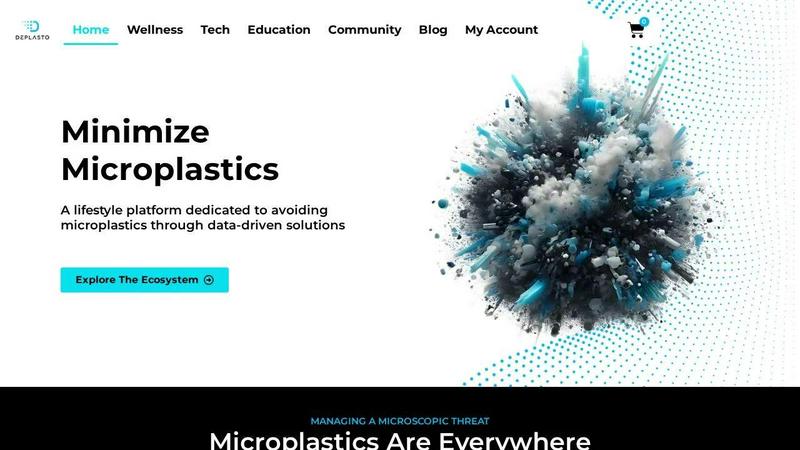
About Microplastic Intake App
The Microplastic Intake App is a groundbreaking data-driven wellness tool designed to address a critical blind spot in modern health tracking. While countless applications help you monitor your macronutrients, caloric intake, and exercise routines, they all overlook a pervasive and invisible threat: microplastics. Peer-reviewed studies have established that humans are inhaling and ingesting thousands of these tiny particles every single day, with research detecting them in 100% of blood samples and in over 30 different body parts, from the brain to the heart. This app is built for the health-conscious individual, the environmental advocate, and anyone looking to optimize their biological performance. It moves beyond general awareness by providing a proprietary model that quantifies your estimated daily microplastic intake based on the specific foods you eat, the beverages you drink, and the activities you engage in. The core value proposition is empowerment through measurement. By identifying the biggest contributors to your personal exposure, the app enables you to make informed choices that can support your gut health, hormone balance, energy levels, and antioxidant production. It transforms abstract scientific data from hundreds of publications into a personalized, actionable roadmap for minimizing your toxic load and reclaiming control over your internal environment.
Features of Microplastic Intake App
Personalized Intake Tracking
This feature allows you to log your daily consumption of foods, drinks, and activities to receive a precise, estimated microplastic particle count. The app utilizes a proprietary algorithm built upon data from hundreds of peer-reviewed studies, translating complex scientific findings into a simple, user-friendly dashboard. You can see exactly how many particles your morning coffee, seafood dinner, or polyester workout shirt contributes to your daily total, providing a clear baseline for making impactful changes.
Science-Backed Food and Beverage Database
The app includes an extensive, continuously updated database that quantifies microplastic content in thousands of common items. From bottled water and takeout containers to specific types of fish, salt, and produce, each entry is sourced from published academic research. This feature removes the guesswork from healthy eating, allowing you to compare the relative microplastic load of different options and choose alternatives that align with your wellness goals, such as supporting a clearer mind and better mood.
Activity and Environmental Impact Logger
Recognizing that microplastics are not just ingested but also inhaled, this feature enables you to log non-dietary exposures. You can track activities like wearing synthetic fabrics, using plastic cutting boards, or spending time in urban environments with high airborne particle counts. By correlating these activities with your overall intake score, the app provides a holistic view of your exposure pathways, helping you understand how everyday habits contribute to the estimated 52,000 particles consumed annually.
Insight Dashboard and Trend Analysis
This feature translates your tracking data into actionable wellness insights. Over time, the app visualizes your intake trends, highlighting correlations between high-exposure days and fluctuations in your perceived energy, mood, or digestive comfort. The dashboard helps you identify patterns and measure the effectiveness of your avoidance strategies. It provides peace of mind by showing tangible progress as you lower your intake, directly supporting the body's natural detoxification and anti-inflammatory processes.
Use Cases of Microplastic Intake App
Optimizing a Health-Conscious Diet
A nutrition-focused individual can use the app to audit their existing meal plans. By logging a typical day of eating, they might discover that their healthy smoothie (using a plastic blender and protein powder) or their favorite canned tuna lunch is a primary source of microplastics. They can then use the app's database to find lower-impact alternatives, such as glass blending jars or fresh-caught fish, thereby reducing their intake while still hitting their nutritional goals.
Managing Invisible Environmental Exposure
A parent concerned about household toxins can utilize the app to assess non-dietary risks. They can log activities like microwaving leftovers in plastic containers, using plastic baby bottles, or the family's laundry habits with synthetic fleece jackets. The app highlights how these everyday actions release particles into the air and food. This data empowers them to make simple switches, like using stainless steel bottles or installing a water filter, to create a safer home environment.
Supporting Hormonal and Gut Health Goals
An individual struggling with brain fog, low energy, or hormonal imbalances can use the app as a diagnostic tool. By meticulously tracking their intake over several weeks, they can identify if high microplastic consumption correlates with their symptoms. The app's insights help them connect the dots between their diet and their body's signals. Reducing intake of known disruptors, as guided by the app, can support the body's natural ability to balance hormones and enhance energy.
Academic and Research Validation
A student or researcher studying environmental health can use the app to visualize the real-world implications of published studies. Instead of just reading that 700,000 microplastics are released per wash of polyester clothes, they can log their own laundry habits and see a personalized estimate. This feature bridges the gap between abstract academic data and personal experience, making the science tangible and reinforcing the importance of public health recommendations and policy changes.
Frequently Asked Questions
How does the app estimate my microplastic intake?
The app uses a proprietary model that aggregates data from hundreds of peer-reviewed scientific studies. For each food, drink, or activity you log, the app cross-references your entry with known contamination levels published in academic literature. It calculates an estimated particle count based on factors like the type of food, packaging, processing method, and preparation technique. While it is an estimate, it is a scientifically grounded and highly actionable approximation that allows for meaningful comparisons and trend tracking.
Is the data in the app truly backed by science?
Yes, 100% of the data used to build the intake model is sourced from peer-reviewed publications. The development team continuously monitors new research to update the database and algorithm. The platform is built on the foundation of widely-cited studies, such as the Cox et al. 2019 study estimating annual consumption and the Napper et al. 2016 study on microplastic release from clothing. The goal is to translate complex, academic findings into a practical tool for everyday wellness.
Can the app tell me exactly how to avoid microplastics?
The app provides the data to help you make your own informed choices. It identifies the largest contributors to your personal intake, allowing you to prioritize changes that will have the most significant impact. It does not prescribe a rigid diet but instead empowers you with knowledge. By seeing that a specific brand of bottled water or a particular type of takeout container is a major source, you can choose a lower-exposure alternative, effectively using the app as a guide for your avoidance strategy.
Is this app only for people with health concerns?
While the app is an excellent tool for anyone looking to optimize their health, it is designed for a broad audience. From environmentalists wanting to understand their personal footprint, to new parents looking to create a safer home, to athletes wanting to maximize their recovery and performance by reducing inflammatory triggers, the app serves anyone who wants to be more conscious of what is entering their body. It provides peace of mind and a sense of control in an era of widespread environmental toxins.
Explore more in this category:
Similar to Microplastic Intake App

GROWNX
Real-time App Store analytics with an AI copilot for portfolio owners.

SnapPChart
SnapPChart grades a trading chart screenshot A+ to F, with an entry, stop, targets, and risk/reward. Works on stocks, forex, crypto, futures.

Wisegrid
Spreadsheet-native work management with AI formulas, dashboards, automation, reporting, and project views for growing teams.


GeoRank
GeoRank turns relocation research into an interactive map where you compare places on sunshine, cost, tax, and visa, then ask AI about your shortlist.

EnsembleData
EnsembleData offers powerful real-time APIs for seamless social media data extraction, enabling businesses to harness insights at scale.

Subiq
Subiq simplifies SaaS subscription management for small teams, helping you track tools, manage spending, and avoid costly renewals.